# European Animation Takes Central Global Stage; 2026 Industry Layout Unveils Clear Long-Term Growth Trends
As the 2026 Annecy International Animation Film Festival & MIFA Market wraps up, industry summits, authoritative market reports and landmark industrial projects jointly define Europe’s irreplaceable standing in the global animation landscape, while laying out five definitive development trends to guide the sector’s growth through 2034. Boasting unique cultural advantages, mature public funding mechanisms and a complete cross-border co-production ecosystem, European animation stands as the world’s core hub for artistic animation, diversified original storytelling and cross-regional industrial collaboration, maintaining steady expansion amid global industry competition.
I. Europe’s Unique, Multi-Dimensional Status in Global Animation Industry
1. Stable Massive Market Scale with Sustained Growth Momentum
Authorized industry data shows the European animation market hit USD 82 billion in 2025, with 2026 estimated to reach USD 86.10 billion; a compound annual growth rate (CAGR) of 5% is projected through 2034, pushing total market volume to USD 127.21 billion. Streaming OTT platforms dominate revenue streams, accounting for 40.9% of the entire European market share in 2025, driven by massive original content investments from Netflix, Disney+ and Amazon Prime Video that continuously expand commission pipelines for European local animation creators.
Regionally, France holds the top position with a 23.3% market share, supported by CNC national film subsidies, mandatory European content broadcast quotas and world-renowned studios including Xilam and Folivari. The United Kingdom leads English-language co-production and technical innovation via Aardman Animations; Germany, Spain and Ireland form secondary growth poles backed by regional film funds and tax rebate policies such as Ireland’s 32% Section 481 animation credit. Collectively, Europe accounts for roughly 25% of the global animation market share, ranking third worldwide yet holding unrivaled leadership in artistic, auteur-driven animated works.
2. Global Benchmark for Artistic Diversity & Cultural Animation Output
Unlike North America and Asia’s commercial IP-centric model, European animation’s core competitive edge lies in its inclusive, multi-cultural creative system backed by the EU Creative Europe program, which allocates over 260 million euros annually to cross-border audiovisual co-productions. The sector prioritizes diverse, inclusive storytelling: 38% of all 2026 European animation projects center on minority representation, gender equality and multicultural themes, with half of feature productions led by female producers.
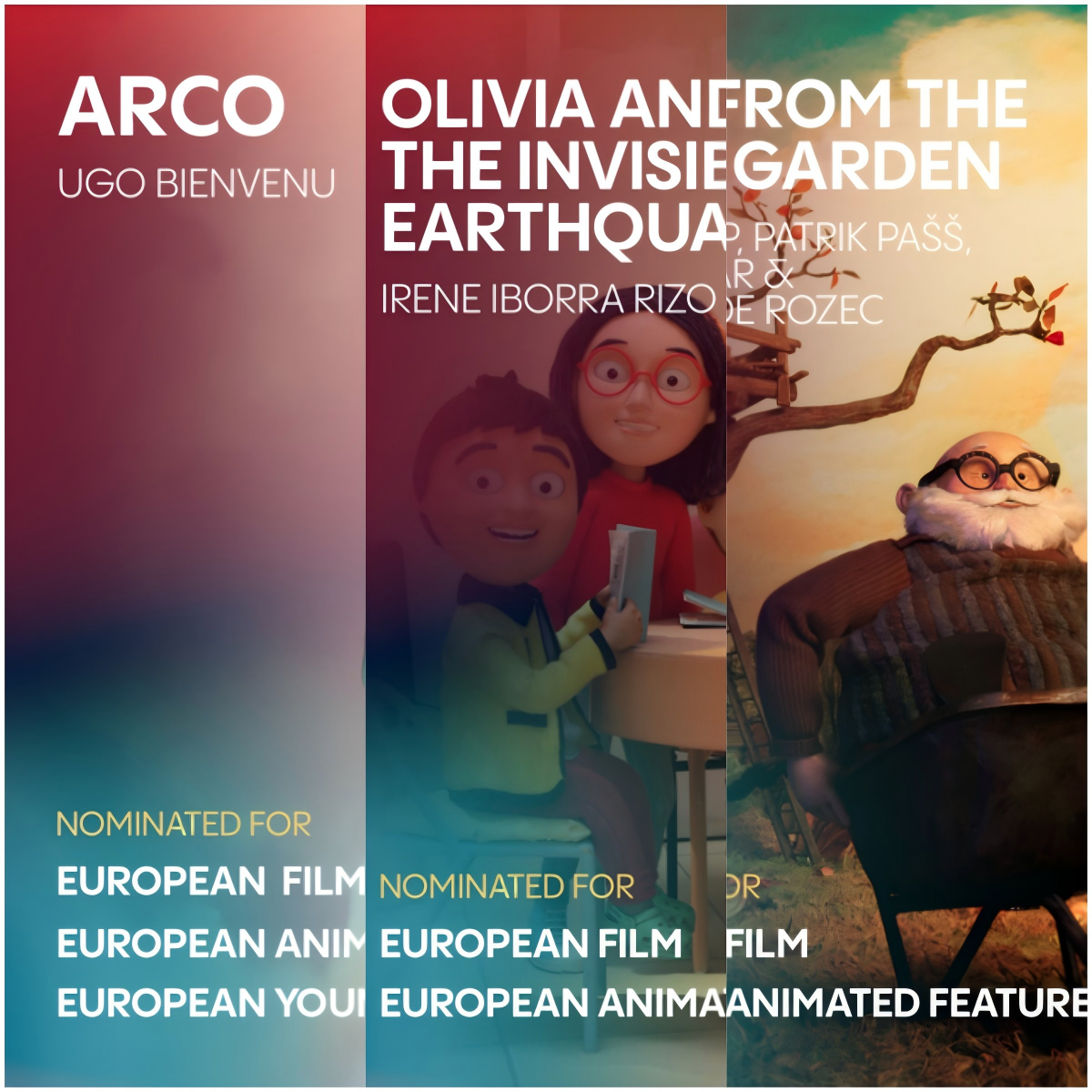
This artistic strength was fully showcased at the 2026 European Film Awards, where animated feature *Arco* claimed the top Animated Feature honor, alongside standout nominated works including *Dog of God*, *Little Amelie*, and *Olivia and the Invisible Earthquake* that blend regional folklore, mature social commentary and cross-age narrative value. At Annecy 2026, six of 11 official competition feature films originated from France or French co-productions, cementing Europe’s reputation as the birthplace of award-winning artistic animation worldwide.
3. Global Core Hub for Cross-Border Co-Production & Industry Exchange
Europe owns the world’s most complete animation co-production operation system, supported by flagship industry events: Cartoon Movie, CartoonNext, the newly launched Annecy European Animation Summit and MIFA Market. The 2026 Cartoon Movie held in Bordeaux selected 50 feature projects from 21 territories and launched the “Québec-Canada Land in Europe” cross-continental cooperation initiative; CartoonNext in Marseille focused on cross-media and interactive animation innovation, accelerating resource matching between European and overseas creators.
The inaugural Annecy European Animation Summit, hosted under MIFA 2026, unites EU policymakers, institutional representatives and global studio executives to jointly tackle core industry challenges including cultural sovereignty, cross-border talent mobility and platform content regulation, serving as the unified European voice in global animation governance. Meanwhile, the newly opened Cité internationale du cinéma d’animation in Annecy — the world’s first comprehensive animation cultural complex integrating museums, exhibition galleries and open-air screening zones — further consolidates the city’s status as the global animation capital and Europe’s cultural export landmark.
4. Balanced Dual Ecosystem: Independent Art Studios + Global Mainstream Players
Europe’s competitive landscape forms a unique dual structure: on one side, multinational giants including Warner Bros. Discovery, Disney, Netflix and Sony operate regional branches and fund European original IP development; on the other, a thriving network of independent studios such as Cartoon Saloon (Ireland), Aardman (UK) and Xilam (France) relies on public grants to create culturally distinctive, award-winning works with global distribution appeal. Unlike single-market industrial chains, Europe’s dual model balances commercial IP operation and experimental artistic creation, filling the global market gap for mature, non-child-exclusive animated content.
II. Six Core Defining Trends Shaping European Animation’s 2026–2034 Future
Trend 1: Cross-Border Co-Production Expands Beyond EU to Global Cross-Continental Partnerships
Intra-EU co-production remains the primary financing model, while 2026 marks a major expansion of cross-ocean cooperation. Events like Cartoon Movie formally established long-term collaboration channels with Quebec, Canada, with more joint projects linking Europe to Latin America, Southeast Asia and Africa. Co-production frameworks effectively resolve Europe’s linguistic market fragmentation issue, pooling budgets, talent and distribution channels to achieve larger audience scale and offset limited single-country revenue. Over half of 2026 European animated feature projects are multi-territory co-productions, with cross-continental joint works growing year-on-year.
Trend 2: Technology Upgrading: Real-Time Engines, Controlled AI & Sustainable Production Standards
Two parallel tech shifts sweep the industry:
- Real-time rendering tools (Unreal, Unity) are widely adopted by small and mid-sized European studios, cutting production cycles and lowering entry thresholds for independent creators, while the EU Horizon Europe program funds real-time animation applications in cultural heritage and education sectors;
- The industry forms unified consensus on generative AI governance: MIFA 2026 launched a trade union joint working group to negotiate standardized AI usage rules, balancing efficiency gains with copyright protection and creator labor rights, avoiding unregulated AI substitution of core handcrafted animation craft.
Sustainability has also become mandatory industry practice led by Ecoprod: standardized green production rules including festival public transit incentives, fully plant-based catering and low-carbon shooting workflows are being rolled out across all major European animation events and studio pipelines, forming the world’s first systematic animation sustainable production standard system.
Trend 3: Revenue Diversification Beyond Film & Series, B2B Functional Animation Grows Rapidly
European animation is breaking reliance on theatrical box office and streaming licensing, expanding high-stability B2B revenue streams. Medical simulation, architectural visualization, educational animation and corporate branded short-form content maintain double-digit annual growth (the advertising animation segment posts a 10.5% projected CAGR through 2034). These non-entertainment verticals provide steady off-season income for studios, reducing dependence on volatile feature film returns and strengthening the sector’s overall financial resilience.
Trend 4: All-Age & Mature Animated Content Becomes Core Competitive Track
Moving past the historical stereotype that animation targets only children, European studios prioritize teen, young adult and mature audience narratives. 38% of 2026 pitching projects integrate social, philosophical and realistic themes for grown-up viewers, while streaming platforms increase budgets for European adult animated series. Original IPs blending regional folklore and universal human emotion gain global traction, forming a differentiated competitive advantage against purely commercial mainstream animation from North America and Asia.
Trend 5: Institutional Infrastructure & Talent Ecosystem Construction Accelerate
2026 saw landmark cultural infrastructure upgrades led by Annecy’s international animation city; simultaneously, pan-European talent incubation programs, animation university industry-university cooperation and cross-border talent exchange schemes are scaled up to address the continent’s talent drain crisis to North American and Asian studios. MIFA’s new trade union program establishes unified cross-Europe labor standards, improving compensation and career development paths to retain senior rigging, layout and VFX specialists
Trend 6: OTT Streaming Remains Core Growth Engine, Platform Localization Deepens
Global streamers continue to expand European regional teams in Paris, London and Madrid, prioritizing locally rooted original animation with global export potential. The 40.9% OTT market share recorded in 2025 will keep rising through 2034, as platforms shift from one-off content purchases to multi-year co-development partnerships with European studios, providing stable upfront budgets and full global distribution channels for original European IPs.
III. Industry Outlook
While European animation still faces structural challenges including linguistic market fragmentation, insufficient private risk capital and cross-border talent outflow, its unique cultural positioning, complete public support system and expanding global co-production network lay solid foundations for long-term growth. Through deepened technological iteration, cross-continental cooperation and sustainable industrial standards, European animation will further consolidate its dual identity as a global artistic animation benchmark and vital cross-cultural communication carrier, continuously releasing high-value original content to reshape the competitive landscape of worldwide animation.
Source References
- Market Data Forecast Europe Animation Market Report (Feb 2026)
- Annecy MIFA 2026 European Animation Summit Official Materials
- Dispatch Media Industry Analysis Report (June 2026)
- Cartoon Movie & CartoonNext 2026 Official Briefings
熱門頭條新聞
- Woodland fantasy RPG Songs of Glimmerwick comes to Steam on September 30th!
- gamescom dev awards 2026 recognize outstanding indie games and industry contribution
- BOMBANANA! Set to Launch on 2 September 2026 on PC via Steam!
- Netflix Shuts Down Night School Studio and Moonloot Games, Restructures Gaming Division and Reshapes Its Entertainment Business Mix
- DCU Wonder Woman Reboot Gets First Official Update From Screenwriter
- Reborn · Stone Age Kicks off Second Reunion Closed Beta Test, Reviving a Pioneering Chinese Online Game Classic
- Chill Survival Adventure Until North Ends Launches in Early Access on August 31st
- Pixel Washer Cranks Up the Pressure With New Trailer Full of Grimy Locales, Slick Sprayers, and Sweet Rides