From Renaissance to Game Renaissance: How Italy’s Video Game Industry Is Going Global with Creativity and Policy as Twin Engines
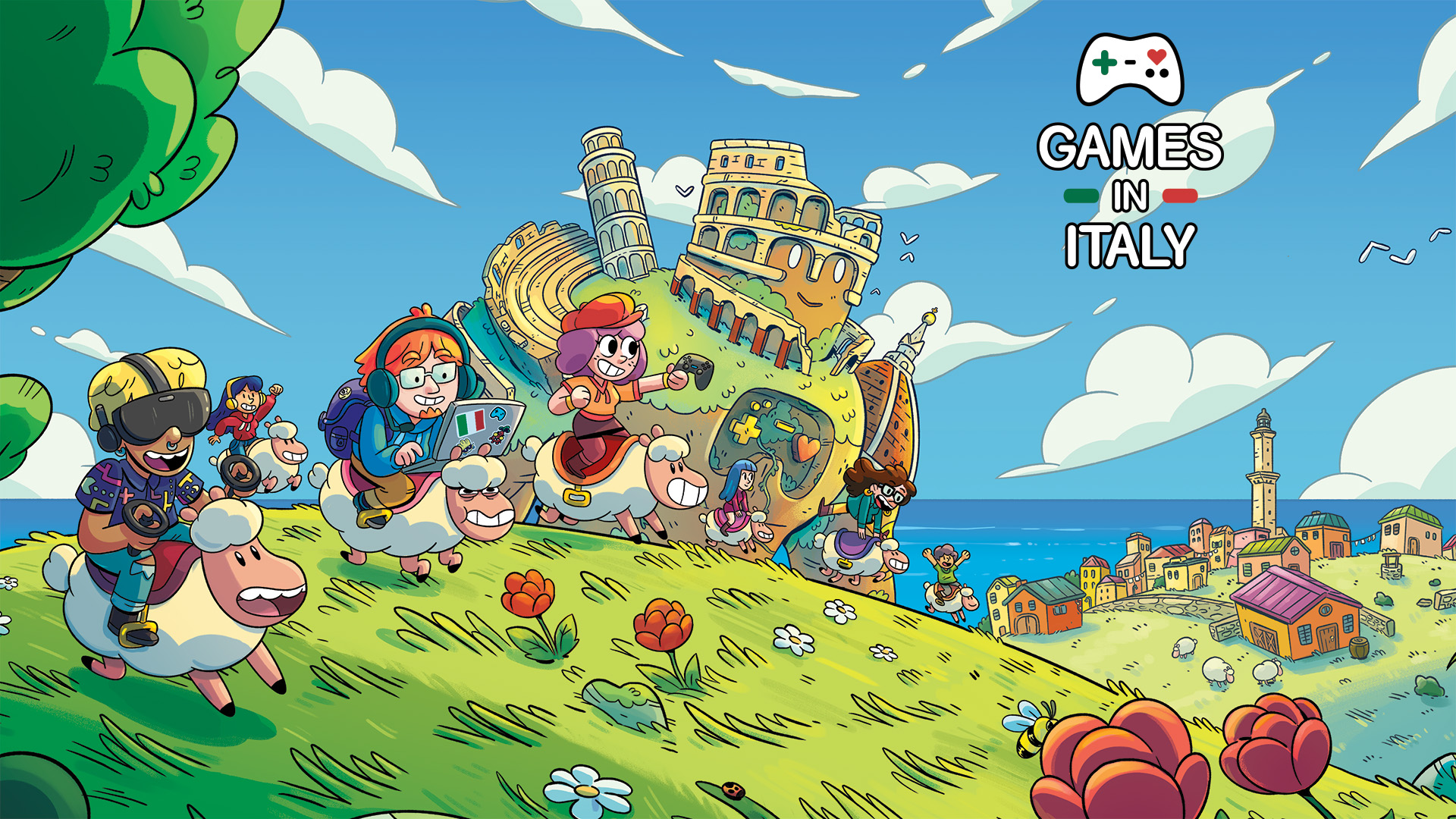
During the eighth edition of First Playable and the Italian Video Game Awards ceremony, the Italian Interactive Digital Entertainment Association (IIDEA) officially launched the upgraded “Games in Italy” digital platform. This industry portal—bringing together over 600 game titles and hundreds of studios nationwide—not only offers a panoramic view of the “Made in Italy” gaming ecosystem but also signals that this European top-five gaming market, valued at nearly €2.4 billion, is advancing toward the global industry stage with greater systemization and confidence.
I. Industry Scale: A European Powerhouse on a Steady Growth Trajectory
The Italian video game industry is on a stable development track. According to IIDEA’s latest industry report, the total Italian games market in 2024 reached approximately €2.4 billion, marking a year-on-year increase of about 3%. Although the market saw a slight correction in 2025 (around -1%), the overall scale remained around €2.4 billion, demonstrating strong market resilience. Software content continues to drive revenue growth, accounting for 77% of the total market, approximately €1.8 billion.
On the supply side, the number of Italian game companies, employees, and total revenue have all shown significant growth. In 2024, IIDEA recorded over 200 Italian game companies employing more than 2,800 people, with combined industry turnover estimated between €180 million and €200 million. This represents a growth of approximately 36% compared to 2022—a remarkable pace for a maturing mid-sized European game industry.
Sen. Lucia Borgonzoni, Undersecretary of State at the Ministry of Culture, commented on the industry report: “The report presented conveys the image of a healthy and expanding industry, as evidenced by the growth recorded both on the business side and in terms of consumers. Launched in the race to conquer an increasingly central position in the international context, the videogame sector in Italy develops along the lines of creativity and innovation, which, when they meet, give life to a form of cultural expression capable of involving a heterogeneous audience and transmitting knowledge.”
II. Policy Engine: Tax Credits and Institutional Recognition
The rapid development of Italy’s game industry owes much to sustained policy support. The Italian Ministry of Culture has incorporated video game development into the national cultural strategy framework, allocating dedicated tax credit funds to the sector each year. For 2025, the tax credit amount has been confirmed at €12 million.
More importantly, the Italian government is pushing for “institutional recognition” of the game industry. Thalita Malagò, General Manager of IIDEA, stated: “Looking to the future, our sector is asking Italian policy makers to recognise video games as a sector with specific needs and characteristics. This recognition is crucial to unlocking the as-yet unexpressed potential for growth, making a decisive contribution to a more sustainable development of the country and its digital and technological transition.”
The essence of this institutional appeal is to liberate the game industry from the single label of “entertainment” and incorporate it into a broader policy framework for cultural creativity and technological innovation—which would mean more stable financial support, more systematic international promotion resources, and deeper integration into the nation’s digital transformation strategy.
III. Industry Ecosystem: Creative, Export-Oriented “Small Giants”
A core characteristic of Italy’s game industry is its highly export-oriented nature. Since the domestic market accounts for less than 5–10% of Italian game companies’ revenue, local studios set their sights on global markets from the very beginning. Europe and North America are their primary target markets, with Asia and South America constituting steadily growing secondary markets.
This “born global” industry DNA has shaped the unique character of Italian game development. As IIDEA emphasizes, the Italian game industry “by its very nature, is export-oriented and operates mainly in a global market.” Digital products and online distribution platforms enable Italian developers to transcend geographical boundaries and deliver creative works steeped in local cultural heritage directly to players worldwide.
First Playable, held in Florence, has become the key hub for connecting Italy’s game industry with international resources. This B2B event brings together developers, publishers, investors, and service providers through pitch sessions, mentorship, and business matchmaking, opening doors to global partnerships for Italian studios. The concurrent Italian Video Game Awards serve as an annual review of domestic creative output—in 2026, the top prize for “Best Italian Game” was awarded to Turin-based Tiny Bull Studios for The Lonesome Guild.
IV. International Promotion: The “Games in Italy” Platform and Branded Global Outreach
The upgraded Games in Italy platform is the core vehicle for IIDEA’s globalization strategy. It comprises two major components:
Industry Map: An interactive map presenting the distribution of game companies across Italy, covering developers, publishers, and service providers.
Game Database: Established in collaboration with Francesco Liotta of Cinic Games, currently featuring over 600 released and in-development Italian game titles, continuously tracking Italy’s latest output on platforms such as Steam.
This platform is not merely an information portal but also a global promotional brand. At major international events such as Gamescom and GDC, the “Games in Italy” mark has become the unifying banner for the Italian game industry’s collective voice. The platform also partners with Steam to host dedicated promotional events spotlighting Italian-made games.
The Italian Trade Agency (ITA) also actively organizes delegations of selected local developers to participate in international expos, fostering the establishment of global partnerships.
V. Looking Ahead: From “European Workshop” to “Creative Laboratory”
Looking forward, Italy’s game industry stands at a critical juncture, transitioning from “scale expansion” to “qualitative leap.” Several core development directions merit attention:
First, deepening institutional recognition. If the game industry can achieve the same “cultural and creative industry” status as film and music, the scale and stability of tax credits will increase substantially, attracting more international capital and talent.
Second, scaling up small and medium studios. Italy’s industry currently remains dominated by small and medium-sized studios. The path to maturity lies in achieving scalable growth while preserving creative independence. International connection opportunities provided by platforms like First Playable are accelerators for this process.
Third, the global expression of cultural IP. From the legacy of the Renaissance to contemporary design aesthetics, Italy possesses an inexhaustible reservoir of cultural materials. Transforming these local cultural genes into game narratives and gameplay with global appeal is the core challenge for Italy’s game industry to evolve from “European workshop” to “creative laboratory.”
As IIDEA puts it, the mission of Games in Italy is “to tell the story of the Italian video games industry on a global scale, to showcase the successes of the national video games industry and to explain why it is important to invest in Italian companies.” When a €2.4 billion market, the creative vitality of over 200 studios, €12 million in policy support, and a global industry vision converge, the story of Italy’s game industry is accelerating from “European potential” to “new global force” on the world stage.
熱門頭條新聞
- Registration Opens for NVIDIA China Developer Day 2026 — A Premier Off line Tech Gathering for AI Developers in Suzhou
- Giving Back To The Industry: Nova Games Foundation Officially Launches To Empower Next Generation Game Creators
- Cozy Narrative-Driven Adventure Cat Secretary Launches on November 4th!
- Overwatch Rush Begins Soft-Launch in Southeast Asia, Blizzard Explores New Global Path for IP based Mobile Games
- GungHo to Shut Down Disney Pixel RPG on September 30, 2026
- Decorado: Alberto Vázquez on the Journey from Animated Short-film to Feature-length Animation
- CICF×AGF Guangzhou Anime-Game Festival: Greater Bay Area ACG Grand Event Lights Up National-Day Holiday
- Merge Mobile Game Sector Outlook 2026: Merge-2 Drives Robust Growth Amid Opportunities & Challenges