Marvel Cuts 8% of Staff: Disney’s Global Cost Restructuring Reshapes Hollywood and Content Industry
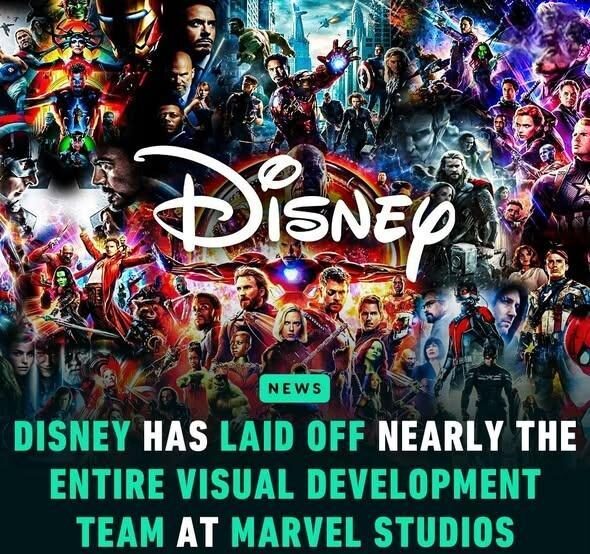
According to multiple authoritative outlets including Deadline, IGN, and Bleeding Cool, Marvel Entertainment, a subsidiary of The Walt Disney Company, has launched company-wide layoffs affecting approximately 8% of its workforce on April 15.The cuts span both Marvel Entertainment in New York (comics, IP operations) and Marvel Studios in Burbank (film and television production), impacting departments including comics publishing, production, visual development, finance, and legal.This move is part of Disney’s broader plan to eliminate up to 1,000 positions across the group, signaling a strategic shift from streaming expansion to profit-driven efficiency—one that will profoundly reshape the superhero genre and the global content industry.
1. Key Layoff Details: Visual Development Devastated, Shift to Project-Based Outsourcing
The restructuring is not a minor adjustment but a core component of Disney’s global cost-reduction initiative:
- Scale and scope: Marvel cuts around 8% of staff, aligning with broader reductions at Disney divisions including ESPN, Pixar, and home entertainment, led by new CEO Josh D’Amaro with a focus on streamlining operations and prioritizing high-return core IP.
- Heavy blow to visual development: The team responsible for character, environment, and world-building design across the MCU has been sharply reduced, with only a small in-house core retained.Marvel will transition to a project-based freelance and outsourcing model, ending its long-standing reliance on full-time in-house creative staff.
- Cross-departmental impact: Jobs are reduced across comics, production, IP, finance, and legal teams, with notable pressure on Disney+ original series and streaming content groups, reflecting Disney’s retreat from low-ROI original programming.
2. Impact on Disney: Strategic Shift from Expansion to Quality & Profitability
As Disney’s most powerful IP engine and profit pillar, Marvel’s layoffs mark a defining turning point:
- End of the high-output, high-spending era: After years of expanding its release slate to 3–4 films and 4–5 Disney+ series annually—with production costs soaring to $200–300 million per title—Disney is pivoting to fewer releases, stronger quality, and focused flagship projectssuch as Avengers 5 and Avengers 6.
- Cost restructuring for profitability: By reducing full-time creative roles and expanding project-based outsourcing, Disney aims to lower fixed overhead, improve return on investment, and strengthen its financial performance and stock recovery.
- Evolution of IP strategy: Moving from full in-house production to a core IP development + external licensing and partnership model, similar to Sony’s Spider-Manarrangement, to maximize value while reducing risk.
3. Industry-Wide Impact: Hollywood Enters a New Era of Leaner, Project-Based Production
Marvel’s restructuring will send ripple effects across the global entertainment landscape:
- Superhero genre contraction and consolidation: As the global benchmark for superhero IP, Marvel’s cutbacks signal market saturation and oversupply. Rival studios including Warner Bros./DC and Universal Monsters will likely tighten budgets, reduce slates, and shift to rationalized, premium-focused competition.
- Creative employment model disrupted: The shift away from full-time visual development roles will become an industry template. Major studios will accelerate the move toward freelance, outsourced, and flexible staffing, reducing long-term job stability in VFX, concept art, and design.
- Streaming content logic reset: Disney’s pullback on streaming-driven content will force Netflix, Amazon, Warner Bros., and others to reevaluate spending. Reducing low-return shows, prioritizing tentpole IP, and controlling budgetswill become the new industry standard, closing the era of unchecked streaming expansion.
- IP development re-centered on quality: Marvel is moving away from rapid universe expansion toward deeper, more polished individual stories. This will encourage the industry to shift from quantity-first to audience experience and creative quality.
Conclusion
Marvel’s 8% staff reduction is more than an internal adjustment—it is the visible tip of Disney’s strategic transformation and a milestone for Hollywood and the global content industry.In the short term, the shift will bring creative disruption and project delays.In the long term, it will push the industry away from reckless expansion toward a more efficient, disciplined, and quality-focused era, redefining the future of superhero storytelling and global filmed entertainment.
熱門頭條新聞
- Hong Kong International AIGC Digital Creation Competition 2026
- Beyond Concept Verification: AIGC Film & Video Enters Commercial Realization Cycle in H2 2026
- It’s Time to Reap What You Sow (and Then Throw It!) – Planted! Launches 29th October 2026.
- Award-Winning Composer Cris Velasco and Milan Records Bring the Dark, Nordic Sound of Mistfall Hunter to Life
- ArcheAge S: Strait of Freedom Targets Q2 2027 Steam Launch
- “One City Embodies Three Kingdoms, Half-Step Into Jianghu” Launches in Shanghai — Kaiying Network’s Dual Chinese-Style Game IPs Cross Over With Urban Tourism Festival, Pioneering Game-Culture-Tourism Integration Model
- Registration Opens for NVIDIA China Developer Day 2026 — A Premier Off line Tech Gathering for AI Developers in Suzhou
- Giving Back To The Industry: Nova Games Foundation Officially Launches To Empower Next Generation Game Creators