Happy Elements’ New Title “V Project” Unveiled: A “Wall-Breaking” Declaration for Advancing into the Global Female-Oriented Market
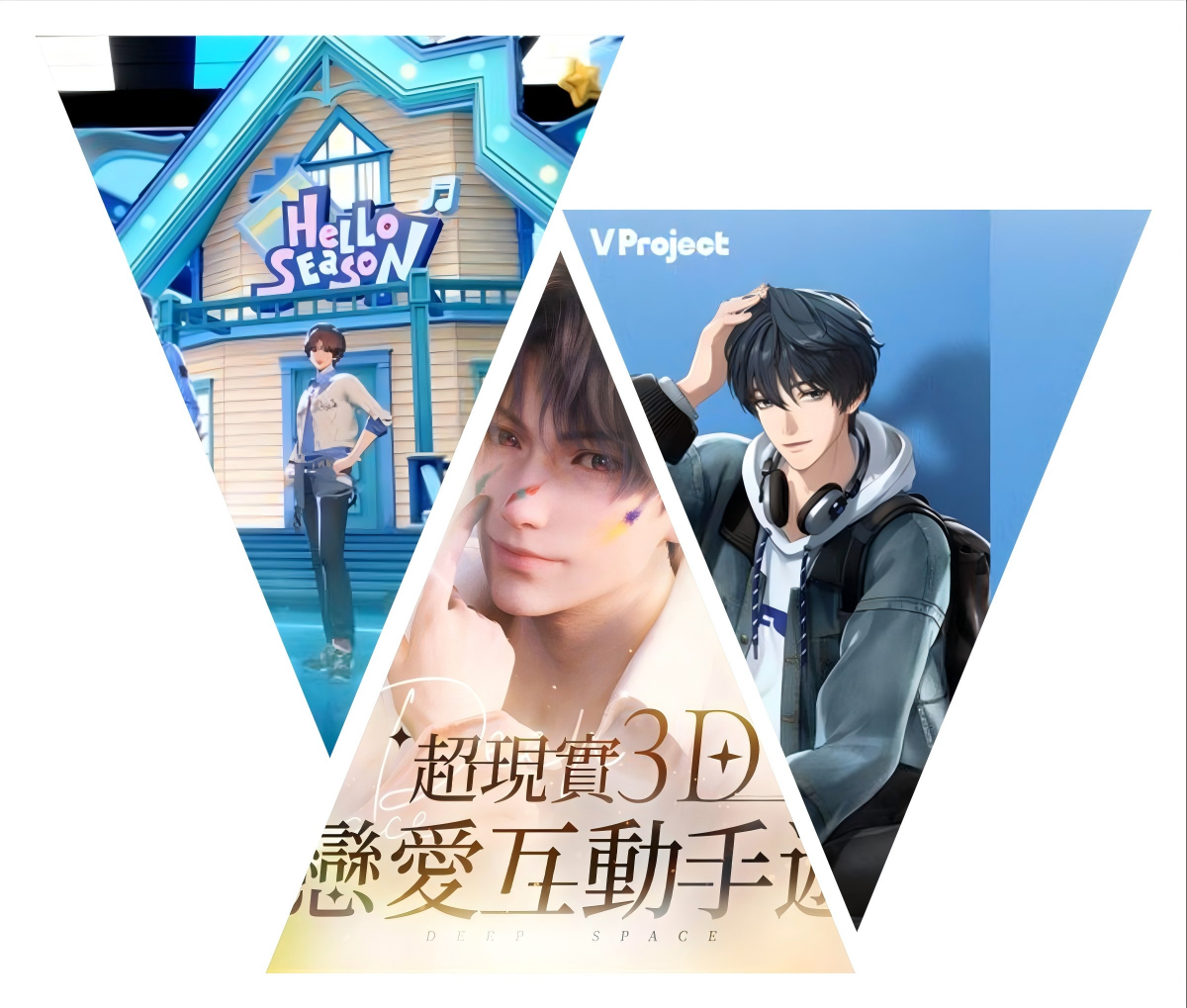
In the female-oriented game sector, the market structure has long maintained a steady state of “one leader and several strong competitors.” Leading titles like “Love and Deepspace” not only achieve outstanding commercial performance but also see their character influence rival that of real-life idols in the broader entertainment market. However, behind this successful paradigm lies a high degree of thematic homogeneity and formidable competitive barriers. While the idol theme inherently aligns with the core of “dream-building,” few products have adopted it as their central narrative framework.
Happy Elements, a veteran deeply rooted in idol culture, previously established its advantage in the Japanese school-inspired genre with the “Ensemble Stars!” series. Now, the newly announced “V Project” collaboration between its studio and vstudio marks the company’s proactive move to shed its established label and launch an assault into the deeper waters of the female-oriented market through a strategic pivot toward global aesthetics.
From “J-Pop School Style” to “K-Pop International Flair”: A Revolution in Visuals and Relationships
Looking back, the core narratives of Japanese idol games often revolve around “youth,” “growth,” and “bonds,” with players’ emotional projections often carrying a nurturing tone as “producers” or “guardians.” “V Project,” however, presents a distinctly different visual language and relationship dynamic.
In the debut PV and gameplay demo, the three characters completely abandon uniform anime-style performance outfits or school uniforms, instead adopting streetwear mixes that blend Y2K and American campus fashion. Their sense of style resonates with currently active K-pop groups like NewJeans and RIIZE. This is not merely an iteration in art style but a precise “alignment” by Happy Elements to break through cultural boundaries and embrace global pan-entertainment users. The character designs are more mature and three-dimensional, aiming to shift the player’s role from “mom fan” to “girlfriend fan,” establishing a more equal, direct, and intimate emotional connection.
Fusion of “K-Pop Exterior” and “Japanese Core”: Balancing Technical Heritage with Emotional Engagement
Despite its international, trendy exterior, the core of “V Project” remains deeply rooted in Happy Elements’ proven idol game DNA. The gameplay demo showcases fluid and detailed character dance movements, with details like cloth physics and weight shifts highlighting its technical prowess in 3D presentation. More crucially, the game retains the exquisitely nuanced “service awareness” characteristic of Japanese idol systems: precise eye contact with the camera, seemingly casual winks, and interactive gestures—these meticulously designed “service moments” aim to instantly touch the heartstrings of core players.
This combination of “K-pop styled high-end packaging” and “Japanese-styled nuanced interaction” creates a unique differentiated experience. It attracts a broader audience with international visual aesthetics while satisfying core players with deep emotional responsiveness, effectively harnessing the strengths of both Japanese and Korean pop cultures. Additionally, the official announcement of Chinese songs, combined with Japanese production quality and Korean idol training standards, offers premium content for China, a significant market for K-pop.
From “Stage Admiration” to “Shared Life Experiences”: The “Touch” Concept Redefines Immersive Companionship
If the visual shift represents an external innovation, then the experiential transformation led by “V Project’s” core concept, “Touch,” delves into the deeper needs of evolution in female-oriented games. The game aims to break away from the traditional god-like “spectator” perspective in idol cultivation games, fostering a highly immersive sense of “shared experience” through multi-dimensional storytelling.
The PV extensively employs first-person perspectives: interactions resembling private text messages, and cinematography that emphasizes “he is looking at the scenery, and he is looking at you” during travels, striving to build an intimate feeling that breaks the fourth wall. The narrative setting expands from confined stages to the vast real world, selling a “lifestyle” of traveling and sharing daily trivialities with idols. Utilizing the “Touch” setting—a technology connecting emotions and perceptions—players can freely switch between first-person daily life, god’s-eye view main story, fan perspective stages, and fragmented story angles, deeply participating in the ensemble growth of the characters.
This structure of “companion narrative + ensemble growth” aligns with the current societal need for deep emotional connections and resonates with the global trend in K-pop narratives that emphasize team bonds, potentially unlocking broader content appeal.
Breaking Through in a Saturated Market: A Dual Strategy of Consolidating Moats and Exploring New Blue Oceans
Happy Elements’ launch of “V Project” at this juncture has clear strategic intent. On one hand, it aims to consolidate its leadership in the idol game domain by upgrading technology and innovating themes, thereby building higher competitive barriers against potential challenges. On the other hand, it seeks to address potential issues like content aging and high entry barriers associated with classic IPs such as “Ensemble Stars!”
As a brand-new IP, “V Project” carries no historical baggage, allowing it to advance lightly. It can explore blue ocean markets with limited interest in traditional Japanese anime aesthetics—particularly in regions like Europe, America, and Southeast Asia—using more universal aesthetics, advanced 3D technology, and innovative narrative models. This strategy aligns with the logic of Chinese game developers expanding overseas: “attacking niche markets with industrialized high quality.” If it successfully delivers on its promised quality, it has the potential to achieve success in both the Japanese/Korean and Western markets.
Conclusion: More Than a Game, a Preview of an IP Ecosystem
“V Project” demonstrates Happy Elements’ ambition to not remain confined to its established track. It precisely positions itself at the intersection of “game” and “idol,” drawing inspiration from the operational heat of Korean virtual idols and the IP incubation systems of Japanese music enterprises. It attempts to use the game as a core vehicle to build an idol utopia that integrates high-quality content, multi-perspective storytelling, and deep emotional bonds.
Although challenges remain—such as balancing mobile performance and designing long-term monetization—”V Project” has undoubtedly sounded the charge. It is not only Happy Elements’ act of self-innovation but may also provide the female-oriented sector with a “second solution” that transcends romance narratives, signaling the potential for idol-themed games to move from “stage starlight” to “shared life experiences.” Whether it ultimately grows into a sustainable long-term IP warrants continued industry attention.
Hot News
- SIGGRAPH Asia 2026 Takes Shape: Distinguished Keynote Speaker Line-up Unveiled
- Apple Completes App Store Leadership Transition; New Management Pursues Higher Margins, Phil Schiller Steps Back From Day-to-Day Operations
- Apple’s new EU App Store Business Terms Still Violate the Digital Markets Act (DMA).
- Lost and Found Co. Developer Bit Egg Becomes First Game Studio to Win Thailand’s Prestigious Prime Minister’s Export Award
- DRAGONHEIR: SILENT GODS MARKS THIRD ANNIVERSARY WITH COMMUNITY-CREATED HERO AND ORDER VS. CHAOS SHOWDOWN
- China Domestic Animation Summer Season 2026 Review: Box-office Boom for Theatrical Animation, Established Web Series Face Headwinds, AI Man-Dramas Explode for New Growth
- Tianji: Shadow of the Ancients, Coming 2027 to Multiple Global Platforms
- China’s Anime-Goods (“Guzi”) Economy 2026 Market Review