AI Man-Drama Enters “Licensed Operation” Era, Copyright Ownership Becomes Core for High-Quality Domestic Animation Development
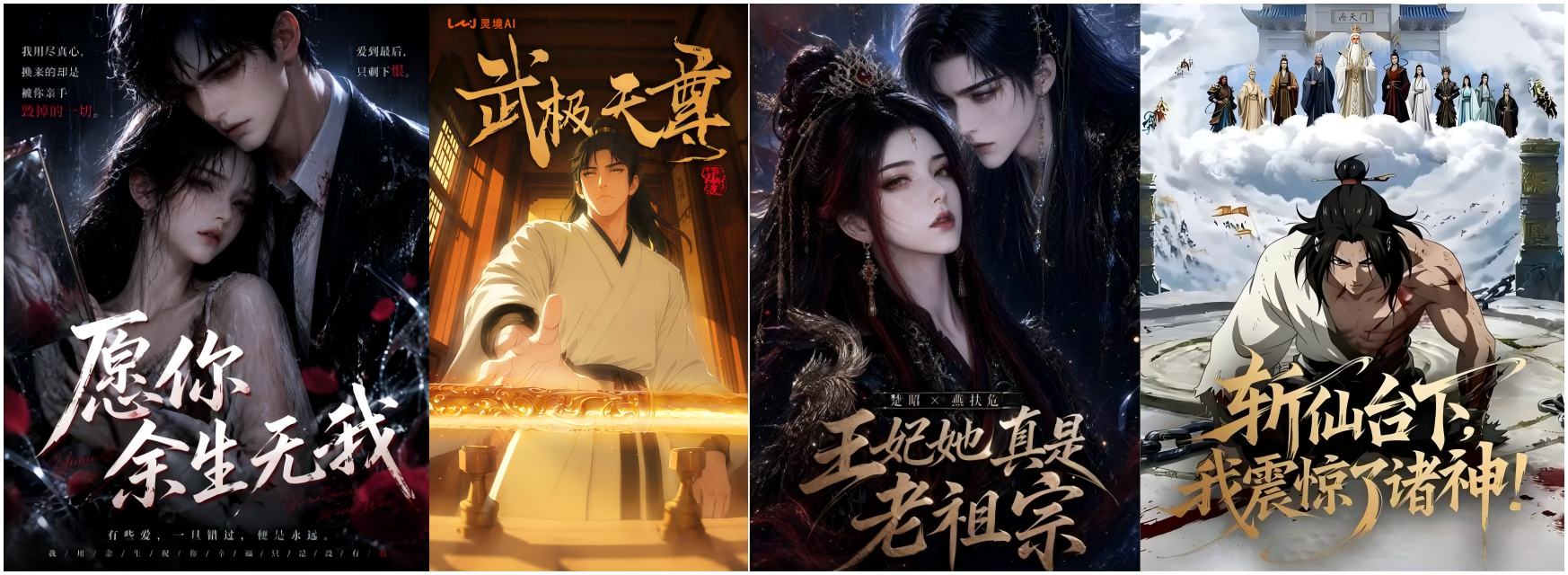
AIGC technology has become a new engine for cost reduction and efficiency improvement in domestic animation. AI-generated man-dramas leverage multimodal large-scale models to reshape animation production workflows and unlock huge market potential. Nevertheless, the sector is confronted with prominent pain points including blurred copyright boundaries, plagiarized script re-writing, and unauthorized portrait exploitation. Following a series of regulatory policies issued by the National Radio and Television Administration (NRTA) in 2026, AI man-dramas have bid farewell to unregulated rapid expansion and officially stepped into a standardized era featuring filing–based licensing and copyright priority.
AIGC Empowers Domestic Animation: Efficiency Boost Fuels Multi–Billion–Dollar New Track
Producing one minute of high-quality traditional animation usually requires weeks or even months for script-writing, key-art, storyboarding and post-production. Enabled by AIGC toolchains such as Midjourney, ComfyUI and Runway, AI can handle 60-70 % of image generation and storyboarding tasks. Production efficiency rises by 5-10 times, while per-minute production cost drops to RMB 1000-2500.
Production barriers are greatly lowered, making it feasible to convert web-novels and static comics into dynamic AI man-dramas. Industry statistics show that China’s animated micro-short drama market (dominated by AI man-dramas) achieved explosive growth in 2025. The market size is projected to exceed RMB 24 billion in 2026, with continuously expanding user base. AI man-drama has become a key growth driver for digital cultural entertainment.
Alongside surging output, structural challenges have emerged: mass-produced contents suffer from heavy homogenization; “rewrite-style” copyright infringement, IP name-spoofing, unauthorized celebrity-facial LoRA training and copying copyrighted art styles are rampant. Many works have broken copyright chains, leaving creators with heavy burdens of evidence collection when facing piracy and plagiarism. Balancing industrial growth and governance has become an essential agenda for the whole ecosystem.
Regulation Comes into Force: Tiered Filing Establishes Mandatory “Licensed Operation” Rules
Effective April 1 st, 2026, NRTA formally enforces filing rules for AI man-dramas. AIGC-produced animated micro-dramas are fully incorporated into the classified-tier review system for online micro-series under dual oversight by radio–television authorities and streaming platforms. Existing unfiled titles are subject to full-network mandatory removal, and all new releases must complete filing prior to launch.
- Three–tier Filing Mechanism
- Projects with investment ≥ RMB 3 million, or covering sensitive themes including politics, military and ethnic affairs: reviewed by national NRTA, issue Online Drama & Episode Distribution License;
- Ordinary-theme projects with investment ranging from RMB 1 million-3 million: reviewed and filed by provincial radio-television administrations;
- General-theme projects with investment below RMB 1 million: self-reviewed by streaming platforms and collectively reported to provincial authorities for filing, lowering compliance burdens for small-and-medium creators.
- Mandatory AIGC Content LabellingAll episodes containing AI-generated materials must carry clear labelling such as “AI-Produced” or “This work contains AI-generated content” at opening or prominent positions. Tampering or concealing AI-generation markers violates deep-synthetic content regulatory requirements.
- Core Content Red LinesProhibitions cover vulgar & suggestive contents, subversive re-adaptation of classics and heroic figures, unauthorized use of real-person portraits and voice prints. Age-appropriate warning labels for minors are compulsory to secure content safety boundaries.
Copyright Ownership: Human Originality Forms the Foundation of Right Confirmation & Litigation
Regulatory documents and judicial consensus have reached a clear conclusion: pure one–click AI–generated output is not eligible for copyright protection under copyright law. Only works embodying substantial human creative intellectual contributions can obtain copyright protection, with rights belonging to project sponsors and creative teams.
Human creative contributions run through the whole pipeline: original script polishing, iterative prompt engineering, parameter tuning, source-material screening, storyboard design and manual post-production revision. Overseas industrial practice suggests human-originated creative input should account for no less than 40 % of final works, to lay solid evidence foundations for copyright registration, timestamp notarization and potential infringement lawsuits.
Three categories of high-frequency infringement risks are prevailing in current industry:
- Defective IP adaptation authorization: Creators only obtain reading rights for web-novels, without explicit license for AIGC dynamic visual adaptation, yet directly produce and release man-dramas, which constitutes adaptation infringement.
- Portrait & art–style violation: Deploying unlicensed celebrity-facial LoRAs or directly replicating copyrighted animation art styles. Generated characters may bear striking resemblance to real celebrities or established IP figures, triggering disputes over personality rights and copyrights.
- “Spoof–name” rewrite–infringement: Perpetrators alter character names while copying core plots and settings from original works, or leverage well-known IP titles to attract traffic. Hit IP such as A Record of a Mortal’s Journey to Immortalityrepeatedly suffers from such spoofing. Copyright holders such as China Literature are calling for revenue-linked heavy-deterrent penalties and fast-track dispute resolution mechanisms.
New Industrial Paradigm: Full–Chain Compliance — Pre–Production Rights Confirmation, Mid–Production Evidence Preservation & Pre–Launch Filing
Facing technological dividends together with compliance pressure, the industry is building actionable modern compliance workflows:
- Pre–project: Confirm rights via written contracts. Acquire formal written IP adaptation licenses explicitly covering “AIGC dynamic man-drama adaptation, multi-platform commercial distribution”. Clarify ownership of AI-generated deliverables, source-material liabilities among in-house teams and external vendors.
- Production phase: End–to–end evidence preservation. Archive full script iterations, prompts, model parameters, candidate assets and manual revision records. Apply trusted timestamps or blockchain notarization for scripts, character designs and final episodes, constructing complete creative evidence chains.
- Before release: Complete official filing and AIGC labelling. Prepare mandatory qualifications including Radio, Film & Television Program Production and Operation License, cooperate with streaming platforms for filing procedures, and display AI-generation marks in compliance with official specifications.
- Risk audit: Comprehensive source–material vetting. Verify commercial-use eligibility for AI models, LoRAs, reference images, voice-overs, typefaces and background music. Avoid the common pitfall: downloadable tool resources do not automatically grant commercial-use authorization.
Conclusion
AIGC is a double-edged sword: technology boosts productivity, yet copyright constitutes the lifeline for sustainable development of AI man–drama. Moving away from wild growth does not mean suppressing innovation. The “licensed-operation” regulatory framework is designed to protect genuine original creators. Competition within domestic AI man-drama will no longer merely center on output volume and low costs. Instead, the industry will refocus on solid storytelling, intact copyright chains and valuable cultural expression. Driven by technological empowerment and institutional safeguards, the sector can stride forward from scale-oriented expansion toward high-quality, boutique-oriented development.
熱門頭條新聞
- AI Man-Drama Enters “Licensed Operation” Era, Copyright Ownership Becomes Core for High-Quality Domestic Animation Development
- New European Animation Licensing Paradigm — Early-Stage Integration Fuels Long-Lived Animated Franchises
- Insight ’26 — Inaugural Post-Production & VFX Business Conference to Take Place in London
- Gods, Death & Reapers Gains Global Spotlight
- Yahoo Quietly Rebuilds Its Games Business: Daily Web-based Casual Games Open A New Growth Trajectory
- gamescom asia × Thailand Game Show 2026 Returns to Bangkok
- TIGA Submits Autumn Budget Proposals, Calls for Enhanced Video Games Expenditure Credit (VGEC) to Boost UK Games Industry
- Call for Entries Opens for FFAA 2027