The Rise of AI Anime: Industrial Restructuring and Future Outlook Behind the Efficiency Revolution
Introduction: When Computing Power Becomes the New Production Set
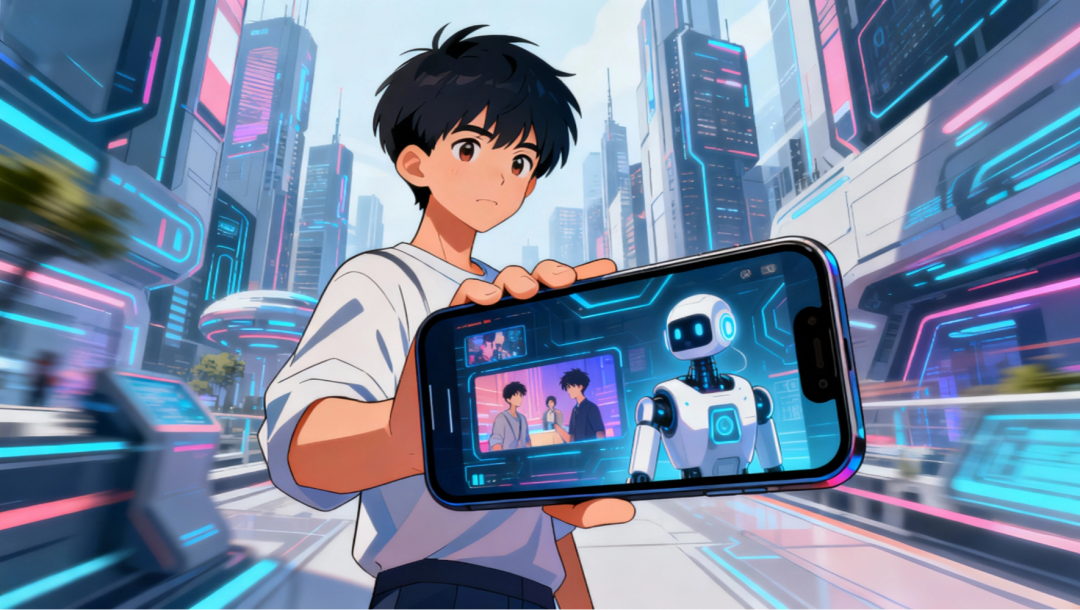
With the technological breakthroughs of generative AI models such as Sora and Luma, a productivity revolution sweeping through the animation and film industry is quietly unfolding. The traditional production model centered around physical sets like Hengdian is transitioning toward virtual production powered by clusters of graphics cards. Industry data shows that the cost per minute of producing AI-generated anime short films has plummeted from tens of thousands of yuan in traditional models to just a few hundred yuan, while the production cycle has been compressed from several months to weeks or even days. This disruptive leap in efficiency is reshaping the industry’s business logic and ecosystem.
Part 1: Efficiency Revolution Drives Business Model Innovation
The application of AI technology not only lowers the barrier to production but also fosters diversified monetization paths. Currently, AI anime has developed a three-tier business model:
Hybrid Monetization System: Building on the “pay-to-unlock” model, it integrates precise ad placements to maximize revenue. The low cost of experimentation allows producers to conduct large-scale A/B testing, dynamically optimizing payment triggers and content strategies.
New Paradigm for IP Incubation: AI anime is becoming a low-cost tool for IP validation. Producers can rapidly adapt web novel IPs into anime content for market testing. Works with strong data performance can be reverse-developed into novels, games, or traditional film and TV projects, forming a cross-media narrative ecosystem.
Platform Ecosystem Competition: Platforms like Douyin and Bilibili are actively building closed-loop ecosystems—from creation tools to content distribution—through traffic support, technical integration, and financial subsidies, accelerating user habit formation and creator retention.
Part 2: Structural Challenges Beneath the Prosperous Surface
Despite rapid development, the industry still faces four core risks:
Content Homogenization Crisis: Low barriers to entry have led to highly concentrated themes, with formulaic narratives such as post-apocalyptic survival and domineering CEO stories flooding the market, increasing the risk of user aesthetic fatigue.
Technical Experience Ceiling: Current AI video generation has significant shortcomings in character consistency, emotional expression, and cinematography, making it difficult to support complex narratives and often relegating content to the “fast-consumption” level.
Copyright and Ethical Dilemmas: Ambiguities in training data ownership, difficulties in defining infringement for generated content, and the lack of ethical standards for virtual personas pose dual legal and moral challenges for the industry.
Supply Chain Dependency Risks: Small and medium-sized producers are overly reliant on leading AI model providers, with hidden concerns over computing costs and the fragility of the technical supply chain that cannot be ignored.
Part 3: Future Outlook: From Tool Revolution to Ecosystem Evolution
The industry’s progression will exhibit characteristics across three stages:
Short Term (1–2 years): Competition will focus on optimizing production and distribution efficiency. The market will undergo rapid consolidation, with professional production studios and platform ecosystems taking initial shape.
Medium Term (3–5 years): As AI achieves breakthroughs in key technologies such as character consistency and emotional expression, the core of competition will shift from tool proficiency to narrative capability and IP operation. Native AI IPs with complete worldviews are expected to emerge, enabling diversified development into games, merchandise, and more.
Long-Term Vision: This may give rise to new formats such as “virtual talent management,” where AI-generated characters become digital assets with independent personas and fan economies. Combined with interactive technology, “Interactive Drama 2.0″—where users participate in plot construction—could become a reality, pioneering a new paradigm of immersive storytelling.
Conclusion: The Return to Value in the Age of Technological Empowerment
AI is equipping the anime industry with an efficiency “engine,” but the ultimate value of the industry still lies in emotional connection and meaning creation. The true winners of this transformation will not be the “prompt engineers” most skilled at using tools, but the “narrative architects” who best understand human nature and storytelling. A mature future AI anime ecosystem must find a balance between technological innovation, content quality, copyright norms, and industrial collaboration, driving the industry’s deep transition from a traffic-driven “fast-consumption model” to a value-driven “digital asset model.”
Future Development Pathways:
Path of Technological Integration: AI must deeply integrate with traditional animation techniques, preserving artistic warmth while enhancing efficiency, and overcoming technical challenges in emotional expression and artistic stylization.
Long-Term IP Operation: Establish a data-driven IP incubation system, using AI to rapidly validate market response and focus on original content with long-term development value.
Construction of Regulatory Frameworks: There is an urgent need to establish systems for copyright recognition, ethical review, and industry standards for AI-generated content to provide institutional safeguards for healthy industry development.
Human-Machine Collaboration Paradigm: Form a new division of labor where “AI handles efficiency enhancement, while humans focus on creative decision-making,” unleashing the imaginative potential of creators.
The ultimate goal of AI anime should not be to replace human creativity but to become a more powerful brush in the hands of creators—ensuring that every good story finds its audience.
熱門頭條新聞
- TOKYO GAME SHOW 2026 Marks Its 30th Anniversary with Record-Length Five-Day Run at Makuhari Messe; Complete Overview of Dates, Speakers, Exhibitors & On-Site Key Activities
- Hong Kong International AIGC Digital Creation Competition 2026
- Beyond Concept Verification: AIGC Film & Video Enters Commercial Realization Cycle in H2 2026
- It’s Time to Reap What You Sow (and Then Throw It!) – Planted! Launches 29th October 2026.
- Award-Winning Composer Cris Velasco and Milan Records Bring the Dark, Nordic Sound of Mistfall Hunter to Life
- ArcheAge S: Strait of Freedom Targets Q2 2027 Steam Launch
- “One City Embodies Three Kingdoms, Half-Step Into Jianghu” Launches in Shanghai — Kaiying Network’s Dual Chinese-Style Game IPs Cross Over With Urban Tourism Festival, Pioneering Game-Culture-Tourism Integration Model
- Registration Opens for NVIDIA China Developer Day 2026 — A Premier Off line Tech Gathering for AI Developers in Suzhou