The current situation of China’s digital twin cities
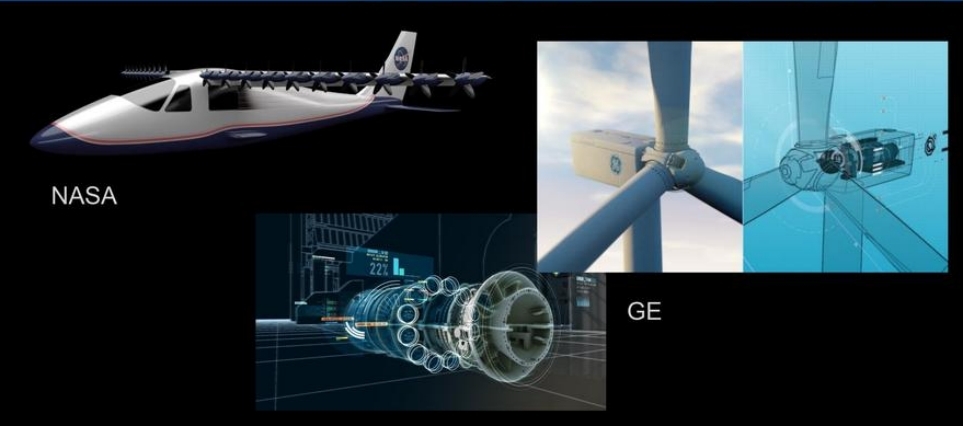
Over the past 20 years, the development of urban informatization in China has gone through three stages: from digital city, smart city to new smart city; urban informatization has also developed from digitization to network-based and intelligentization.
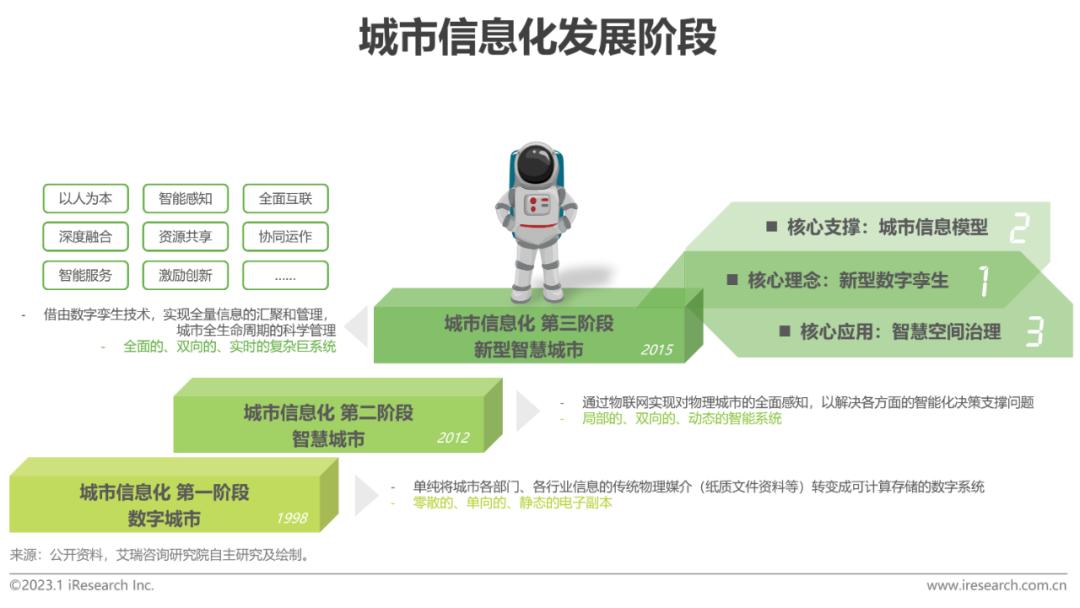
The concept of digital twinning originates from NASA, is widely used in the industry, and is rapidly becoming the focus of city operations and management by local governments. As digital twin technology improves and penetrates into industries, the objects for digital twinning expand from micro, capital-intensive products / equipment to macro, large-scale, complex urban spaces, and the digital twin city market presents both opportunities and challenges. The new smart city includes the digital twin city. The digital twin city is an integral part of the new smart city architecture and the current optimal solution. It is the advanced stage of digital city, smart city and even city informatization, and is the focus of the new urbanization architecture in the future.
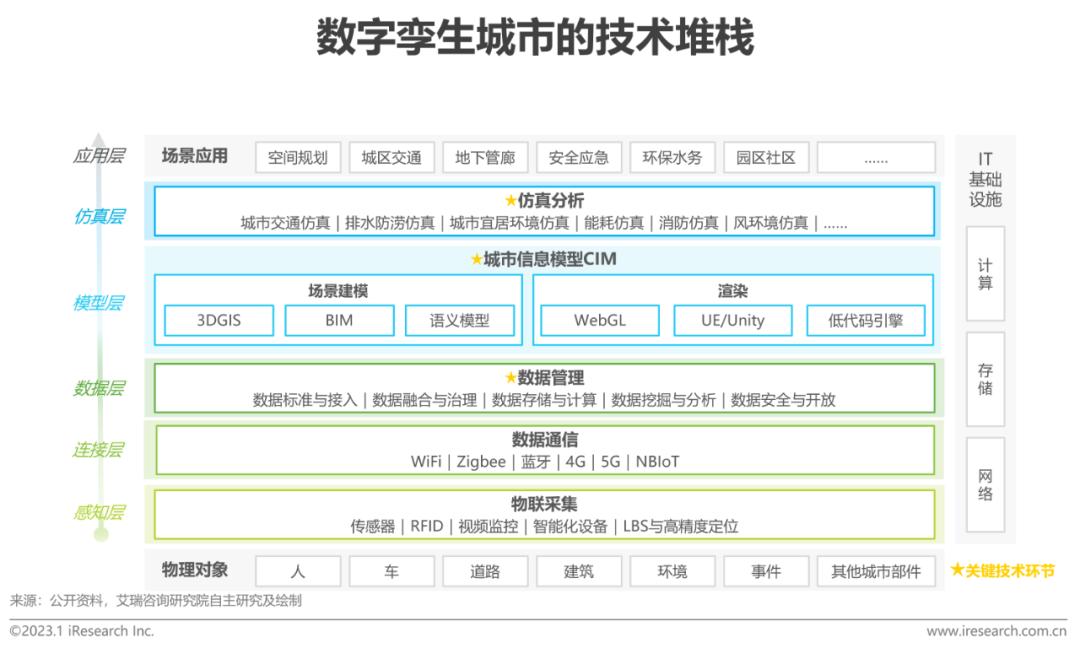
The digital twin city is not a singular technology, but a “mega technology” that combines the Internet of Things, big data, BIM, GIS, artificial intelligence and other cutting-edge technologies. Its technical complexity and difficulty of construction are self-evident, but at the same time, it has a certain historical accumulation and industrial foundation.
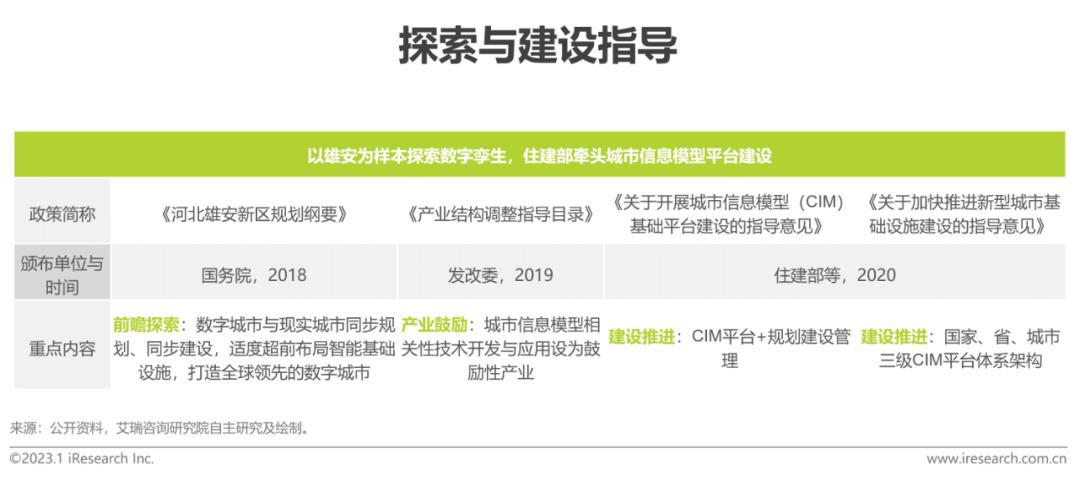
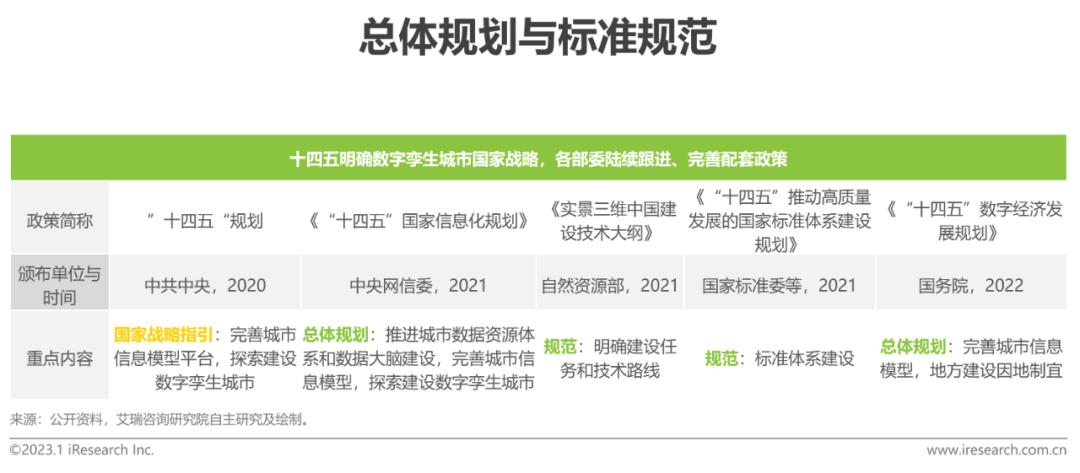
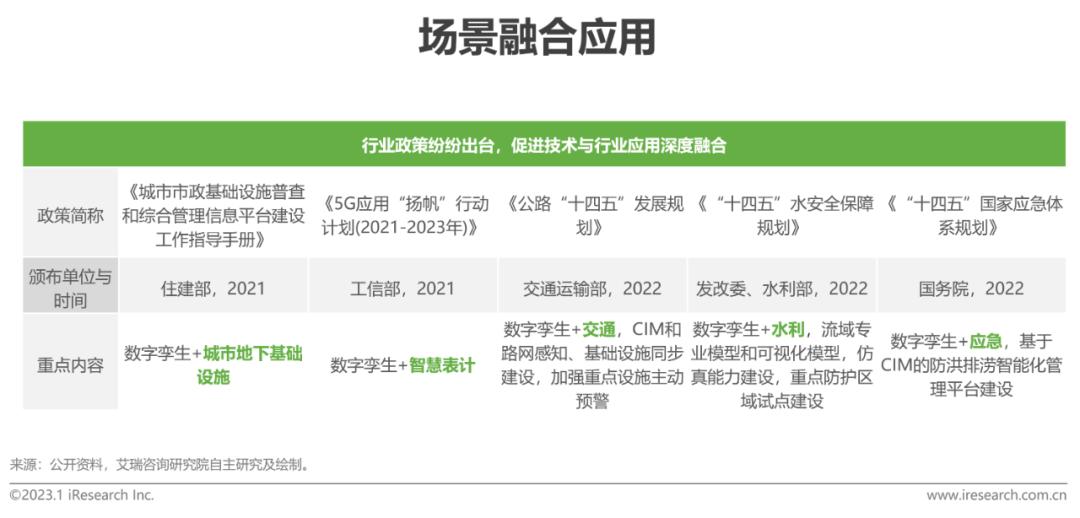
The Ministry of Housing and Urban-Rural Development focuses on promoting the construction of the CIM platform. The 14th Five-Year Plan triggers the frequent introduction of “industry +” policies to promote application and development, and for local policies to follow suit and implement said policies.
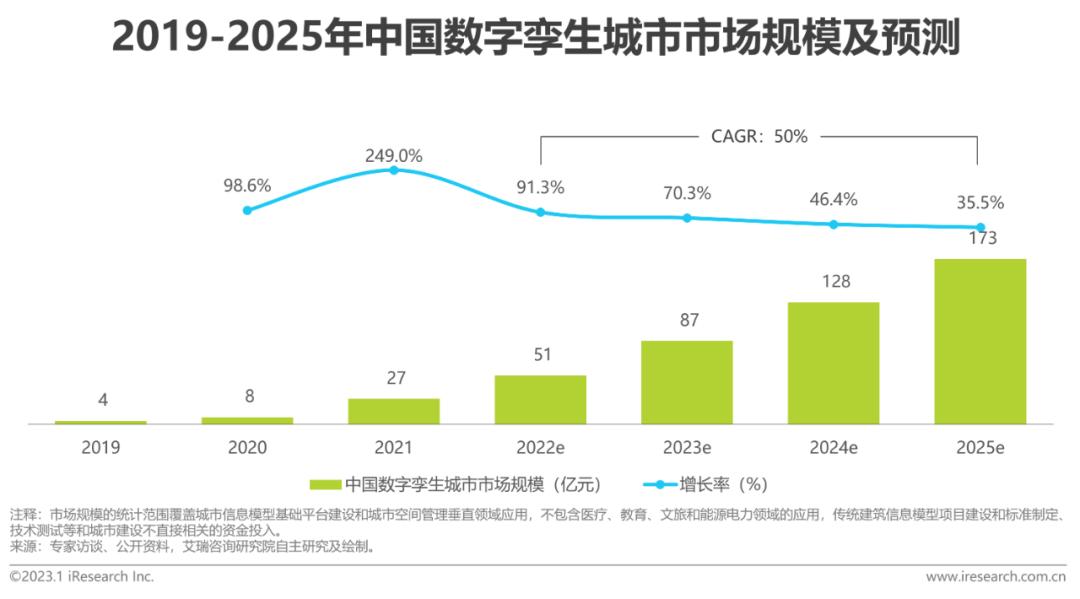
China’s digital twin city market size and forecast market size reached 5 billion yuan in 2022, with a compound annual growth rate of 50%. In 2022, the digital twin city market is expected to exceed 5 billion yuan. The main construction projects include the infrastructure of the city information model (CIM) platform and the G-end (government and institutions) market in areas such as transportation, underground space, security and emergency, environmental protection and water applications, and B-end market applications such as parks and residential communities. During the 14th Five-Year Plan period, the compound growth rate shall reach 50% in the next three years. The high growth expectation is due to three factors: first, the construction of CIM basic platforms in pilot cities and new urban areas have started in 2022, in which large areas are generally planned to be completed in three phases, and the construction is expected to accelerate under the promotion of the Ministry of Housing and Construction; second, the “small but beautiful” micro and local scenarios are implemented on a large scale as an important supplement, and the question of “what is the value of digital twin cities and whether they can solve practical problems” is verified through typical practical cases; third, China’s digital twin city is in its infancy, with a significant low base effect. With the continuous exploration of application scenarios, digital twin cities will achieve multiple rounds of explosive development and maintain high growth.
Hot News
- China Domestic Animation Summer Season 2026 Review: Box-office Boom for Theatrical Animation, Established Web Series Face Headwinds, AI Man-Dramas Explode for New Growth
- Tianji: Shadow of the Ancients, Coming 2027 to Multiple Global Platforms
- China’s Anime-Goods (“Guzi”) Economy 2026 Market Review
- Newzoo Forecasts Global Games Market to Hit $213.9 Billion by End-2026
- Opportunities Amid Transition: GamesMarket 2026 Industry-Leader Interview Maps Challenges, Resilience and Outlook for European Games Industry
- AI Man-Drama Enters “Licensed Operation” Era, Copyright Ownership Becomes Core for High-Quality Domestic Animation Development
- New European Animation Licensing Paradigm — Early-Stage Integration Fuels Long-Lived Animated Franchises
- Insight ’26 — Inaugural Post-Production & VFX Business Conference to Take Place in London