NetEase’s Ananta and The Future of Gacha
Source: https://www.anantagame.com/m
Source: NetEase
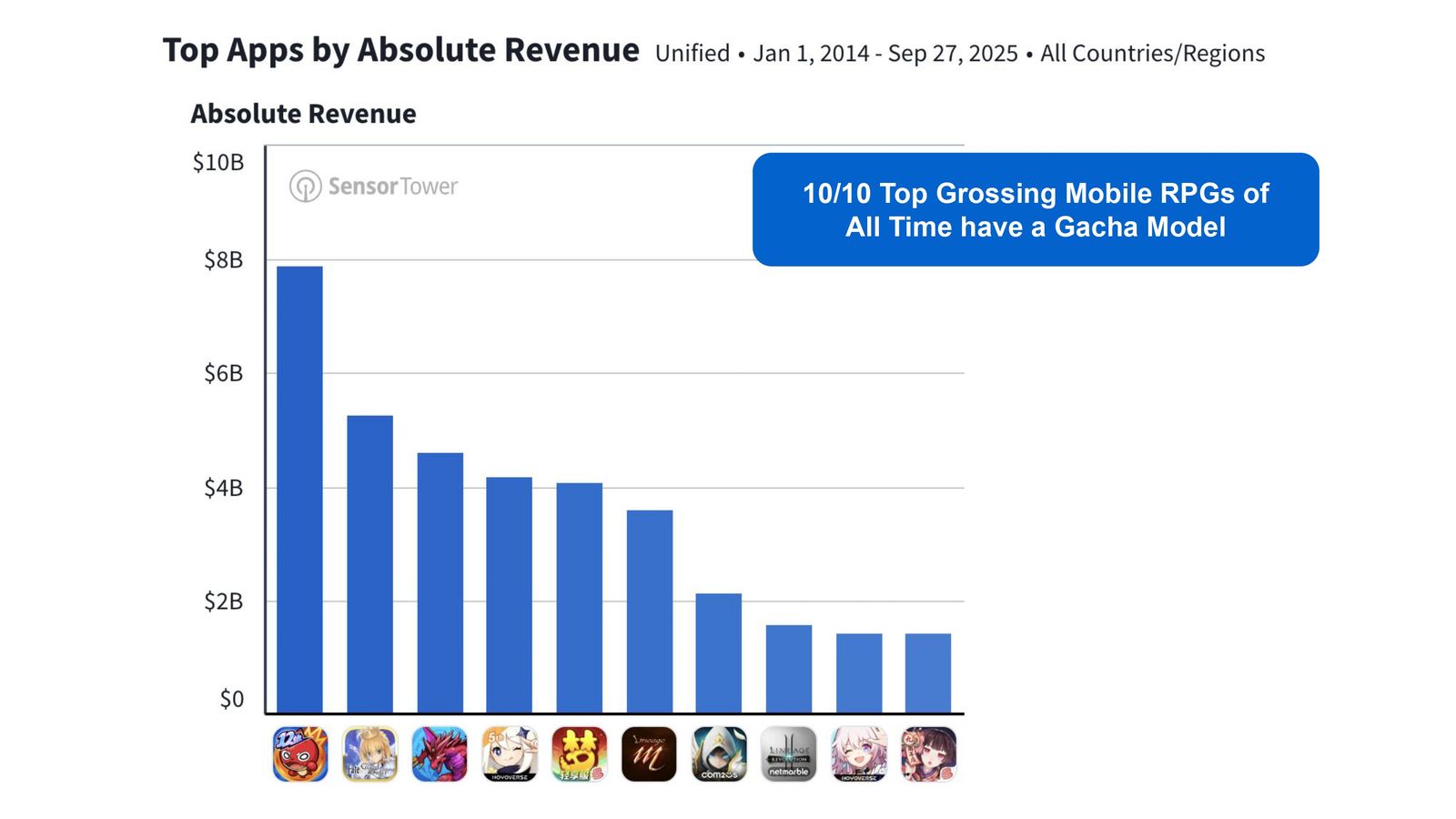
The modern mobile F2P landscape, particularly within the high-production action / open-world RPG genre, has been largely defined by a single, colossally successful monetization model: the gacha model. This system leverages powerful psychological drivers — the allure of chance, the desire for collection, and the fear of missing out — to generate billions in revenue. It has become the de facto financial engine for ambitious, anime-styled mobile F2P RPGs.
Source: https://app.sensortower.com/
Source: Sensor Tower, Naavik
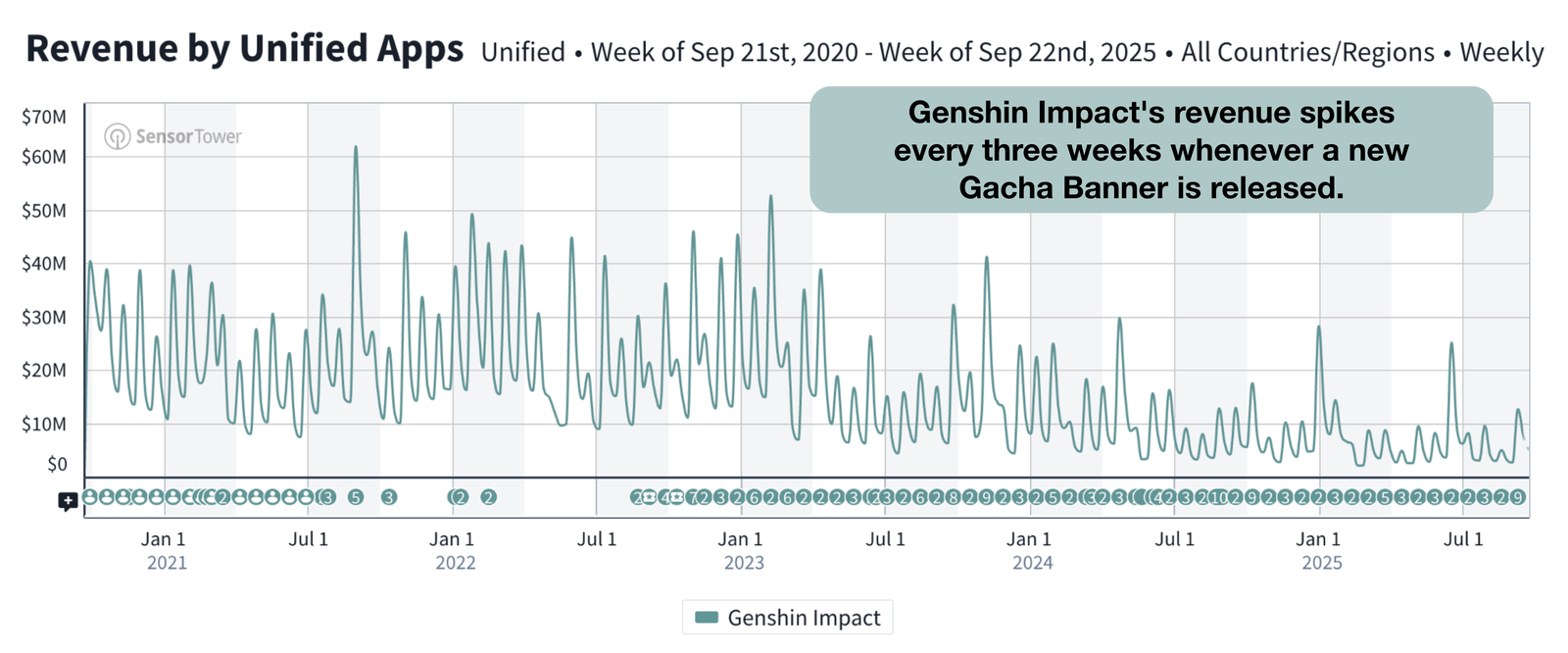
Games like Genshin Impact and Honkai: Star Rail have proven just how powerful this model can be — both surpassed $1B in revenue within their first year by relying on a near-perpetual monetization loop. These games continuously introduce new, powerful, and visually desirable characters that can only be obtained through randomized “pulls,” incentivizing both moderate spenders and high-value whales. While controversial, this approach has shown to be remarkably efficient.
Source: https://app.sensortower.com/
Source: Sensor Tower, Naavik
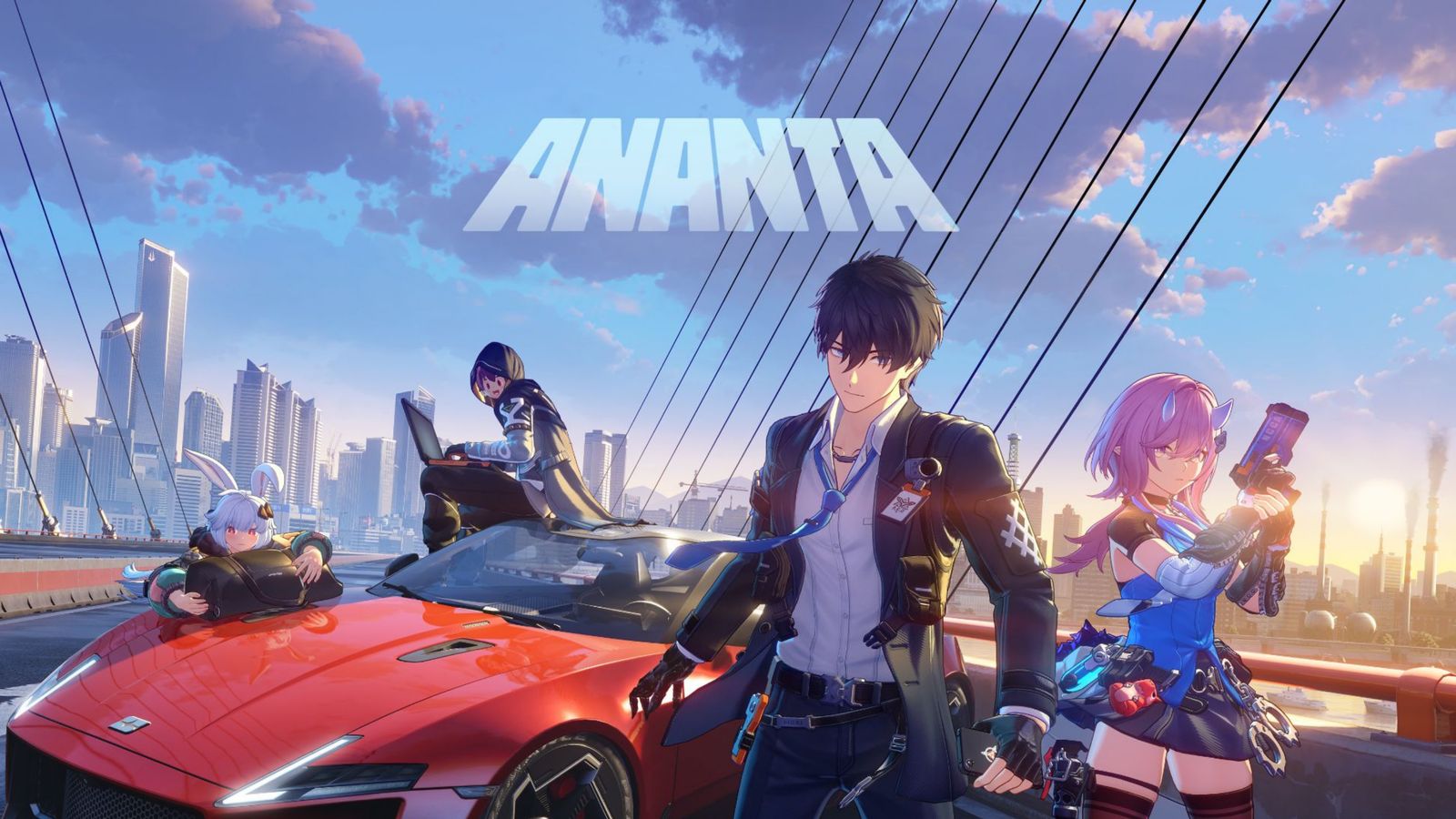
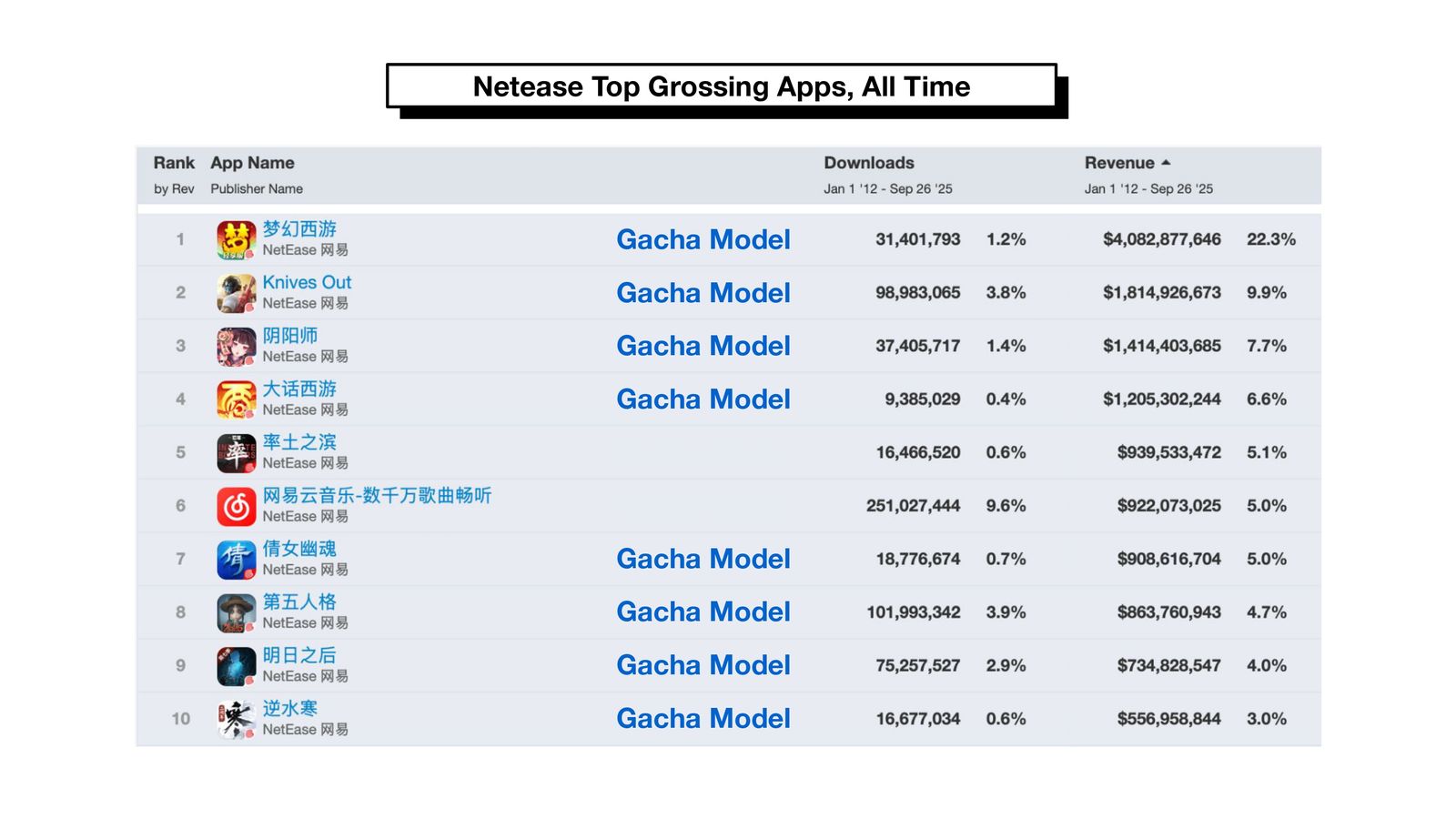
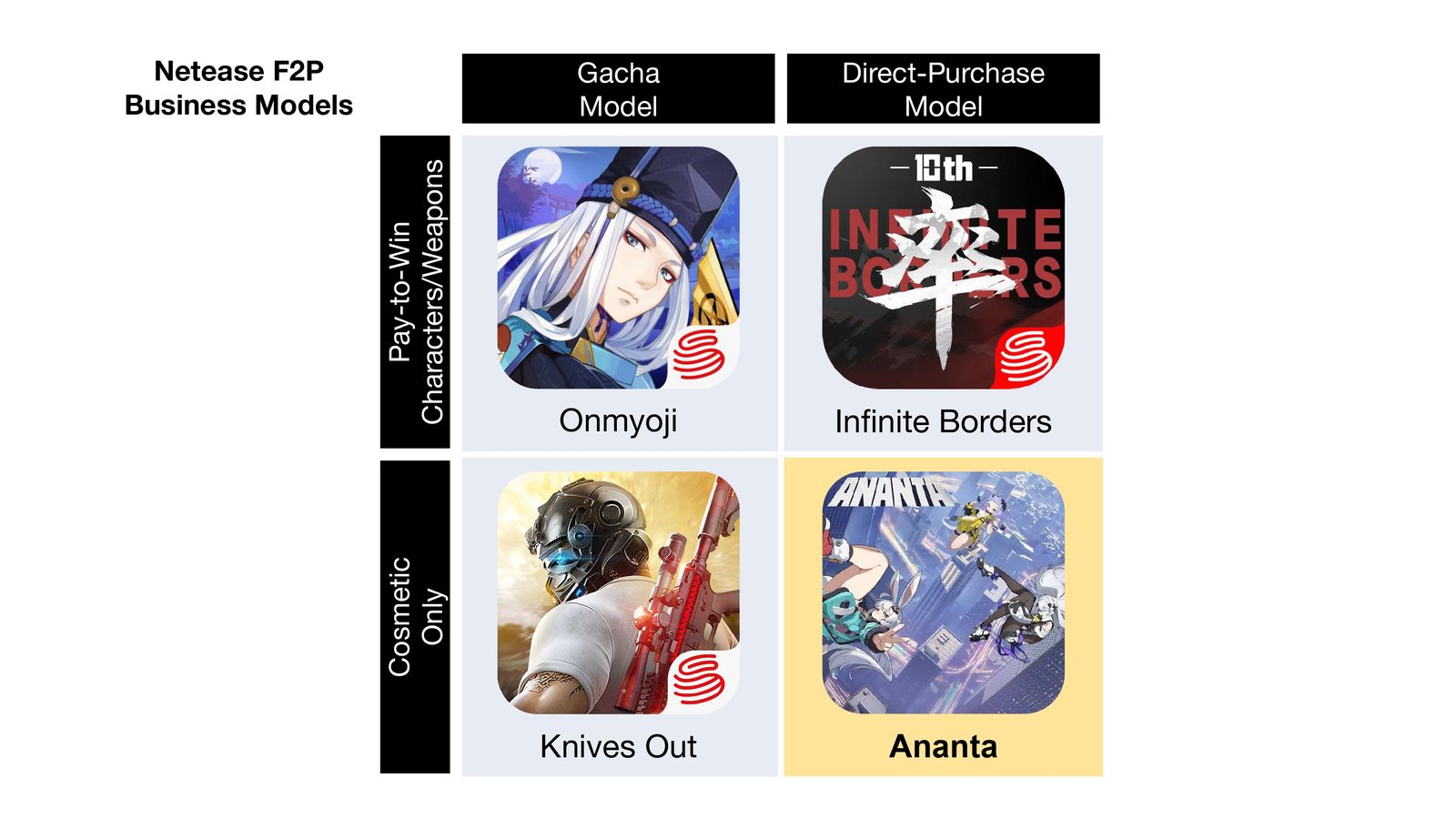
This established paradigm makes NetEase’s monetization strategy for its upcoming title Ananta, a AAA open-world action RPG (here’s a gameplay video), a move of profound significance and considerable risk. According to developer interviews and reports from the Tokyo Game Show, Ananta will deliberately avoid using a character gacha model. The primary paid items will be cosmetics (character skins, limited-time event costumes, home decorations, cars etc.), none of which will be wrapped in a cosmetic gacha either. Also note that Ananta’s development team is already 700 to 800 strong.
Given Ananta’s production value and scale, the game’s production and marketing budgets are likely on a similar scale to Genshin Impact’s initial $100M development cost and an ongoing annual budget of $200M. However, Genshin Impact justified that investment with the immense potential earnings of the gacha model. The stakes are clearly high for NetEase to consider deviating from a formula that they have proven to work across a majority of their portfolio.
Source: https://app.sensortower.com/
Source: Sensor Tower, Naavik
However, NetEase is not alone here. The developers of Duet Night Abyss, a similar high-budget upcoming title, recently announced in a livestream that they are removing the gacha model entirely — further supporting the idea that a strategic shift in mobile F2P RPG monetization may be underway in the East.
By removing this central pillar, NetEase is betting that an alternative monetization model can not only recoup its investment, but also compete with the financial performance of its gacha-driven rivals. However, NetEase’s gamble doesn’t seem to be a reckless act, but rather a calculated response to a few different factors (covered next). If successful, it could fundamentally reshape the monetization blueprint for mobile F2P RPGs coming from the East.
Source: https://naavik.co/
Source: Naavik
Why Abandon a Winning Formula?
NetEase’s motivation for this pivot is likely driven by a confluence of market forces, regulatory headwinds, consumer trends, and forward-looking business strategy.
#1 — Market Saturation by Evolving Consumer Trends: The “Genshin-killer” has become a meme in the gaming community, symbolizing the flood of cross-platform RPGs attempting to replicate miHoYo’s success by cloning its core mechanics, production value, gameplay scale, and business model. This has led to a crowded and fiercely competitive market. For a new title to stand out, simply being a “Genshin-like” game is probably no longer enough. Further, a level of monetization engine predictability (namely, character gachas) has set in in these games’ core markets and players generally tend to have a love/hate relationship with the same. This is further supported by empirical evidence, as seen here and here.
By explicitly rejecting the gacha model, Ananta immediately generates a powerful point of differentiation. However, whether that translates into business success remains to be seen.
#2 — Regulatory Headwinds: China’s proposed gaming regulations (from 2023) heavily focused on reining in the excesses of gacha and loot box monetization. For example, the draft rules sought to directly curb spending by establishing a “reasonable pull limit” on gacha mechanics, preventing players from engaging in endless attempts to get an item; requiring developers to offer a direct purchase option for items found in loot boxes; and specifically prohibiting minors from purchasing loot boxes altogether.
While those specific regulations have not yet gone into effect, the draft has not yet been withdrawn and Chinese regulators traditionally regulate via slow iteration. Major laws (such as real-name verification) often start as harsh proposals, get softened after backlash, then roll out gradually.
More globally, there is growing regulation around gambling mechanics in video games (see the state of loot box regulation in various countries here), and gacha often skirts the legal definitions of gambling in many regions. The public perception is also shifting, as younger audiences and their parents are more aware of the potential for addiction.
By moving to a more transparent model, such as a direct-purchase cosmetics store and a battle pass system (à la Fortnite or Valorant), NetEase seems to be future-proofing its product. However, and again, whether that translates into business success remains to be seen.
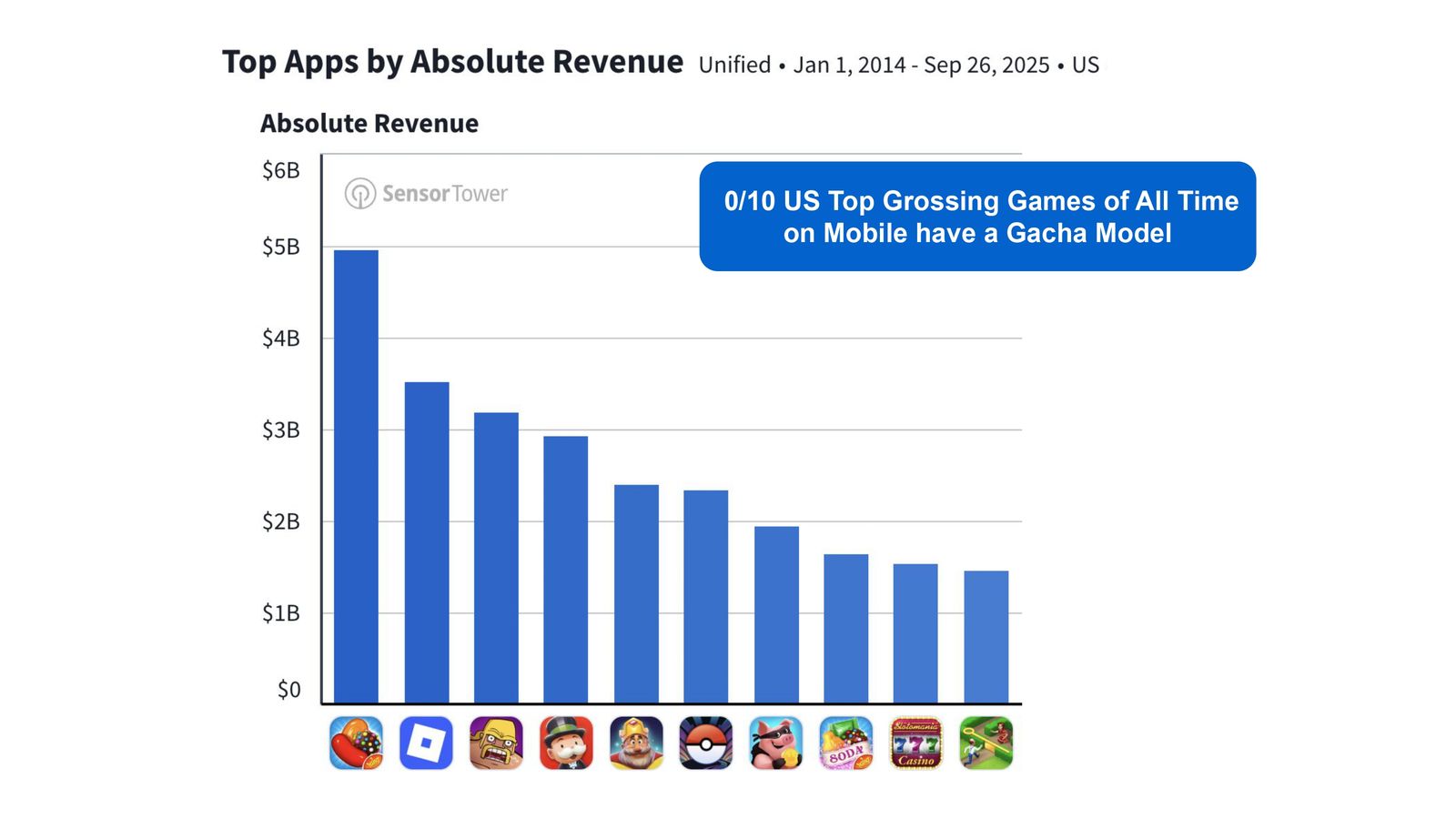
#3 — Capturing a Broader Audience (aka the West): While the gacha model is highly normalized in many parts of Asia, it has simply not gained massive traction for a large portion of the Western mobile F2P player base. Further, some games monetized purely through cosmetics and battle passes have proven it can generate billions, such as Fortnite. However, not only are these instances rare, but they require massive user scale (a level which performance marketing budgets alone cannot buy) and a multiplayer DNA (Ananta may not have this at launch).
Source: https://app.sensortower.com/
Source: Sensor Tower, Naavik
Maybe NetEase’s calculus is that the revenue lost from not targeting “whales” with a gacha system can be more than compensated for by attracting a vastly larger, highly diverse, and more globally distributed player base that engages in smaller, more consistent non-gacha transactions over a longer period. Maybe the calculus also includes the rise of anime culture in the West. And maybe Ananta will also be seen as an alternative to GTA by the masses. However, the more maybes, the more risk.
Will it Work?
Success is plausible, but far from guaranteed. In our opinion, the following three points will need to be true for this project to reach massive revenue scale:
#1 — Making Cosmetics as Desirable as Characters
Source: https://naavik.co/
Source: Naavik
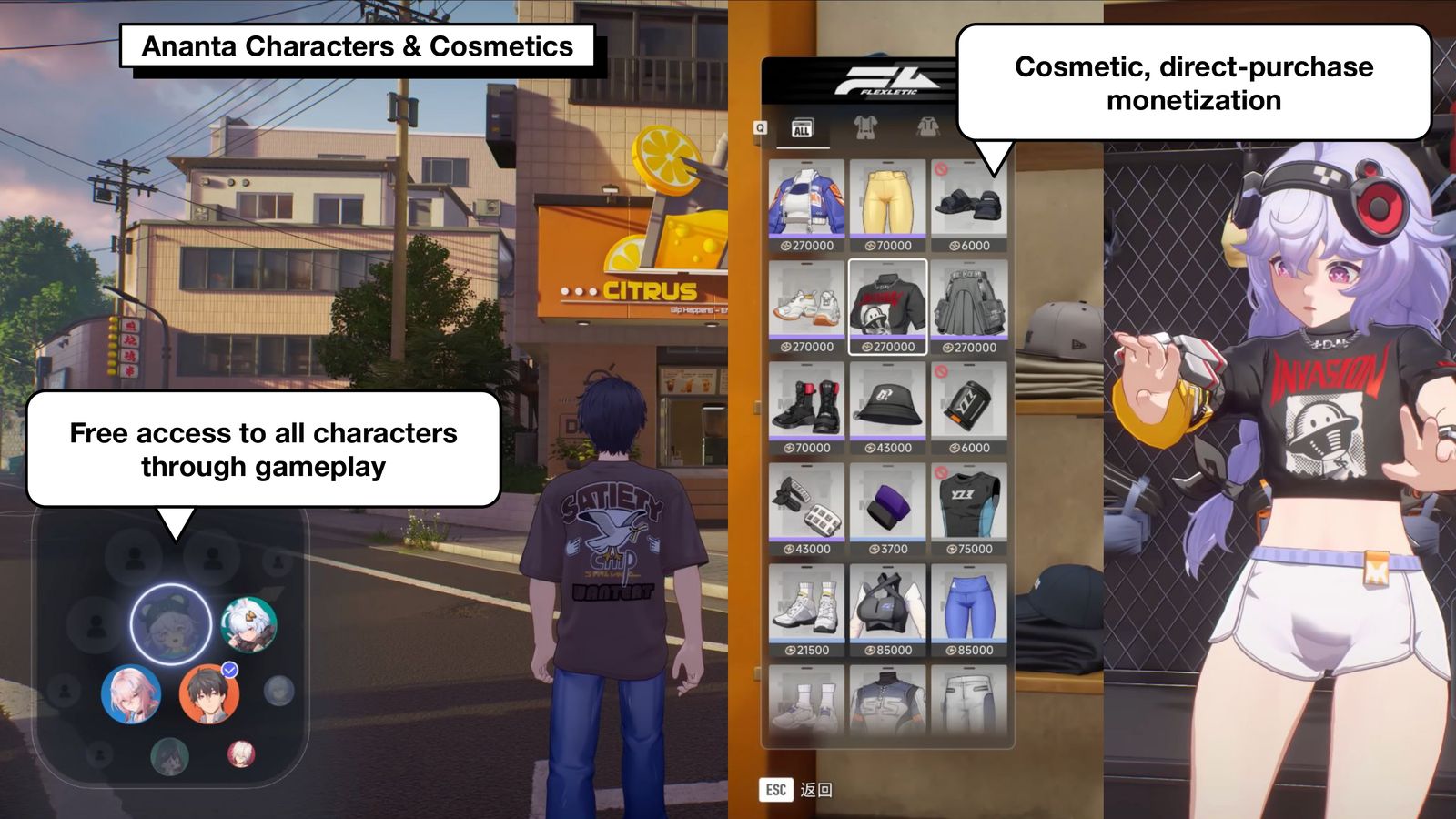
For Ananta to compete with the likes of Genshin Impact (let’s not get into competing with GTA just yet), it will likely need to replicate the revenue trajectory generated by new character releases in gacha games. These releases are events, driving player spending through a powerful combination of gameplay utility (new abilities) and character fantasy.
Since cosmetics rarely have any gameplay utility, Ananta’s strategy aims to capture the fantasy component by making cosmetics incredibly desirable. The approach appears to hinge on a crucial psychological shift: moving player motivation from external validation (showing one’s cosmetics off to other players) to internal satisfaction. This is proven to work in PC/Console AAA single-player focused titles, where players stylise armor or weapons to perfectly curate their hero, as a form of deep personal expression and role-playing. More importantly, such games are usually premium purchases (upfront cost), wherein the developer investment recoup mechanics work very differently to that of mobile F2P titles.
That said, Path of Exile being F2P and monetizing mostly through cosmetics does counterposition strongly — but such examples are very rare. And in Mobile F2P, this approach is largely uncharted territory. While we all love taking the road less trodden, it remains highly questionable whether revenue from self-expression can ever match the potent, dopamine-driven revenue peaks of character gacha banners in a mobile F2P setting.
#2 — Large-Scale Adoption to Justify a Cosmetics-Only Economy
Source: https://www.fortnite.com/item-shop?lang=en-US#limitedtime
Source: Fortnite
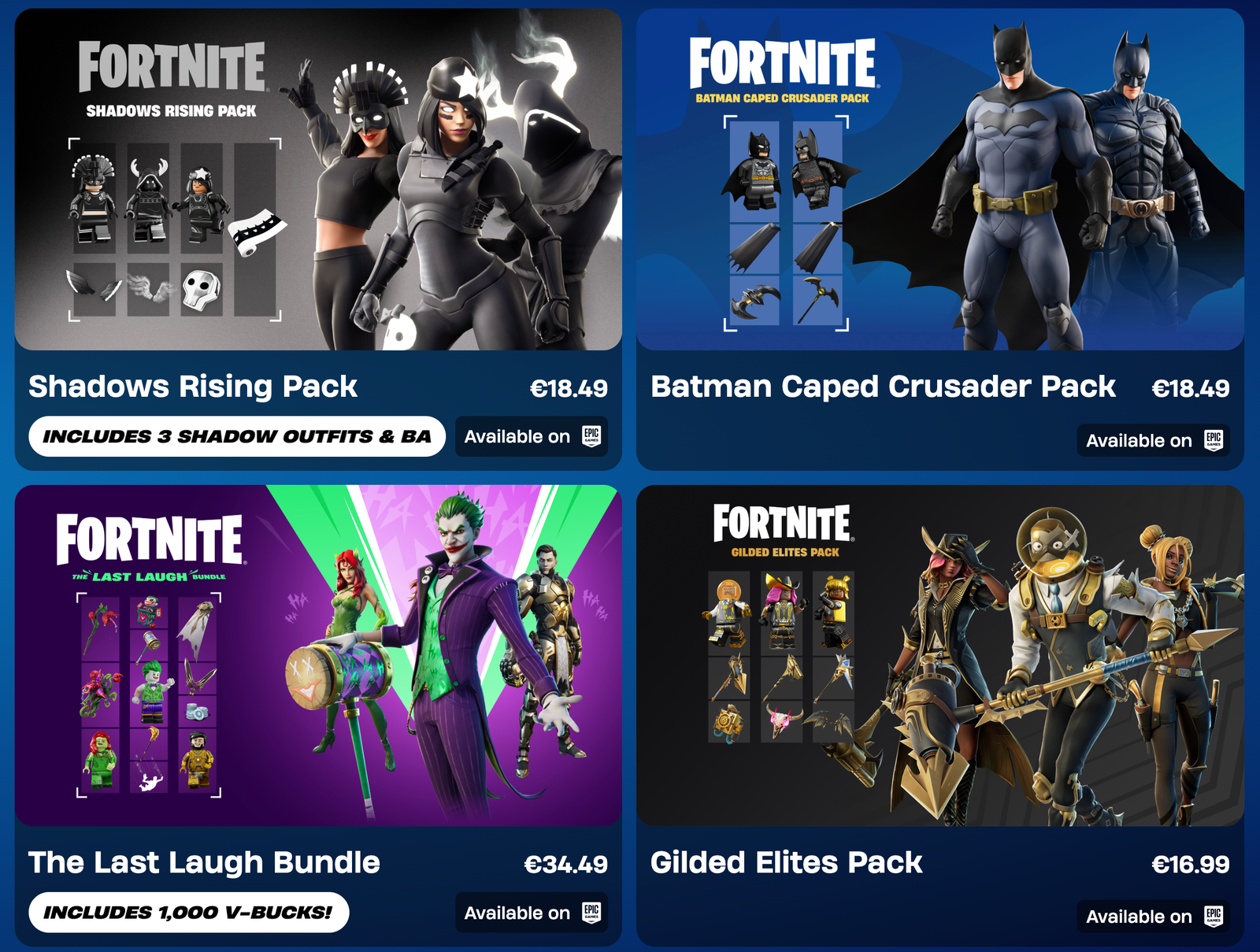
A cosmetics-only economy’s success is usually directly proportional to the size of the active player base, a model exemplified by giants like Fortnite, where a small percentage of a massive audience spending on cosmetics generates enormous revenue. This presents a major hurdle, as traditionally, even wildly successful Asian RPGs do not achieve the colossal player counts of Western breakout hits.
With Ananta, Netease is essentially betting it can massively multiply the typical Asian market adoption for this genre. However, we are skeptical. To help illustrate, during Genshin Impact’s launch months (Sep – Dec, 2020), it garnered ~10.3M downloads in Japan, according to Sensor Tower. Assuming Ananta’s untapped Japanese audience exists in Sensor Tower’s “Action and Strategy” category, of which Action RPGs are a part of, Genshin Impact generated ~20% of the category’s total download volume during the same period. And that’s just one new game taking a one-fifth of the category’s player base.
While the jury is out on whether the game can gain massive, Fortnite-level traction in the West, the question then becomes whether there is a vast, untapped audience of Asian players who will flood into Ananta simply because it lacks a gacha system. This is a significant and unproven assumption.
#3 — Robust Multiplayer Mode, the Endgame for a Cosmetics-Only Economy

Source: https://play.google.com/store/apps/details?id=com.supercell.brawlstars&hl=en
Source: Brawl Stars
Even with a focus on internal satisfaction, a cosmetics-focussed economy thrives when players have a stage to display their uniqueness. A robust multiplayer mode provides this essential social endgame, creating a powerful feedback loop of external validation that drives sustained cosmetic sales long after the main story is complete.
This makes NetEase’s current public stance on multiplayer particularly concerning. With developers stating they are merely “considering it”, a polished multiplayer experience is likely a long way off. Considering that a game’s launch window is its moment of peak hype and player attention, attempting to introduce multiplayer a year (or more) later could prove to be a critical strategic error. By then, the initial momentum is gone, and a portion of the player base has already moved on.
With all the above said, we’re actually excited by the prospect of being proven wrong. If Ananta — and perhaps Duet Night Abyss — succeeds, the impact could potentially be seismic. It would serve as a strong proof point that massive financial success in the AAA live-service RPG space is not inextricably linked to gacha monetization. Not only would this represent a major turning point for Asian developers, but it would create a major crack in the gacha-based monetisation stronghold. And consumers will likely be better off in the long-run. From that perspective and in our opinion, NetEase is not just launching a new Genshin-like with no gacha; it is taking a bet that could reshape the future of cross-platform F2P monetisation. We hope NetEase win’s that bet!
Surcease: Harshal Karvande, the writer, Naavik Contributor & Principal Designer at Rovio
熱門頭條新聞
- Hand-Painted Cozy Adventure Seina: a Tale of Spirits Launches Free Steam Demo
- SPRAWL zero brings early 2000s nostalgia to PC and consoles this September
- Oops! You’re the Hero! steals its way onto PC September 15, 2026
- Bullet Heaven Cloudbreaker to Take Flight on September 15th — Will You Survive the Skies?
- Wuthering Waves Version 3.6 Lamplight in Mirage, Swords Resolve in Heart Out Now
- Rovio Revenue Stabilises Following USD 200M Impairment and Internal Restructuring;
- Annual Report of the German Games Industry 2026 published
- Woodland fantasy RPG Songs of Glimmerwick comes to Steam on September 30th!