Chinese Animation Celebrates a Banner Year: “Langlangshan Little Monster” and “Ne Zha 2” Break into Annual Top 5, Signaling Rise of Domestic Anime
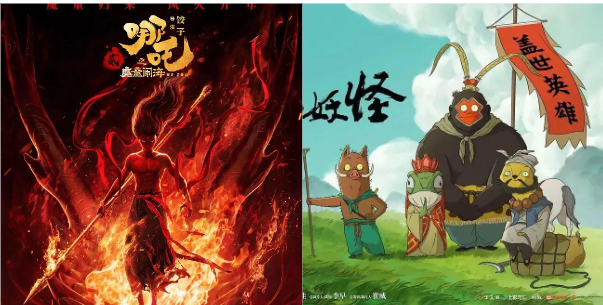
Marking the 120th anniversary of Chinese cinema, Chinese animated films have captured the market spotlight with outstanding performance. The national annual box office has so far surpassed 45.9 billion yuan, with both Langlangshan Little Monster and Ne Zha: The Devil Boy Comes of Age (hereinafter referred to as Ne Zha 2) forcefully breaking into the year’s top five, showcasing the growing market appeal and cultural influence of domestic animation.
Record-Breaking Phenomenon: Emotional Resonance and Eastern Aesthetics Win Over Audiences
As the year’s biggest dark horse in animation, Langlangshan Little Monster claimed the title of China’s highest-grossing 2D animated film ever with 1.717 billion yuan in box office revenue, attracting over 47 million viewers. The film, told from the perspective of an underdog little monster, wraps profound reflections on “the ordinary versus dreams” within a humorous and healing narrative, earning widespread acclaim for its delicate emotional expression and unique Eastern aesthetic.
Professor Liu Haibo from the Shanghai Film Academy, Shanghai University, noted that the film’s core message of “daring to embark on a journey to find self-worth” accurately resonates with the spiritual aspirations of contemporary youth. He also highlighted that the creative team chose a more cost-effective and traditionally evocative 2D format over blindly following the mainstream trend of 3D animation, achieving a balance between art and commerce.
Revitalizing the ‘Chinese Animation School’: ‘Technology Serving Aesthetics’ Becomes Consensus
The success of Langlangshan Little Monster serves as a vivid example of the “Chinese Animation School,” represented by the Shanghai Animation Film Studio, being revitalized in the new era. The philosophy of “heritage + innovation” connects past and present, from the groundbreaking The Proud General that pioneered a “national style,” to Langlangshan Little Monster’s creative fusion of traditional ink-wash artistry with modern cinematic language.
The studio continues to push the contemporary evolution of this artistic system. Its new work, Ran Bi Wa, involved completing over 50,000 drawings on Xuan paper, integrating ink-wash, paper-cutting, and stop-motion animation. Simultaneously, digital restoration projects like the 4K Memorial Edition of Legend of the Sealed Book are breathing new life into classic IPs. Chang Guangxi, former head of Shanghai Animation Film Studio, emphasized, “Following a national path requires advocating for innovation—neither imitating others nor repeating ourselves.”
Evolving Industry Ecosystem: IP Operations Extend Emotional Engagement
Building on a “content is king” foundation, the industry ecosystem and IP operational capabilities of Chinese animation are also strengthening. Wang Juan, Secretary of the Party Committee and Chairman of Shanghai Film Group, pointed out that exceptional films should transcend the temporary cinema experience to create lasting emotional connections. Langlangshan Little Monster has developed over 800 types of derivative products, from plush toys to picture books, allowing the audience’s emotional attachment to continue long after leaving the theater.
Experts at a related seminar concluded that Chinese animation should adhere to a “technology serving aesthetics” creative approach, rooted in China’s excellent traditional culture, moving people with authenticity and connecting them through emotion. Meanwhile, enhancing the economic vitality of film and fostering a new ecosystem will secure fresh space for industrial development.
Overseas Expansion Accelerates: Cultural Resonance Transcends Borders
The journey of Chinese animation now extends far beyond domestic shores. To date, Ne Zha 2 has grossed approximately $2.2 billion worldwide, ranking it as the highest-grossing animated film in global box office history. Its success has spurred more domestic animations to proactively “go global.”
Peng Kan, Lecturer at the School of Art and Communication, Beijing Normal University, stated that the reach of Chinese animation exports is rapidly expanding across countries and regions. Ne Zha 2’s release in 16 Latin American countries marked an “unprecedented breakthrough.” Successful case studies demonstrate that the “universality of the cultural core” is key. The overseas release of Langlangshan Little Monster retained the emotional theme of “the little guy’s growth,” only adapting some folk terminology, enabling international audiences to naturally appreciate Chinese cultural charm through empathy.
Furthermore, the “global co-creation” model is maturing. For its North American release, Ne Zha 2 not only enlisted local voice actors but also added English annotations for cultural elements like the “Universe Ring,” employing a strategy of “localized operation + globalized dissemination” to bring Chinese stories closer to audiences worldwide.
With works like Langlangshan Little Monster and Ne Zha 2 achieving comprehensive breakthroughs commercially, artistically, and in cultural exchange, Chinese animation is ushering in a vibrant golden age, powered by firm cultural confidence and innovative industrial practices.
熱門頭條新聞
- Registration Opens for NVIDIA China Developer Day 2026 — A Premier Off line Tech Gathering for AI Developers in Suzhou
- Giving Back To The Industry: Nova Games Foundation Officially Launches To Empower Next Generation Game Creators
- Cozy Narrative-Driven Adventure Cat Secretary Launches on November 4th!
- Overwatch Rush Begins Soft-Launch in Southeast Asia, Blizzard Explores New Global Path for IP based Mobile Games
- GungHo to Shut Down Disney Pixel RPG on September 30, 2026
- Decorado: Alberto Vázquez on the Journey from Animated Short-film to Feature-length Animation
- CICF×AGF Guangzhou Anime-Game Festival: Greater Bay Area ACG Grand Event Lights Up National-Day Holiday
- Merge Mobile Game Sector Outlook 2026: Merge-2 Drives Robust Growth Amid Opportunities & Challenges