China’s Anime-Goods (“Guzi”) Economy 2026 Market Review
China’s Anime–Goods (“Guzi”) Economy 2026 Market Review: Growing Scale Amid Structural Differentiation, Entering High–Quality Development Phase
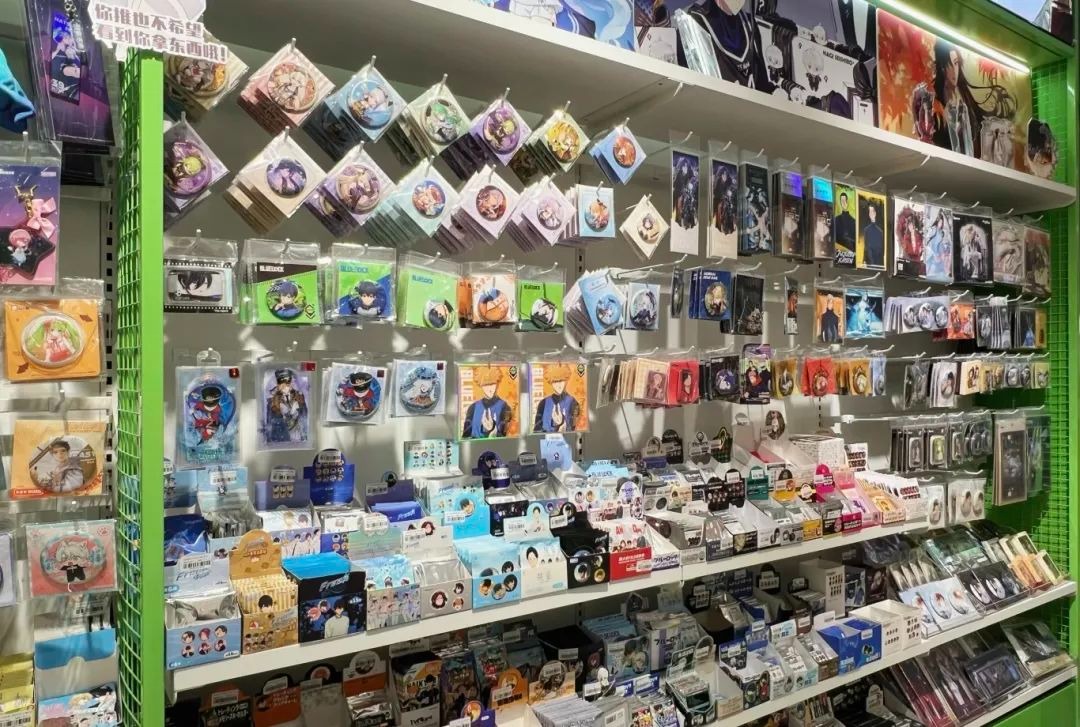
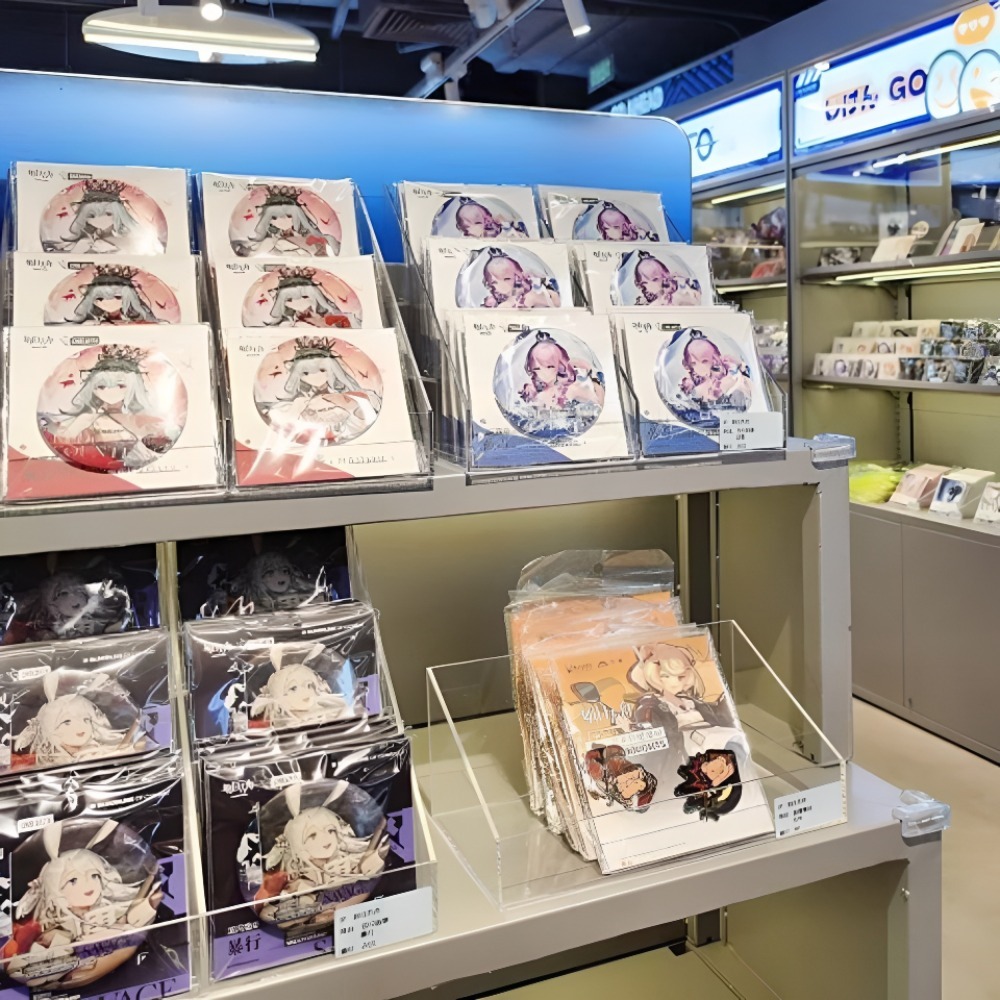
“Guzi”, phonetically derived from English “goods”, collectively refers to physical merchandise derived from animation, web-novel and video-game IP, including badges, acrylic stands, shikishi art boards, trading cards, figures, plush toys and collectibles; the consumer fandom calls collecting these items “eating Guzi”. According to iiMedia Research and other industry analysts, China’s Guzi economy is projected to reach RMB 2.2–2.4 trillion in 2026. While total market size keeps expanding, the sector has moved past the 2024-2025 phase of disordered rapid expansion and entered a new era defined by simultaneous volume growth and structural market differentiation. The industry sees two contrasting realities: overall market expansion paired with a wave of offline-store closures. Competition has shifted from simple shelf-based resale toward end-to-end IP operation, immersive experiential design and integrated supply-chain capabilities. This press release outlines prevailing market conditions, core pain-points and medium-to-long-term development outlooks for 2026 and beyond.
I. Current Market Landscape of China’s Guzi Economy in 2026
1. Market scale: decelerating growth with expanding absolute market size
The domestic Guzi market reached RMB 1.689 trillion in 2024, with a 40.63% year-on-year growth. In 2025, market size rose to RMB 2.021 trillion, while YoY growth moderated to roughly 20%. Forecasters expect the 2026 full-year market to hit RMB 2.2-2.4 trillion, and the market could surpass RMB 3.0 trillion by 2029.
Slower growth does not equate to vanishing demand. Generation-Z and post-05 youth remain the core consumer demographic. Consumption is driven by emotional identification with fictional characters, community belonging and collecting culture. Nevertheless, consumer behaviour has grown more rational. Speculative financial-style resale mania in second-hand markets has cooled; previously sky-rocketed prices for limited-edition badges have retreated, and consumers treat Guzi primarily as emotional cultural goods rather than speculative financial assets.
2. Structural bifurcation: store closures co–exist with high–quality supply, accelerated market consolidation
Polarised performance across the ecosystem represents the most notable industry feature in 2026- Downsizing & market shake–out: At least 155 Guzi retail stores closed or planned closure in H1 2025. Through 2026, store-closure rates in some cities have doubled year-over-year. Many independent small merchants and undifferentiated chain retailers face heavy pressure from inventory backlogs, homogeneous SKUs, high rental costs and unstable supply sources. Industry surveys indicate roughly 14% of newly-opened Guzi shops in 2025 failed to survive for 12 months. Pure resale-oriented stores without exclusive IP resources are facing shrinking survival room- Continued expansion among top–tier players: Even amid widespread small-business closures, capital-backed platforms and IP owners keep investing. ReadGoods recorded merchandise GMV exceeding RMB 1.1 billion in 2025, doubling its 2024 revenue. Top Toy secured large-scale financing, while Douyin made strategic investments in Guzi-focused consumer brands. A total of 1,292 new Guzi-related retail outlets opened nationwide in 2025. Capital and resources are concentrating toward leading enterprises owning exclusive IP rights, in-house product-development capacity and experiential-operation know-how.
3. Geographic landscape: core consumption hubs take shape, commercial districts integrate anime–culture formats
Shanghai, Beijing, Guangzhou, Shenzhen and Chengdu form China’s five major “Guzi consumption hubs”. In Chengdu, events such as ComiDay and Worldline Animation Expo support the local fandom ecosystem; commercial complexes including Tianfu Red Mall, K88 Go-Dimension and Jinzhan Cultural Plaza have rebuilt their tenant mix to incorporate anime-culture offerings, combining Guzi retail, pop-up exhibitions, IP events and fan meet-ups, becoming well-known case-studies for revitalising older downtown shopping districts. Similar transformations can be observed at Bailian ZX Creative Field in Shanghai and Wangfujing Joy Center in Beijing. Guzi merchandise is evolving beyond standalone shop business and becoming integral content for urban commercial spaces. Demand in tier-2 and tier-3 cities is gradually rising, yet constrained by IP supply chains and local fan communities, growth lags far behind major metropolises.
4. Supply–side shift: domestic–origin IP merchandise (“Chinese Guzi”) gains share, reshaping legacy Japan–IP–dominated market
Historically, China’s Guzi market heavily depended on imported Japanese anime IP licences. During 2025-2026, merchandise built upon domestic web–novel, animation and game IP has rapidly expanded its market footprint. Xianyu marketplace data shows domestic–origin Guzi transaction volume reached 1.2 times that of Japanese–imported equivalents in Q1 2025.
Case in point: ReadGoods develops full-category merchandise spanning trading cards, precious-metal commemorative collectibles, plush dolls and home-living goods for flagship IPs such as The King’s Avatar and Lord of Mysteries. Its business model integrates offline pop-up events, itasha wrapped vehicles and nation-wide character-mascot roadshows, building a closed-loop system covering original content, physical products, offline experiences and fan communities. Domestic IP benefits from native cultural resonance, higher licensing efficiency and flexible collaboration with local cultural-tourism projects. However, many smaller domestic rights-holders still treat merchandise as one-off post-launch monetisation rather than embedding derivatives into long-term IP lifecycle planning, leading to short-lived product cycles once IP hype fades.
5. Consumption–scene upgrade: from pure retail to multi–dimensional omnichannel ecosystem
Early-stage Guzi consumption centred on e-commerce and physical-store product purchasing. By 2026, the consumer journey has evolved into a multi–layered ecosystem combining online e–commerce, offline retail, IP pop–up stores, anime conventions, cultural–tourism tie–ins and co–branded F&B experiences.
Successful IP projects no longer only sell physical collectibles; they deliver immersive fan experiences: IP-themed cafés, stamp-collection challenge activities, character mascot roadshows and life-size IP exhibitions. Offline events generate UGC social content that in turn drives merchandise sales, forming self-reinforcing business loops. Conventional shelf-only retail stores lose competitiveness. The capability to deliver exclusive IP content and build fan communities becomes a critical survival metric for retail operators.
6. Early–stage overseas expansion: Chinese–origin Guzi explores international markets
Leading domestic IP-merchandise enterprises have begun overseas market exploration, prioritising Southeast-Asia as the first target region for physical merchandise exports. Cross-border Guzi commerce is still in its infancy. Key obstacles include international IP-licensing compliance, localised aesthetic adaptation, complex cross-border supply-chain construction and overseas channel development. Nevertheless, rising popularity of Chinese web-novels and animation across Southeast-Asia makes Guzi exports a promising new vector for China’s cultural trade.
7. Policy environment: local governments introduce supportive policies, industry moves toward formalised governance
Multiple regional authorities including Beijing, Shenzhen, Sichuan and Shanghai have incorporated anime-derivative / Guzi-economy initiatives into official policy frameworks. Sichuan province became the first provincial-level administration to explicitly reference the Guzi economy in service-sector policy documents. Beijing Dongcheng District offers subsidies up to RMB 3 million for eligible IP-derivative development projects. Shenzhen has written Guzi-industry development into government work reports. Policy measures encourage original-IP creation, immersive-scene construction and cultural-trade exports. Parallel with incentives, the industry faces ongoing governance challenges around copyright protection, gacha-draw regulation and secondary-market supervision.
II. Core Industry Challenges
- Severe homogenisation & inventory risks: Many merchants carry overlapping product assortments with limited original-design or exclusive-IP differentiation. Gacha-style blind-box mechanics amplify inventory pressure. Once IP public attention fades, retailers may face massive unsold stock, and small-scale operators have limited risk-buffering capacity.
- Short–sighted IP–monetisation mindset: A portion of rights-holders treat merchandise merely as an after-thought revenue stream, without integrating derivatives into full-cycle IP roadmaps. Merchandise sales collapse together with fading IP hype, preventing durable brand-asset accumulation.
- Complex copyright landscape: Pirated merchandise remains pervasive. Legal grey zones surround doujin / fan-art derivatives and licensing boundaries, raising compliance overhead for legitimate businesses.
- Immature overseas–export infrastructure: Guzi overseas expansion is more than simple physical-goods export. It demands localised design, international licensing frameworks, cross-border logistics and local distribution networks; the complete ecosystem is still under construction.
- More discerning consumers: Buyers are moving away from impulse purchasing, raising expectations for craftsmanship, visual design and price-value balance. IP-hype alone can no longer guarantee commercial success.
III. Medium–to–Long–Term Industry Outlook (2026–2029)
The following section represents industry-level interpretive analysis, not definitive quantitative forecasts.
Trend 1: Market keeps growing, with value–creation replacing pure quantity expansion
Total market volume will continue its upward trajectory, yet the era of unrestrained store-opening is ending. Future growth will no longer rely on adding retail outlets and inflating SKU counts. Instead value will come from deep full–category IP exploitation, high–value craftsmanship, cultural storytelling and experiential premium. Competitive advantage will be measured by end-to-end capabilities including IP planning, product design, event marketing and community governance. Undifferentiated small-size operators will keep exiting the market, and further head-player consolidation will unfold.
Trend 2: Domestic–origin “Chinese Guzi” becomes primary growth engine; long–cycle IP operation becomes mandatory
Chinese web-novel, animation and game IP will keep lifting their market share. The industry will gradually move beyond short-term exploitative monetisation. Merchandise planning will move earlier in the IP creation workflow: derivative–product feasibility will be considered alongside content production, rather than being hastily developed only after an IP becomes popular. Content and merchandise will mutually reinforce each other. Operational playbooks proven on titles such as The King’s Avatar and Lord of Mysteries by ReadGoods will be widely emulated. Marketers will roll-out serialised product campaigns tied to character anniversaries and major plot beats to extend IP commercial lifespans.
Trend 3: Off–line spaces transform from pure sales points toward immersive IP–cultural–community venues
Going forward, physical Guzi retail locations will treat merchandise sales as only one component of their value proposition. Their core function will evolve into fan–gathering, check–in and themed–event cultural hubs. Plain inventory-focused stores will face sustained headwinds. Pop-up exhibitions, IP-themed commercial-district “pain-buildings” and cultural-tourism co-branding will become mainstream formats. Stores will integrate stamp-hunting activities, mascot appearances, limited-edition offline-exclusive goods and fan salons, leveraging experiential engagement to drive conversion. Shopping-mall operators will also become more selective about tenant quality, prioritising genuine IP content over generic anime-store tenancy.
Trend 4: Omnichannel integration deepens; community–building & UGC become core operational pillars
E-commerce channels will serve more than transaction purposes. Private-domain community management, fan-co-creation campaigns and UGC incentives will be embedded into standard Guzi-brand operations. User-generated social-media content from offline events feeds back into online marketing, forming closed-loop omnichannel workflows for leading IP projects. AI tools will gradually enter production workflows, assisting illustration asset generation and personalised custom merchandise. Concurrently, copyright rules for AI-generated collectible products will require further policy clarification.
Trend 5: Accelerated overseas roll–out for Chinese–origin Guzi, Southeast–Asia as initial test–bed; shifting from commodity export toward cultural–content export
Driven by rising popularity of Chinese web-novels and animation in Southeast-Asia, Chinese Guzi merchandise exports will pick up momentum. Southeast-Asia will act as the primary pilot market. Overseas expansion will evolve beyond direct domestic-product re-export; businesses will implement localised aesthetic adjustments, comply with regional regulations, and build complete overseas licensing, distribution and after-sales systems. Guzi exports will represent not only consumer-goods trade but also a vehicle for exporting Chinese IP-based cultural content.
Trend 6: Formalisation of industry governance: stronger rules covering copyright, gacha mechanics and second–hand markets
As market scale expands, governmental oversight and industry self-regulation will advance in parallel. Expect clearer frameworks for IP-licence traceability, anti-piracy enforcement, gacha-probability disclosure and secondary-market trading norms. Compliance capacity will turn into a critical business threshold. The operating space for unlicensed fan-derivative grey-market merchandise will shrink, pushing the whole sector toward healthier and more orderly development.
IV. Conclusion
China’s Guzi economy in 2026 is undergoing a classic transition phase: speculative market bubbles are being washed out while industrial fundamentals are solidifying. Although the trillion-dollar-equivalent market keeps growing, the easy-profit era of “open-a-store-and-profit” is definitively over. Competition has shifted from sourcing inventory and price-cutting toward integrated strengths: full-lifecycle IP strategy, original product craftsmanship, immersive offline-experience design, supply-chain mastery and copyright compliance.
The rise of domestic-origin Chinese-IP-based merchandise stands out as the most transformative variable of this cycle. Enterprises that can outlive market cycles will no longer be mere merchandise resellers; they need to become integrated IP operators who understand storytelling, fan psychology, physical-product design and online-offline linkage. Correspondingly, offline retail spaces will evolve from simple shelf-oriented shops into social venues catering to Generation-Z fandom interests. In the longer run, supported by stronger domestic IP pipelines and maturing cross-border distribution infrastructure, the Guzi economy has the potential to grow from a domestic emotion-driven consumer track into a new export channel for China’s digital cultural industries.
Data sources: iiMedia Research 2025–2029 China Sentiment–Economy Consumption Trend Report, Economic Daily, 36Kr industry reports, public financial disclosures from China Literature / ReadGoods.
Hot News
- China Domestic Animation Summer Season 2026 Review: Box-office Boom for Theatrical Animation, Established Web Series Face Headwinds, AI Man-Dramas Explode for New Growth
- Tianji: Shadow of the Ancients, Coming 2027 to Multiple Global Platforms
- China’s Anime-Goods (“Guzi”) Economy 2026 Market Review
- Newzoo Forecasts Global Games Market to Hit $213.9 Billion by End-2026
- Opportunities Amid Transition: GamesMarket 2026 Industry-Leader Interview Maps Challenges, Resilience and Outlook for European Games Industry
- AI Man-Drama Enters “Licensed Operation” Era, Copyright Ownership Becomes Core for High-Quality Domestic Animation Development
- New European Animation Licensing Paradigm — Early-Stage Integration Fuels Long-Lived Animated Franchises
- Insight ’26 — Inaugural Post-Production & VFX Business Conference to Take Place in London