South Korea Enacts Stricter Laws Against Piracy and Ticket Scalping: Up to 7 Years in Prison for Piracy, Fines of Up to 50 Times Face Value for Scalping
On January 29, the South Korean National Assembly passed multiple amendments to laws aimed at comprehensively combating the distribution of pirated content and ticket scalping for performances and sporting events.
The revisions target the Copyright Act, the Performance Act, and the National Sports Promotion Act. They are intended to curb what the government describes as “two chronic threats undermining the foundation of South Korea’s cultural industry.” Stronger enforcement and enhanced platform accountability are planned once the new laws take effect.
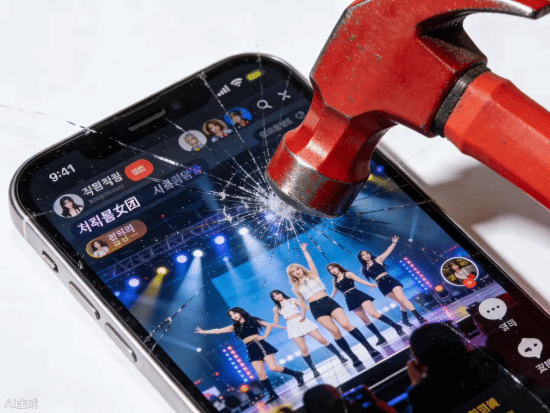
Regarding copyright protection, the amended Copyright Act introduces an “emergency website blocking” mechanism. When infringement is clear and likely to cause irreparable harm, South Korea’s Ministry of Culture may require internet service providers to immediately block access to infringing websites. For the first time, this measure will also apply to overseas piracy sites.
Additionally, the new law strengthens civil and criminal penalties. For willful or repeated infringement, courts may award damages of up to five times the assessed loss, considering factors such as intent, scale of damage, profits gained, duration, and frequency of infringement.
On criminal penalties, the maximum prison sentence has been increased from five to seven years, and the maximum fine raised from 50 million to 100 million won (approximately 481,000 RMB at current exchange rates, as noted by IT Home).
Moreover, South Korea has explicitly defined the act of sharing links to pirated content for commercial purposes—including intent to profit—as a criminal offense.
According to government estimates, illegal content distribution causes annual losses exceeding 4 trillion won (about 19.248 billion RMB). Most provisions of the revised Copyright Act will take effect six months after promulgation, though the emergency website blocking measure will be implemented after three months. Punitive damages will apply only to infringements occurring after the law takes effect.
In the ticketing sector, the revised Performance Act and National Sports Promotion Act impose a more comprehensive ban on ticket resale. The new regulations no longer target only scalping using automated bots but extend to prohibit all forms of ticket scalping.
Previously, judicial authorities required proof of “bot usage” for conviction, making it difficult to hold scalpers accountable when such evidence was unavailable. Under the amended laws, any act that bypasses or undermines fair purchasing processes for resale profit, or repeated selling of tickets above face value for gain, will be considered illegal.
The new laws also expand the responsibilities of platforms and ticket sellers, requiring them to implement technical measures to prevent scalping. The government stated that this shift reflects a recognition of ticket scalping as a “systemic distribution problem” rather than merely “individual misconduct.”
Penalties under the new regulations include administrative fines of up to 50 times the ticket’s face value, confiscation or recovery of illegal proceeds, and stronger investigative powers for designated reporting agencies. Ticket sellers or platforms failing to cooperate may face fines of up to 5 million won (approximately 24,060 RMB).
Furthermore, South Korea will introduce a whistleblower reward system to encourage public reporting of scalping activities. The government estimates the annual scalping market in South Korea exceeds 100 billion won (about 481 million RMB).
The revised ticketing laws are expected to be implemented in the second half of this year. To support enforcement, the Ministry of Culture, Sports and Tourism plans to establish a public-private task force and launch public awareness campaigns to curb scalping.
熱門頭條新聞
- TOKYO GAME SHOW 2026 Marks Its 30th Anniversary with Record-Length Five-Day Run at Makuhari Messe; Complete Overview of Dates, Speakers, Exhibitors & On-Site Key Activities
- Hong Kong International AIGC Digital Creation Competition 2026
- Beyond Concept Verification: AIGC Film & Video Enters Commercial Realization Cycle in H2 2026
- It’s Time to Reap What You Sow (and Then Throw It!) – Planted! Launches 29th October 2026.
- Award-Winning Composer Cris Velasco and Milan Records Bring the Dark, Nordic Sound of Mistfall Hunter to Life
- ArcheAge S: Strait of Freedom Targets Q2 2027 Steam Launch
- “One City Embodies Three Kingdoms, Half-Step Into Jianghu” Launches in Shanghai — Kaiying Network’s Dual Chinese-Style Game IPs Cross Over With Urban Tourism Festival, Pioneering Game-Culture-Tourism Integration Model
- Registration Opens for NVIDIA China Developer Day 2026 — A Premier Off line Tech Gathering for AI Developers in Suzhou