Three Forces Converge to Drive a “Qualitative Leap”: 2026 Marks a Critical Inflection Point for the VR Industry
As we enter 2026, the virtual reality (VR) industry, once a subject of hype followed by a period of quiet, is quietly gathering an unprecedented powerful synergy. Three key signals—policy, capital, and product—are being released simultaneously, all pointing to the same conclusion: the VR industry is transitioning from a technology exploration “laboratory phase” towards an “industrial inflection point” characterized by scale and commercial implementation.
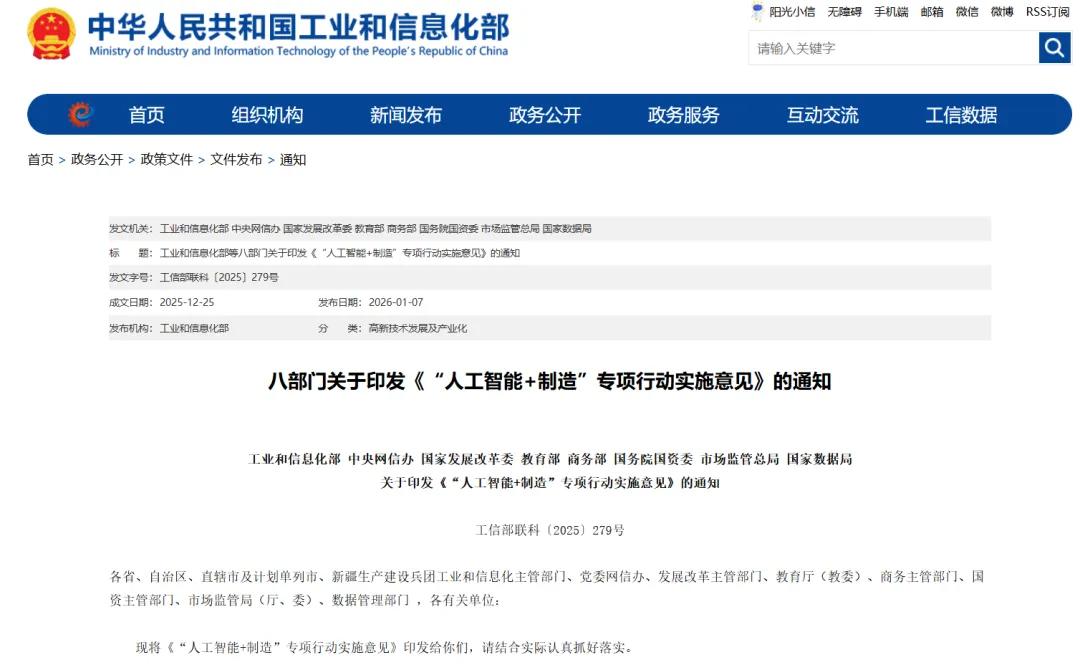
Signal One: A National Blueprint, Policy Charts a New Course for the Industry
On January 8th, eight departments, including the Ministry of Industry and Information Technology, jointly issued the “Implementation Opinions on the Special Action for ‘AI + Manufacturing'”, providing an unprecedented level of national strategic endorsement for the VR/AR industry.
This document not only explicitly identifies VR/AR wearable devices as “new terminals” whose industrialization should be accelerated but, more crucially, outlines a concrete path for their deep integration with the real economy. It focuses on key application scenarios such as industrial inspection and remote healthcare to promote the large-scale deployment of these terminals. This signifies that the value of VR technology is no longer confined to consumer entertainment or “metaverse” concepts. Instead, it has been elevated to the strategic height of a “new quality productive force,” empowering industrial manufacturing and enhancing social production efficiency.
This policy upgrade provides the industry with a full-chain policy framework and assurance—from technology R&D and scenario validation to market expansion—serving as a “ballast stone” for the industry’s long-term, healthy development.
Signal Two: A Supply Chain Bellwether, Capital Bets Big on a Scalable Future
Almost simultaneously with the policy announcement, Luxshare Precision, a global consumer electronics manufacturing giant and a core Apple supplier, announced a major investment. It will invest an additional $520 million in Vietnam to establish a VR headset production line with an annual capacity of 9 million units.
This massive capital and precision capacity commitment from a supply chain leader is a significant bellwether. It marks the transition of VR device manufacturing from its early small-batch, workshop-style production to a phase of large-scale industrial manufacturing requiring complex process integration (involving 15 steps like cooling systems, displays, and Pancake lens assembly) and strict quality control. This move not only expresses leading supply chain players’ firm anticipation of imminent market demand but also signals that VR devices will see significant cost reductions and improved supply stability, removing a key obstacle to mass-market adoption.
Signal Three: Product Power Gains Global Validation, Demand-Side Enthusiasm Ignites
If policy and capital sketch the “supply-side” confidence curve, then at CES 2026, the Chinese high-end VR brand Pimax provided the most enthusiastic response from the “demand-side,” completing the market validation of its product strength.
Its products became the focus of global top-tier tech media and opinion leaders: the lightweight flagship Dream Air won the TechRadar “Pro Picks” award; the Crystal Super, featuring ultra-high-resolution micro-OLED screens, was highly praised on-site by global top tech influencers like Linus Tech Tips (LTT), being hailed as a “real-life simulator.” The products’ core technical strengths—such as极致清晰度, a wide清晰视野, and a sub-200-gram超轻重量—successfully won over even the most demanding professional users, creating powerful word-of-mouth resonance. This indicates that VR devices have preliminarily crossed the “usable” threshold and are entering an experience-driven phase focused on being “easy and enjoyable to use.”
Outlook: A Triple Resonance to Open a New Chapter of Industrialization
Looking back, the VR industry has weathered multiple predictions of a “breakout year” and bubbles. What’s different this time is that the signals are not one-dimensional technological breakthroughs but rather a triple resonance from top-level design, mid-stream industry, and the end-user market, forming a solid triangular foundation for industrial takeoff.
Today, with national strategy setting the direction, a multi-billion-dollar supply chain as the foundation, and phenomenal products as the vanguard, a virtuous cycle for the VR industry ecosystem has been set in motion. We have reason to foresee that 2026 will become a pivotal year for VR technology to deeply integrate from a “cutting-edge concept” into the fabric of countless industries, marking the opening of a new, more substantial, and pragmatic chapter in its industrialization.
Attachment:
“Implementation Opinions on the Special Action for ‘AI + Manufacturing'”
https://www.ncsti.gov.cn/zcfg/zcwj/202601/P020260109595566804450.pdf
熱門頭條新聞
- China Domestic Animation Summer Season 2026 Review: Box-office Boom for Theatrical Animation, Established Web Series Face Headwinds, AI Man-Dramas Explode for New Growth
- Tianji: Shadow of the Ancients, Coming 2027 to Multiple Global Platforms
- China’s Anime-Goods (“Guzi”) Economy 2026 Market Review
- Newzoo Forecasts Global Games Market to Hit $213.9 Billion by End-2026
- Opportunities Amid Transition: GamesMarket 2026 Industry-Leader Interview Maps Challenges, Resilience and Outlook for European Games Industry
- AI Man-Drama Enters “Licensed Operation” Era, Copyright Ownership Becomes Core for High-Quality Domestic Animation Development
- New European Animation Licensing Paradigm — Early-Stage Integration Fuels Long-Lived Animated Franchises
- Insight ’26 — Inaugural Post-Production & VFX Business Conference to Take Place in London