Riding the 2026 World Cup Wave, eFootball Establishes a New Long-Term Operation Model for Football Games
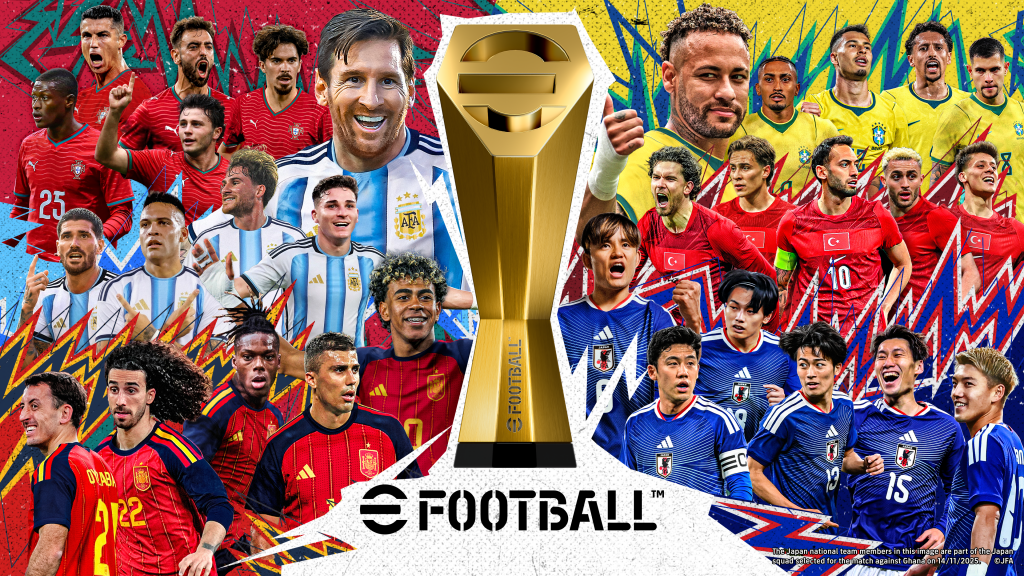
The 2026 FIFA World Cup across Canada, Mexico and the United States has ignited global football fervor, creating a dual growth window of traffic and revenue for mobile football games. Powered by in-depth tournament-linked live operations, real-time match-linked content and integrated official FIFA esports ecosystem, Konami’s eFootball recorded a 51% year-on-year surge in June in-app purchase (IAP) revenue to $41.3 million, doubling the revenue of EA’s competing FC titles. Beyond short-term revenue spikes, this World Cup has reshaped the operational logic of the entire industry, charting a sustainable development path for global competitive football games built around real-time sports linkage and closed-loop esports ecosystems.
1. Capturing World Cup Dividends: eFootball Tops Football Segment with Overwhelming Operational Advantages
The quadrennial World Cup naturally drives football fans to download and engage with football games. June 2026 saw cutthroat competition across the global mobile game market, with razor-thin revenue gaps among top titles. Honor of Kings claimed the top spot with $107.6 million in IAP revenue, followed closely by Whiteout Survival at $105.8 million and Royal Match at $102.4 million — the top three were separated by merely $5.2 million. Amid such fierce rivalry, football games stood out as a differentiated niche.
Industry tracking data shows eFootball hit $41.3 million in June IAP revenue, a 51% year-over-year jump, roughly twice the size of EA SPORTS FC Mobile 26 and its Chinese counterpart FC Mobile World. Its outstanding performance stems from a comprehensive live operation calendar tightly aligned with the World Cup schedule:
- Real-time match card system: Limited-edition player cards featuring standout match performances launch within 48 hours after every key fixture, translating real-world tournament excitement into consistent in-game engagement and spending.
- National team-themed gameplay and tiered rewards: A dedicated international tournament mode lets players lead national sides to replicate the full World Cup knockout journey. Free login rewards include marquee superstars Lionel Messi and Lamine Yamal, alongside exclusive national team items for Argentina and Spain.
- User acquisition incentives: Referral and team-up challenges unlock legendary players such as Steven Gerrard, expanding the game’s reach to casual football fans outside its core player base.
This full-stack operation framework creates a seamless loop: World Cup viewing enthusiasm translates to in-game participation, which drives monetization and retains long-term active users.
2. Full Suite of World Cup-Themed Campaigns: Dual Synergy Between In-Game Content and Global Esports
Konami rolled out its cross-platform Football Festival in-game campaign spanning all mobile, console and PC versions, running through July 23, 2026. The event structure covers three layers of content to attract both casual fans and competitive hardcore players:
2.1 Real-time tournament content to extend immersive viewing experience
Daily limited star card packs refresh after every World Cup match. Standout performers from each knockout fixture are immediately featured in time-limited draws, eliminating the lag of traditional fixed seasonal updates and forging a direct connection between real-world football and virtual gameplay.
2.2 Full World Cup simulation mode
A brand-new international tournament mode replicates the complete World Cup format, from group stages to the final. Players can select any national squad to compete, fulfilling fan demand to experience World Cup action within the game despite the absence of official World Cup trademark licensing.
2.3 Official FIFAe esports pathway linking online qualifiers and offline global finals
Through an exclusive partnership with FIFAe, eFootball hosts the 2026 FIFAe Challenger Series, open to participants from more than 110 FIFA member associations and territories. For the first time, mobile platforms feature a 2v2 competitive format with lower entry barriers for casual users. The tournament will culminate in the eFootball Championship 2026 World Finals, hosted live in Bangkok, Thailand on July 26, 2026. Thirty-two elite global competitors (16 mobile, 16 console) will compete for the world championship title with worldwide live broadcast coverage.
In-game seasonal activities cater to mainstream football fans, while offline esports finals cultivate high-loyalty competitive players, forming a complete user ecosystem balancing casual entertainment and professional competition.
3. Shifting Player Preferences: Demand Shifts Toward Real-Time Match Interaction and Esports Competition
Player priorities have undergone a notable shift during the 2026 World Cup cycle, offering clear guidance for football game operators:
- Moving past static seasonal card pools, users heavily prioritize time-limited real-time match highlight cards. Hotly discussed tournament underdogs and match-winning athletes drive card draw activity, boosting daily active users and repeat spending.
- National team-themed content outperforms club content for the first time, fueled by the World Cup’s mass appeal. Players actively build full national team rosters, creating new monetization opportunities for national team contracts and squad progression systems, breaking the long-standing dominance of club-focused gameplay.
- Interest in competitive esports has risen sharply. The integrated FIFAe tournament infrastructure encourages casual fans to try competitive matches, and the mobile 2v2 format lowers team play thresholds, opening esports to a broader audience beyond hardcore veteran players.
By contrast, EA’s FC series still relies on conventional fixed club card pools and static seasonal updates, lacking real-time match linkage mechanisms to capture immediate fan sentiment, widening gaps in user activity and conversion rates.
4. Long-Term Industry Transformations Driven by the World Cup: Three Defining Trends for Football Games
Beyond short-term traffic gains, the 2026 World Cup has permanently reshaped the commercial and operational frameworks of football mobile games, establishing three irreversible industry trends:
Trend 1: Real-time tournament-linked live operations become standard
Traditional annual premium football titles are gradually phased out, replaced by continuous live operation models. Developers must build rapid content response pipelines to launch limited cards and themed gameplay timed to major international tournaments, turning seasonal sports hype into year-round sustainable growth and repeated IP utilization.
Trend 2: Diversified FIFA cooperation ecosystem takes shape; esports becomes core differentiated moat
After ending its decades-long exclusive licensing partnership with EA, FIFA has shifted to multi-partner collaboration. Esports infrastructure now stands as the most critical competitive edge for developers. As the exclusive host of official FIFAe tournaments, eFootball owns a full vertical pipeline: national qualifying rounds, cross-regional challenger events and a flagship offline world final — an ecosystem competitors cannot easily replicate. Moving forward, football game competition will extend far beyond player and team copyrights; esports operation capacity will determine long-term user retention.
Trend 3: Cross-platform unified operation unites casual and competitive audiences
Cross-device synchronized events, lightweight mobile esports modes and professional console competitive experiences converge as the industry benchmark. Developers must balance casual simulation demands from mainstream fans and high-stakes competition for pro players via tiered campaigns and diverse match formats, expanding total addressable users and breaking growth ceilings.
Industry Conclusion
The 2026 World Cup cycle has validated a core truth for sports games: competitive advantage no longer hinges on one-off copyright purchases, but on building a real-time tournament content pipeline paired with a complete esports user ecosystem. Konami’s eFootball has delivered remarkable revenue growth as a benchmark case for the industry.
As global football tournament calendars rotate year after year, football competitive games will abandon the outdated seasonal one-time monetization model in favor of refined long-term operation anchored to top-tier sporting events and official esports collaboration. Only titles that synchronize seamlessly with real-world football and cater to both mass casual fans and elite competitive players can consistently capitalize on tournament traffic and secure leading market positioning amid fierce rivalry.
熱門頭條新聞
- Registration Opens for NVIDIA China Developer Day 2026 — A Premier Off line Tech Gathering for AI Developers in Suzhou
- Giving Back To The Industry: Nova Games Foundation Officially Launches To Empower Next Generation Game Creators
- Cozy Narrative-Driven Adventure Cat Secretary Launches on November 4th!
- Overwatch Rush Begins Soft-Launch in Southeast Asia, Blizzard Explores New Global Path for IP based Mobile Games
- GungHo to Shut Down Disney Pixel RPG on September 30, 2026
- Decorado: Alberto Vázquez on the Journey from Animated Short-film to Feature-length Animation
- CICF×AGF Guangzhou Anime-Game Festival: Greater Bay Area ACG Grand Event Lights Up National-Day Holiday
- Merge Mobile Game Sector Outlook 2026: Merge-2 Drives Robust Growth Amid Opportunities & Challenges