Rainbow Six Mobile Global Launch: Can Tactical Shooting Break Through on Mobile?
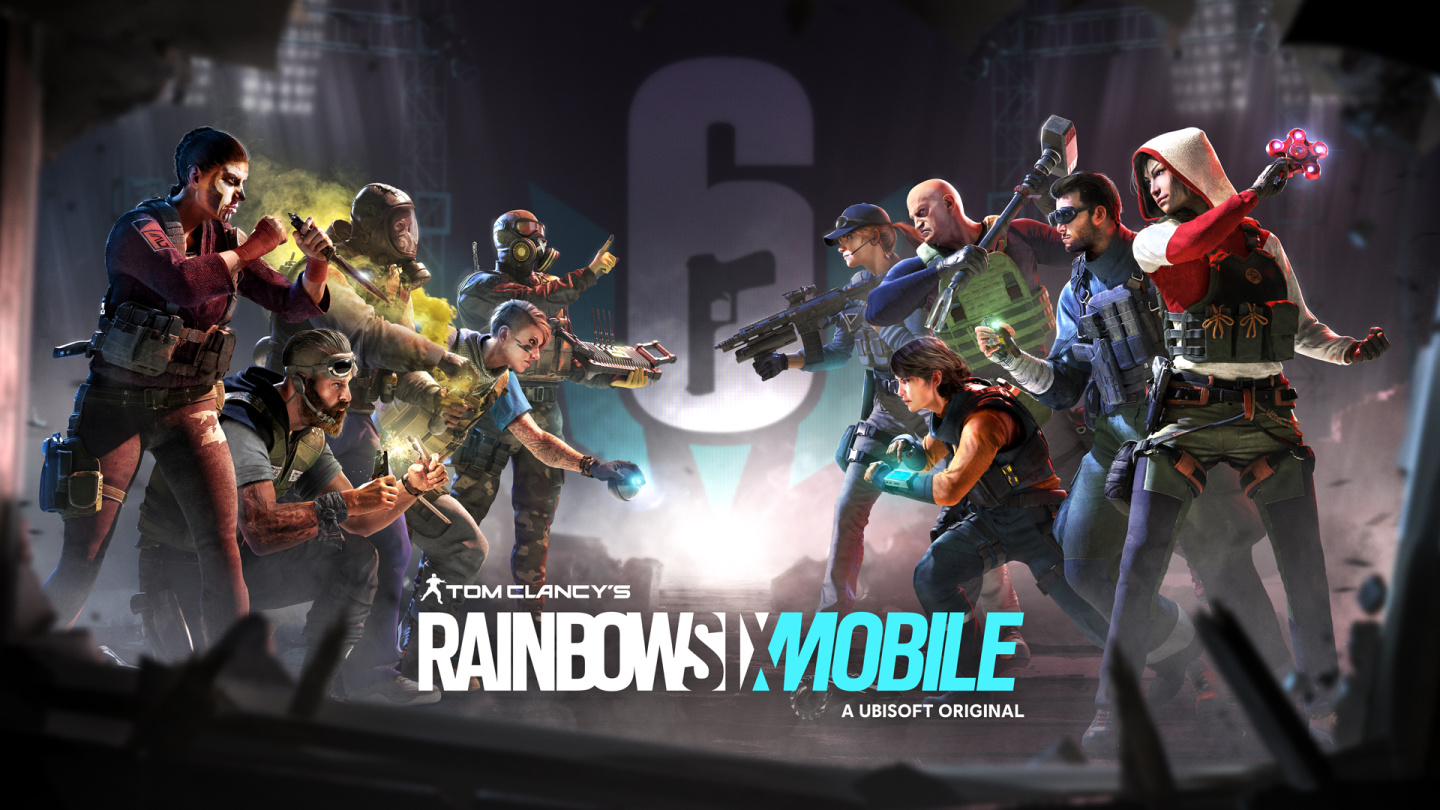
On February 23, 2026, Ubisoft’s tactical shooter IP, Rainbow Six Mobile, officially began its global public test. This mobile product, which took seven years to develop and pooled the efforts of 11 studios, chose a special moment to debut – coinciding with its PC counterpart Rainbow Six: Siege surpassing 100 million players globally and generating over 3.5 billion euros in lifetime revenue. Lying ahead of it are the “corpses” of two major Western shooting games: Call of Duty: Warzone Mobile and Apex Legends Mobile.
Tombstones of Predecessors: Why Did Warzone and Apex Fall?
On May 1, 2023, Apex Legends Mobile officially shut down, less than a year after its high-profile launch. EA’s stated reason was failure “to deliver the adequate quality, quantity, and cadence” – industry jargon that translates to “players weren’t buying it.”
In May 2025, Call of Duty: Warzone Mobile was delisted from the App Store and Google Play, dying just 14 months after its global launch. Activision admitted the game “didn’t resonate with mobile players the same way it did with PC and console players.” More ironically, their compensation to players was issuing double COD Points for Call of Duty: Mobile, developed by Tencent’s TiMi Studio Group.
The reasons for the failure of these two major titles are strikingly similar:
The Disaster of Technical Adaptation. Warzone Mobile retained the PC version’s IW engine but failed to solve optimization issues on mobile – even top-tier phones with Snapdragon 8 Gen 3 chips struggled to maintain a stable 60fps at medium graphics settings, with overheating and throttling becoming the norm. Some players called it “the Crysis of mobile gaming,” implying any device attempting to run it would overheat.
The Trap of Forced Porting. Both games attempted to “compress” the PC/console experience onto phones, ignoring the fundamental differences in touchscreen controls. Apex Mobile’s slide-jump-shoot mechanics became frantic finger gymnastics on phones, while a Warzone Mobile update introducing omnidirectional movement directly caused an optimization avalanche.
Misaligned Operational Logic. Activision tried to make Warzone Mobile the mobile pillar of the “Call of Duty universe,” but scared away players with vague ban rules and ruined the experience with frequent updates chasing the PC version’s pace. Ultimately, its cumulative revenue was only about $17 million, far less than Call of Duty: Mobile’s monthly revenue.
R6M’s Differentiated Survival: It’s Brainpower, Not Run-and-Gun
“Most mobile shooters prioritize speed and reflexes, running and gunning. What Rainbow Six Mobile prioritizes is planning, synergy between different gadgets, and environmental destruction.” Game Director Olivier Albarracin defines the product’s differentiated positioning this way.
Judging from the actual experience, R6M indeed retains the core soul of the PC version:
Wall destruction mechanics, unique operator ability systems, and the tension of information warfare – defenders need to reinforce key walls and deploy traps, attackers need to deploy drones for reconnaissance and choose their assault routes. The tactical depth brought by this “asymmetric information” forms the unique experience that sets Rainbow Six apart from other shooters.
In terms of mobile adaptation, Ubisoft’s choice was to “simplify the control process while retaining gameplay depth.” The game includes options like aim assist, auto-fire, and one-click deployment to lower the barrier for newcomers, while also supporting controller play for a seamless transition for console players. Match duration is compressed to around 7 minutes (Quick Match mode), perfectly fitting fragmented play sessions.
Monetization design also underwent adjustments. After players criticized the “ticket system” in early tests, the team switched back to the “Renown” system from the PC version – players earn Renown through matches and tasks to unlock operators. Each season’s operator enters the Battle Pass first and can be purchased with Renown after the season ends.
Market Debut: The Distance Between Acclaim and Revenue
As of March 9th, Rainbow Six Mobile had generated nearly $1.6 million in global revenue in its first 14 days, with the U.S. contributing 46%. Combined with the soft launch phase, lifetime revenue is approximately $2.8 million. This number isn’t spectacular within the shooter mobile game category – for comparison, Call of Duty: Mobile raked in $14 million in its first two weeks.
However, in terms of reputation, R6M delivered an impressive report card: it topped the iOS free charts in over 100 countries and regions, hit #1 in the U.S., South Korea, Hong Kong SAR (China), and achieved an iOS store rating of up to 4.9. Player comments are filled with sentiments like “finally can play R6 anytime, anywhere” and “time for a couple of rounds during lunch break.”
Of course, problems persist. Currently, the game only supports 60fps, a significant drawback for core players seeking a smooth experience. Operators can only use preset loadouts, weapon choice is limited, and the Renown unlock costs for some operators are perceived as high. On the monetization front, weapon skins only cover specific attachment combinations, appearing less generous compared to competitors.
Tencent’s Chess Move: From Publishing to IP Co-construction
Behind Rainbow Six Mobile lies a deeper storyline.
In July 2025, Tencent established the K9 Cooperation Department to fully interface with Ubisoft’s business, appointing Chen Kan, producer of the CrossFire series, as its head. In October, Tencent and Ubisoft jointly formed ajoint venture studio, Vantage Studios, bringing core IPs like Rainbow Six under the co-construction umbrella. This means Tencent’s role has long surpassed being a mere “Chinese server publisher,” delving deeply into development and long-term planning.
Currently, the Chinese mainland PC version of Rainbow Six, imported by Tencent, has been officially named Rainbow Six: Offensive, and the Chinese mainland mobile version has also obtained its publication license. Industry speculation suggests Tencent will likely launch the PC version first, then based on the mobile game’s global performance, choose the right moment to release the Chinese mainland mobile version, forming a PC-mobile synergy user ecosystem.
Judging from the K9 head’s resume, this approach is traceable. Chen Kan helped build CrossFire into a pillar of Tencent’s shooter category – the PC version has operated for 18 years, and the mobile version is entering its tenth year. The same strategies for introducing social graphs, building anti-cheat systems, and executing localization operations are expected to be applied to the Rainbow Six IP.
Outlook: Filling a Gap or Jumping into a Red Ocean?
Back to the initial question: Can Rainbow Six Mobile succeed where Warzone Mobile and Apex Mobile failed?
Its advantages are clear. There’s a market gap for tactical 5v5 gameplay on mobile, and the depth of wall destruction and information warfare is hard to replicate quickly. The three-year soft launch and testing period gave the team ample time to polish stability and control adaptation. The 100 million players accumulated on PC provide a foundation for the mobile version; the IP recognition and productivity of the core fan community should not be underestimated.
However, the challenges are equally severe. The domestic shooter category is dominated by(loot-shoot-extract mechanics, with leading titles evolving towards platformization. How many users R6M’s differentiated gameplay can capture remains uncertain. Competitor copycatting is only a matter of time – once wall destruction mechanisms are proven effective, imitators will appear. The information gap for new players could lead to a lose-lose situation where veterans complain and newcomers quit.
Furthermore, monetization pressure cannot be ignored. The ARPU for the tactical shooter genre is typically lower than for Battle Royale. Currently, R6M still hovers around #110 on the U.S. top-grossing charts; its commercial performance needs time to develop. Controversial points like weapon skin restrictions and operator unlock costs could also affect players’ willingness to pay.
For Ubisoft, Rainbow Six Mobile is a crucial move in taking its IP mobile – finally bringing its core hardcore IP to the broader mobile market. For Tencent, it’s more like a layout (pre-emptive positioning) for the long run.
熱門頭條新聞
- New AI, New Computing — The 7th AI Computing Conference (AICC2026) Grandly Opens in Beijing
- Germany’s Federal Game Development Funding Programme Allocates €267 Million Over Seven Years, Reshaping Domestic Gaming Industry Competitiveness
- PIF-Backed Merger Proposal Between EA and Savvy Games Could Reshape Global Gaming, With Far-Reaching Impacts on Both Parties’ Businesses
- Farming Camp Demo Expands to PS5, Xbox, Switch & Microsoft Store
- MIPJUNIOR 2026 to Open in Cannes: Full Introduction of Dates, Participation Channels, Core Sessions and Industry Significance
- Chill with You: SHIOI’s Sparkling Scenes – Steam Store Page Is Now Live
- SIGGRAPH Asia 2026 Takes Shape: Distinguished Keynote Speaker Line-up Unveiled
- Apple Completes App Store Leadership Transition; New Management Pursues Higher Margins, Phil Schiller Steps Back From Day-to-Day Operations