PC Games to Mobile: to Port or Not to Port?
Mobile and PC or console audiences don’t just overlap; they often operate in completely different modes. On Steam, finding a good game is part of the hobby itself. You scroll, compare, read reviews, and maybe watch a couple of streams before committing. It takes time, attention, and usually a decent setup to run what you pick.
On mobile, everything works the other way around. UA managers spend millions, so you don’t go looking for your next title, and it finds you first. New games show up in your feed, in an ad, or in the store, and you’re already one tap away from trying one.
Now, can these two ecosystems meet halfway? Say, bring proven PC or console hits to a much larger mobile audience and unlock a new revenue stream. Or take the opposite route and bring a mobile game to PC, letting it find its audience on Steam. Both approaches have already proved they can become a solid addition to your revenue stream.
In today’s piece, we take a closer look at how paid PC games are being ported to mobile and what outcomes you can expect from such moves. After all, for a moment it seemed like even AAA titles were headed in that direction. But then reality kicked in…
The AAA Moment That Looked Bigger Than It Was
Back in 2024, Apple made a loud statement with the launch of its iPhone 15 Pro, announcing that AAA titles like Resident Evil Village, Resident Evil 4, Death Stranding Director’s Cut, and Assassin’s Creed Mirage were coming to mobile. Soon after, the rest of the newer Resident Evil games joined the list.
Full-scale AAA games running natively on a phone sounded almost unreal. The message was clear: mobile is ready for AAA. Or at least the higher-end iPhones were, as the base iPhone 15 was left out of that vision… which made the whole push feel more like a strong marketing campaign for Apple’s new devices than a market revolution.

How AAA games perform on mobile
To be fair, developers did manage to generate some revenue from these releases. Resident Evil 4, Death Stranding, and Assassin’s Creed Mirage each crossed $1M, while other titles in the Resident Evil franchise (2, 3, 7, and Village) stayed around $500K or below.
However, you can clearly see that these numbers are far below those generated by the same titles on other platforms. On Steam alone, Resident Evil 4—the best performer among them—grossed over $29M, which is roughly 29x higher (!).
And these estimates are based solely on AppMagic’s Steam analytics, meaning they exclude revenue from other platforms. Considering that, for example, Death Stranding was initially a PlayStation exclusive, this gap is even larger in some cases. But why?

Source: AppMagic data
The first reason is price. On Steam, these games typically sell for $40–$50, which is a standard price point for older AAA titles like Death Stranding and remakes like Resident Evil, as well as smaller entries in larger franchises, such as AC Mirage. This is a high upfront cost for a mobile user, where most apps and subscriptions are significantly cheaper. Yes, players can end up spending hundreds in their favorite F2P games, but that usually starts with small, low-friction purchases that gradually scale over time.
That’s why hitting “Buy” on a $39.99 price tag for something like Death Stranding feels very different from console, where such prices are common. Even when games like Resident Evil or Assassin’s Creed offer a few free missions, it works more like a test drive than a real commitment. You try it, get a feel for the experience, and might end up buying the full version elsewhere.
More telling than the revenue itself is the market’s reaction. The initial wave faded out with no real follow-up, as we didn’t see many new AAA ports on mobile, not even as part of the iPhone 16 and 17 push. The biggest one was the mobile port of Red Dead Redemption exclusively for Netflix and Control Ultimate Edition, expected to arrive on mobile in early 2026, as Remedy claimed back in the fall.
Does that mean mobile isn’t built for PC and console games? Not quite. But it’s important to understand platforms’ rules and what actually works on mobile. And the answer hasn’t changed in years: simpler controls, shorter sessions, lower prices, and unique art styles over high-end visuals.
But wait a second, this sounds familiar… it’s not just mobile design… it’s indie design!
Indie Games Already Speak “Mobile”
Yep, indies and mobile have a lot in common: tight loops, clear mechanics, quick onboarding, and no pressure to stay for long sessions. So when they come to mobile, they don’t feel more natural than many ports.
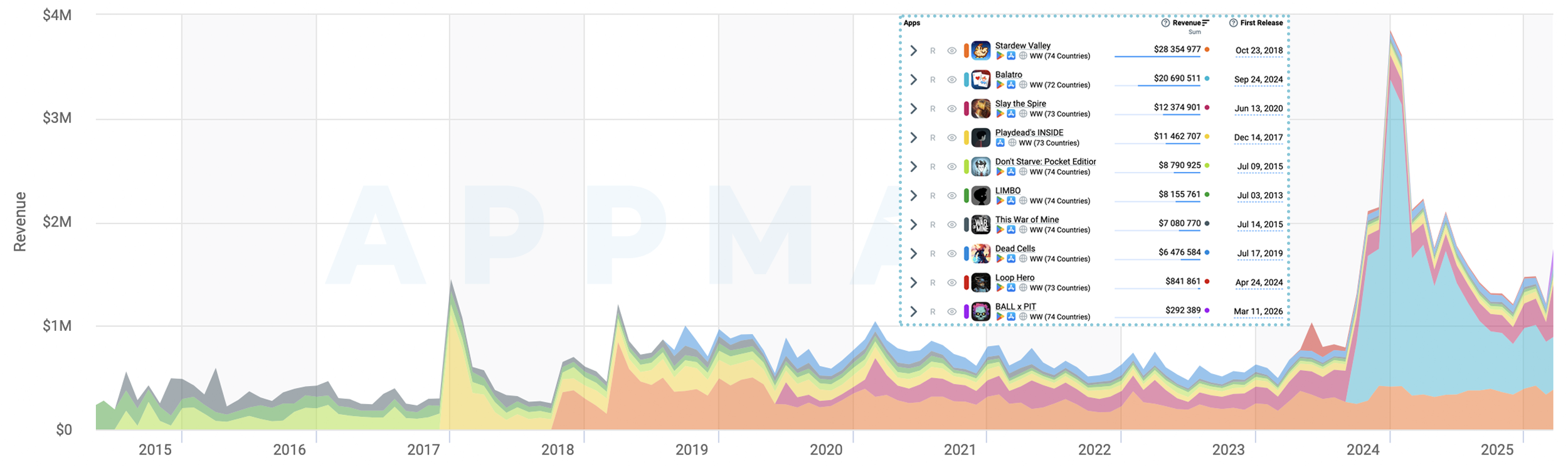
We looked at a few of the most notable indie releases on mobile to see how they perform over time. Stardew Valley has passed $28M in lifetime revenue, Balatro is already over $20M, and Slay the Spire is above $12M. Playdead’s INSIDE has reached $11M, while Don’t Starve is closer to $8M. This War of Mine is above $7M, and Loop Hero has crossed $840K.

How premium indie games perform on mobile
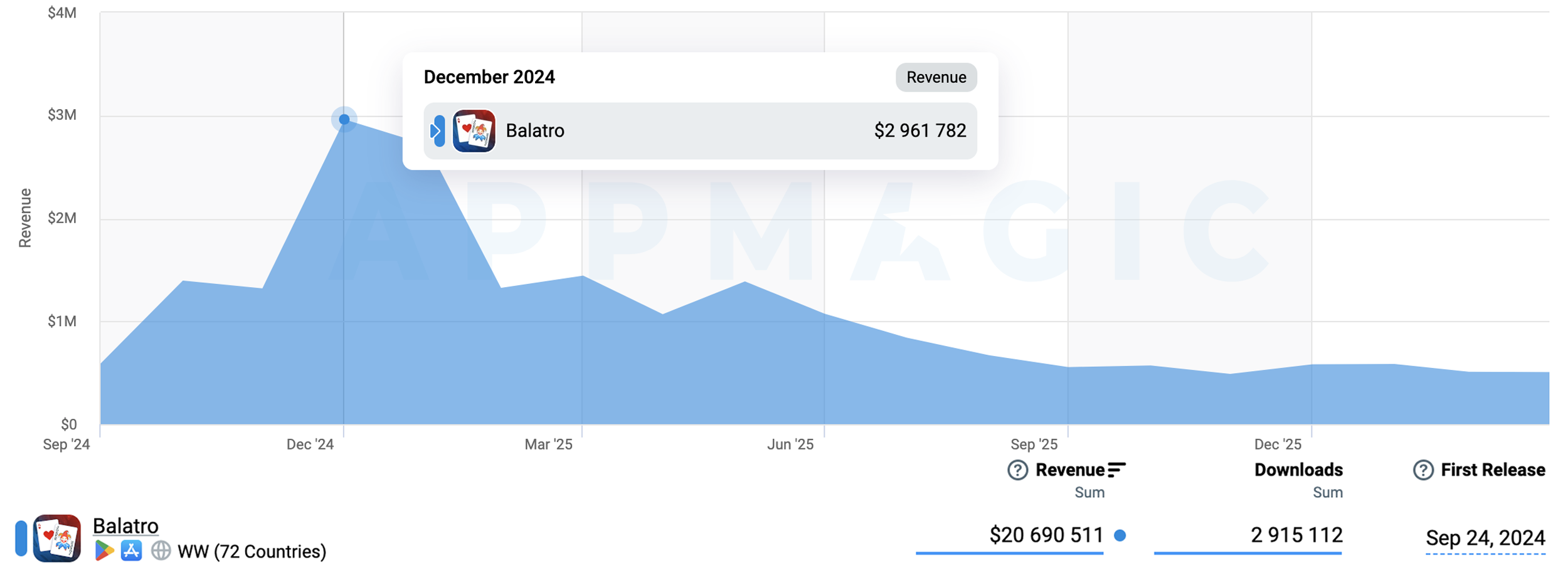
Take Balatro, a GOTY-winning poker roguelike. With its simple visuals and highly addictive core loop, it was almost a perfect fit for mobile from the start. So it’s no surprise it became one of the top-grossing indie titles on the platform, generating over $20.6M in revenue and 2.9M downloads, around 20x more than the AAA ports mentioned earlier. And yet, even these numbers fall short of its Steam performance, where Balatro generated over $72M in revenue and sold nearly 6M copies.
Clash Royale June Update
Balatro: mobile lifetime revenue
Or let’s take Ball x Pit, another example of mobile adding meaningful revenue without replacing the core platform. The game made around $8M on Steam in its first month after release, while mobile added over $280K within its first few weeks. Not the same scale, obviously, but still a solid addition to the overall revenue flow! And there is no surprise, as the game was initially inspired by the mobile hit, as we noted in our earlier analysis.
Clash Royale June Update
Those games didn’t need to be reshaped: they were cheap already, had short sessions, and made sense on a small screen. Mobile didn’t change the experience—it merely removed friction, making it easier to access.
Not every indie title works on mobile, and not every developer chooses to port their game. Ports take time, and some ideas just don’t land the same way on a phone. But when they do, the games are already a better fit for smaller devices.
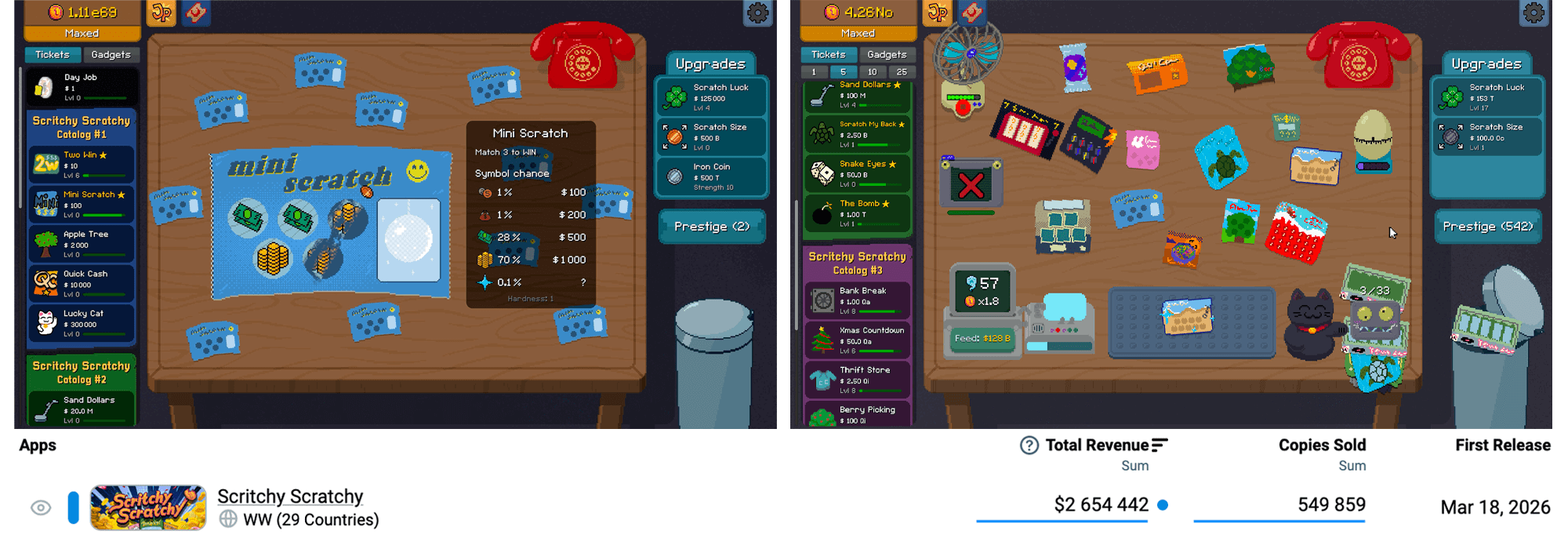
This becomes especially relevant in 2026, with idle games trending on Steam. Look at Scritchy Scratchy: it made the jump almost immediately, launching both on Steam and mobile at the same time! As a result, the game generated around $2.6M on Steam, and almost immediately added more than $130K on mobile.
Clash Royale June Update
Scritchy Scratchy on Steam: gameplay and performance
PC to Mobile: Key Takeaways
The platform matters, as it defines how players engage with games. Despite heavy marketing support from Apple, AAA titles failed to gain real traction on mobile. Indie games tell a different story: while they generate less revenue on PC and console, they often outperform larger titles on mobile. Shorter sessions, simpler visuals and controls, and price points that better match what mobile players are actually willing to pay.
Even though indie games show solid growth, they still fall short compared to titles built specifically for the mobile audience. Take Gossip Harbor, a Merge-2 hit that has influenced the broader casual market. In March 2026, it surpassed the $100M monthly revenue mark—the level none of the PC ports have come close to.
As devices continue to improve and gaming becomes more embedded in everyday life, the idea of a true multiplatform ecosystem becomes more realistic. But for now, mobile is better seen as an extension of success, not its foundation!
Market Nuggets
Bite-sized insights from AppMagic’s data.
Last Asylum: Plague. Breaking Through in a Crowded 4X Market
Squad Busters Chart
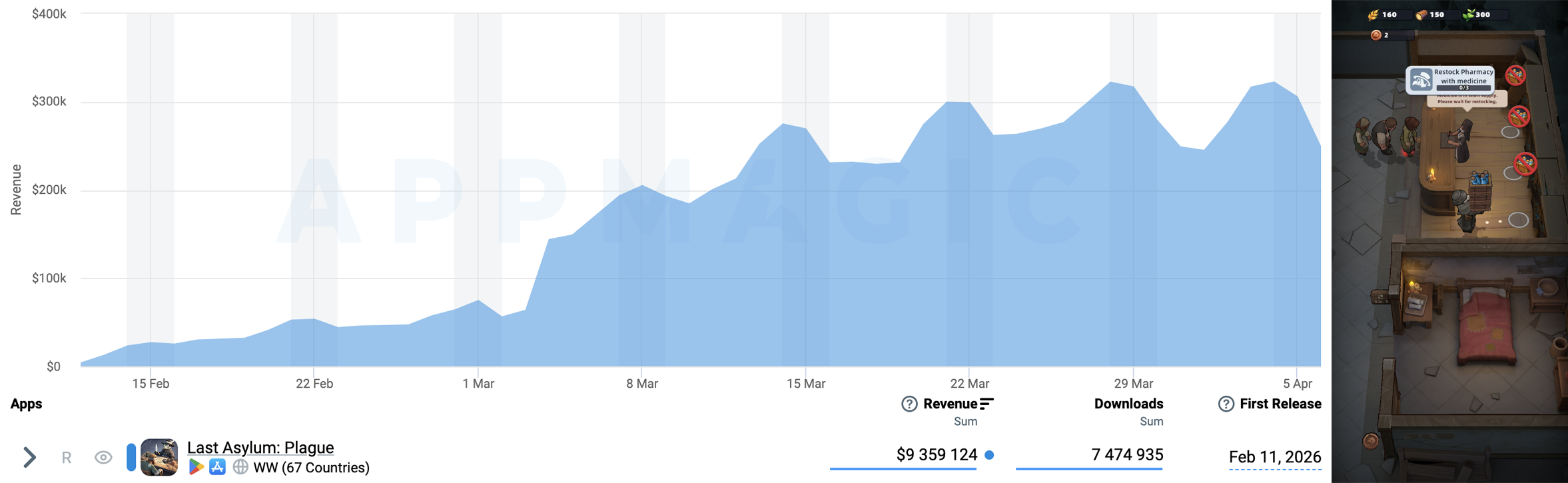
Last Asylum: Plague performance since launch
37Games is best known for its 4X Strategy portfolio. Its Puzzle & Survival ranks among the top 10 games by lifetime revenue in the subgenre. Last month, the publisher released one more 4X game, Last Asylum: Plague, this time in a dark fantasy setting.
Launched in February 2026, the game has already generated over $9M in revenue and garnered nearly 7.5M downloads. Its success comes not only from the distinctive setting with plague doctors, rats, and a dark medieval atmosphere, but also from its gameplay. It brings a simple idle progression loop—a mechanic commonly seen in UA creatives—into the core, making the game immediately familiar and appealing to a broad audience.
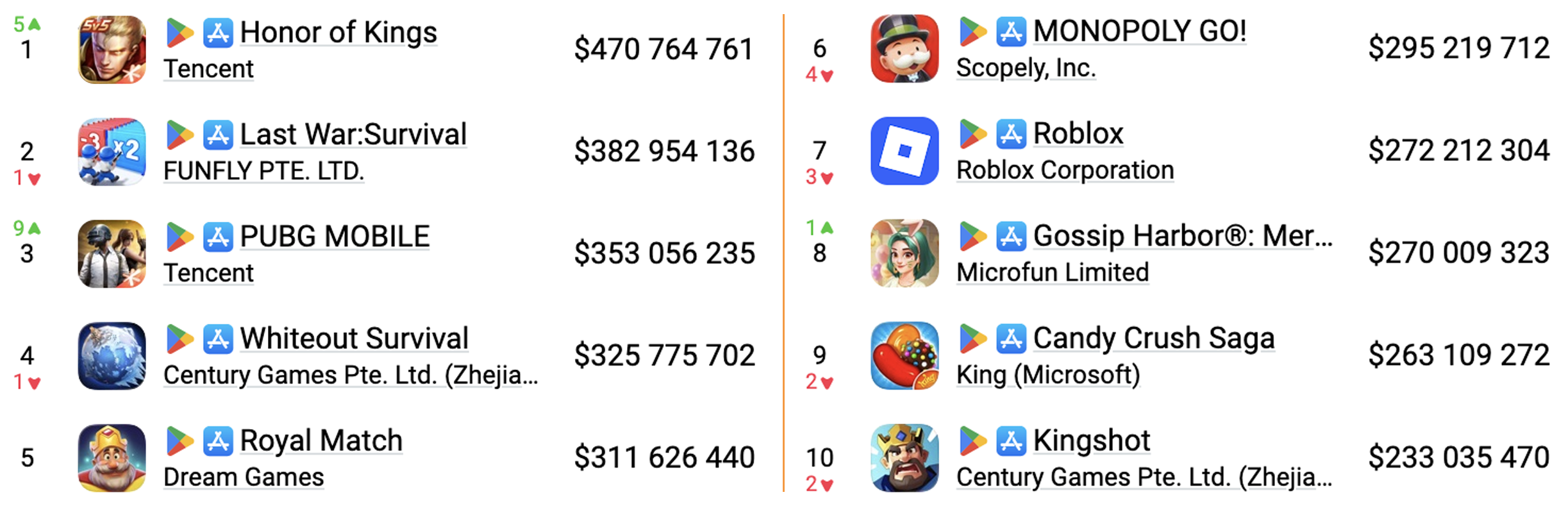
Q1 2026: Top 10 Games by IAP Revenue
The top-grossing games of Q1 2026
There are no new faces in the global Top 10 games by revenue this quarter. However, there is a lot of movement among the familiar titles. For example, Honor of Kings reclaimed the No.1 spot, hitting a new monthly peak of $188M in January after dropping as low as $83M just a month earlier. PUBG Mobile also bounced back, returning to its early 2025 revenue levels with +128% QoQ growth, driven by its March anniversary update.
And then there’s Gossip Harbor, reaching new heights month after month. This time, the game surpassed a $100M mark in March and seized 47% of the entire Merge-2 market. If you want to check out the top games in other categories, you can always use our Top Apps charts.
Roadside Research: Friendslops Are Still Here in 2026
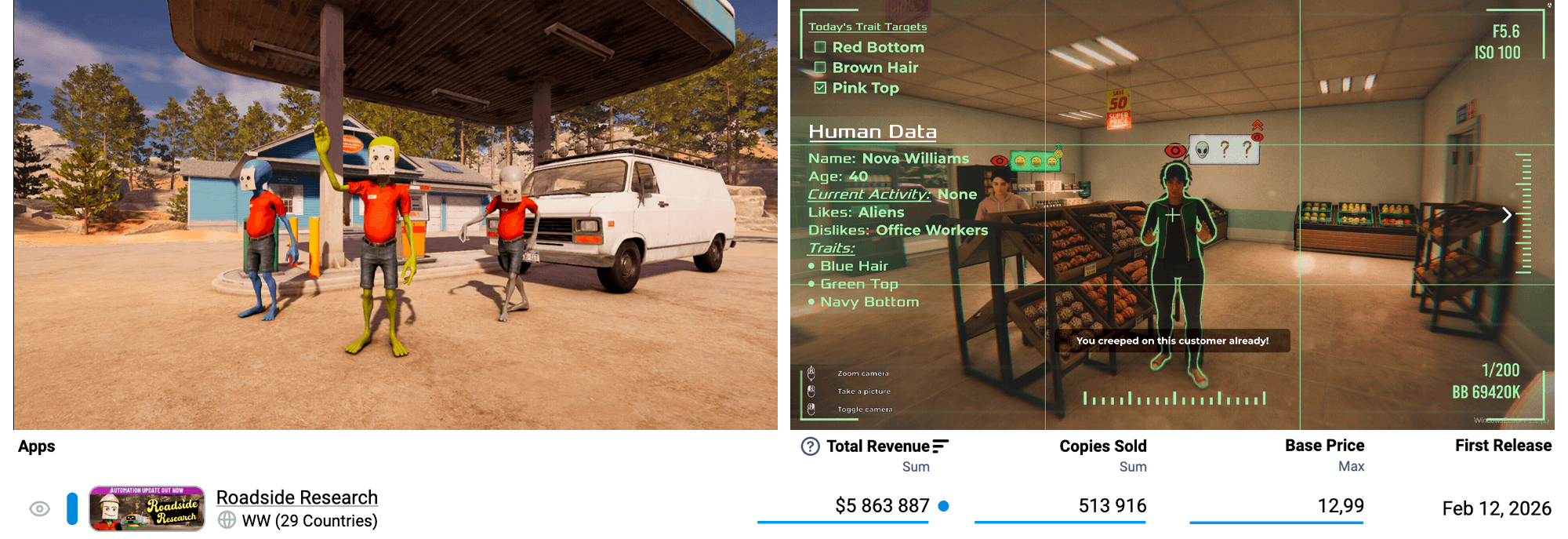
Roadside Research: gameplay and performance
The friendslop trend that launched on Steam last year continues into 2026, as we can see in the April charts. One of the new hits is Roadside Research, which has already generated $5.8M in revenue and sold over 500K copies since its February launch.
The theme fits the genre perfectly: aliens land on Earth, open a gas station, and start running experiments on customers. A goofy setting paired with a familiar core loop: co-op tasks, chaos, and plenty of unpredictable moments that are perfect for streams and TikToks.
Magical Updates ✨
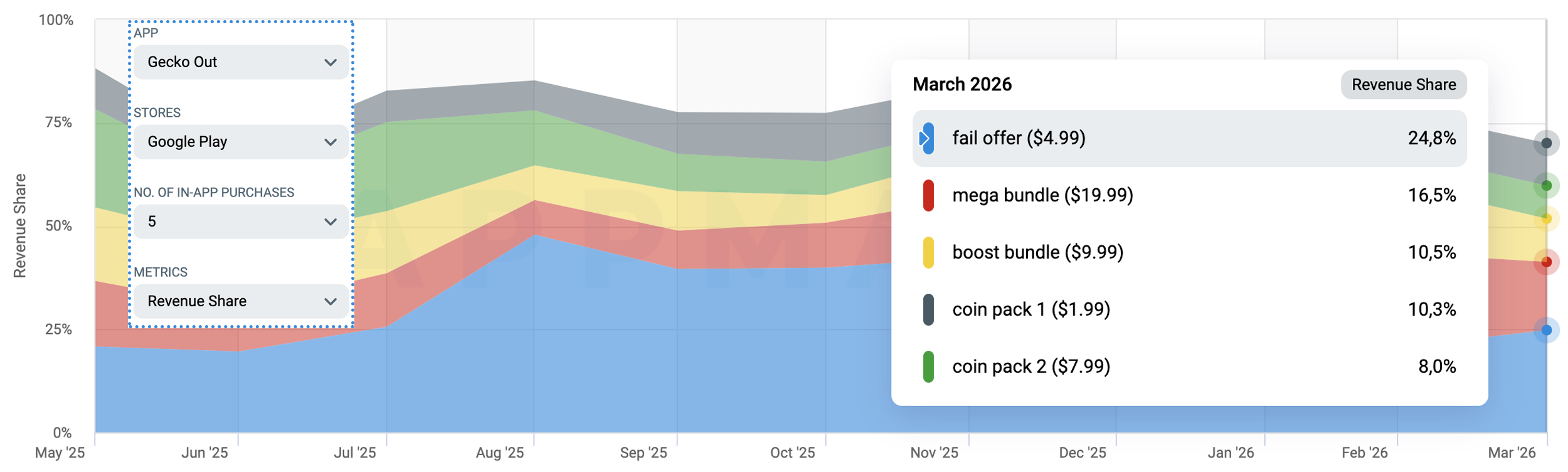
In case you missed it, IAP Revenue Distribution is already out, and it’s a game-changer for monetization analysis:
- Which offers generate the largest share of revenue, and which are purchased most often?
- Which offers convert best to the first purchase?
- What price levels consistently perform in this genre?
It shows exactly how a game makes its money. Instead of looking at total revenue, you get the real story that can make your monetization strategy more effective!
Source:APPmagic
熱門頭條新聞
- New AI, New Computing — The 7th AI Computing Conference (AICC2026) Grandly Opens in Beijing
- Germany’s Federal Game Development Funding Programme Allocates €267 Million Over Seven Years, Reshaping Domestic Gaming Industry Competitiveness
- PIF-Backed Merger Proposal Between EA and Savvy Games Could Reshape Global Gaming, With Far-Reaching Impacts on Both Parties’ Businesses
- Farming Camp Demo Expands to PS5, Xbox, Switch & Microsoft Store
- MIPJUNIOR 2026 to Open in Cannes: Full Introduction of Dates, Participation Channels, Core Sessions and Industry Significance
- Chill with You: SHIOI’s Sparkling Scenes – Steam Store Page Is Now Live
- SIGGRAPH Asia 2026 Takes Shape: Distinguished Keynote Speaker Line-up Unveiled
- Apple Completes App Store Leadership Transition; New Management Pursues Higher Margins, Phil Schiller Steps Back From Day-to-Day Operations