AI: A Double-Edged Sword? German Developer Cuts 90% of Staff, Replaces with AI to Save Dying Mobile Game — And No One Noticed for a Year
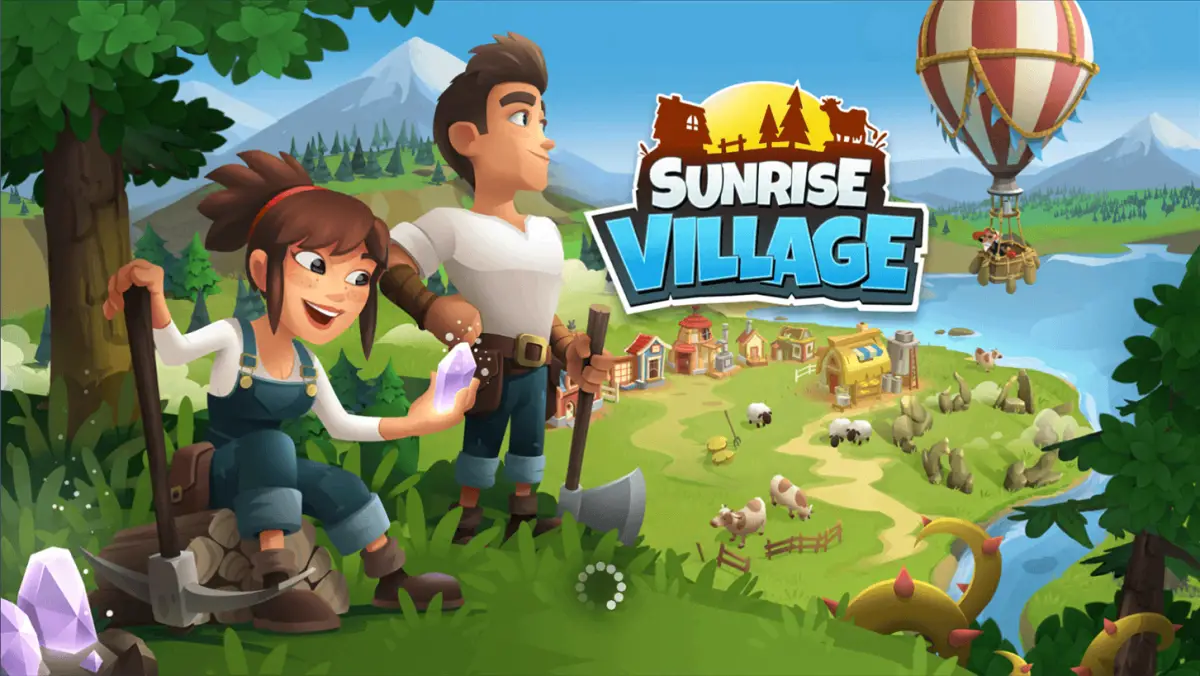 Facing shutdown, InnoGames replaced over 20 of the 25 people working on Sunrise Village with AI. Player numbers remained stable, and the quality went unnoticed. Now, the German developer plans to roll out AI-generated content across its entire portfolio.
About a year ago, German game developer InnoGames made what seemed like a bold gamble: it handed over all content generation for its farming sim mobile game Sunrise Village to artificial intelligence.
A year later, the results are striking — player metrics have held steady, there have been zero community complaints, and apparently, “no one noticed anything had changed.”
“Player numbers and engagement have remained stable,” Thomas Lehr, Director of Engineering at InnoGames, said in an interview. “The results speak for themselves: zero community complaints about AI or perceived quality differences. It seems players simply haven’t noticed any change.”
Shut Down or Use AI
Sunrise Village, a cozy farming simulation game, first launched in 2021. Under the brutal “winner-takes-all” logic of the mobile gaming market, the title failed to maintain its early momentum. According to AppMagic estimates, the game’s monthly revenue in 2025 ranged between approximately $160,000 and $190,000 — a figure that, after deducting platform fees, taxes, marketing costs, and team salaries, made profitability a challenge.
“Financially, the game was underperforming,” Lehr admitted. Before shifting to AI-powered content generation, roughly 25 people worked full-time on Sunrise Village. Under traditional logic, such a game would typically face shutdown — just as Supercell’s Squad Busters, despite boasting 58.7 million downloads and around $66.2 million in revenue, was deemed insufficiently successful and ceased development 18 months after launch.
“Traditionally, the answer would be to shut down unprofitable games,” Lehr said. “But that’s becoming increasingly unpopular with players, as the Stop Killing Games initiative shows.”
AI offered an alternative. By integrating AI content generation, the team maintaining Sunrise Village shrank from 25 people to just two to four, with the remaining staff reassigned to new projects. “Without AI, the game would have been cancelled,” Lehr said. “With AI, we can keep it running profitably with a minimal team while maintaining the high quality of content that players expect.”

The ‘AI Stage Designer’ Toolkit
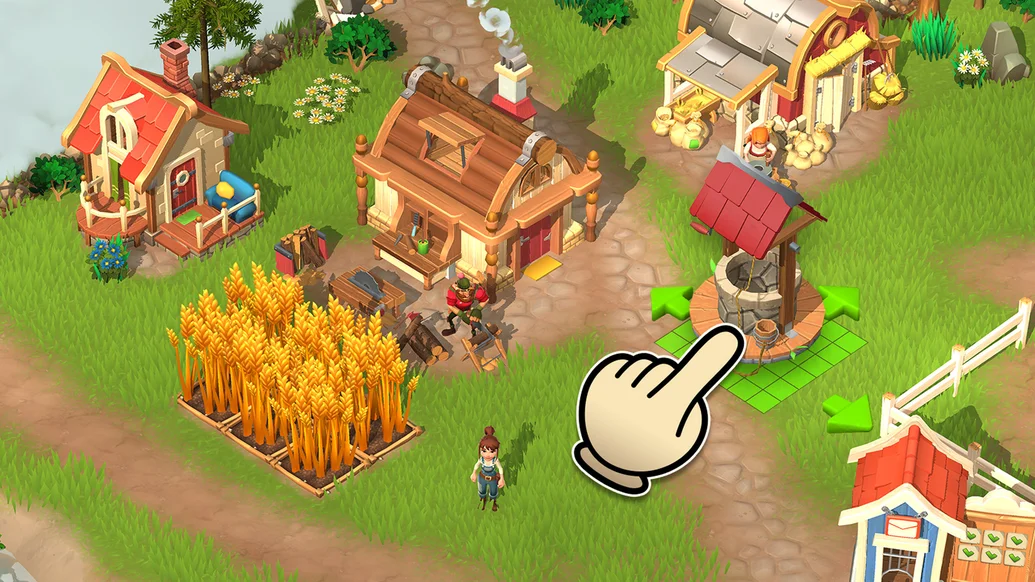
Central to this transformation was a proprietary toolset called the “AI Stage Designer.” Integrated into the Unity engine and built on OpenAI’s GPT-4o model, it breaks game content creation into six steps:
Story and Quests: Converts natural language narratives into structured storyline and quest data, automatically generating triggers and validation logic.
Intelligent Balancing: Using a knowledge base of roughly 100 game items across multiple tiers, the system automatically calculates construction requirements, XP rewards, and difficulty scaling.
Asset Discovery: Analyzes visual assets to automatically generate searchable labels.
Layout and Placement: Automatically generates level structures, progression paths, and unlockable areas.
Object Spawning: Automatically places collectibles, treasures, and obstacles within levels.
Cutscenes: Generates cutscenes that integrate with the storyline.
Lehr emphasized that human oversight runs through every step. Every level undergoes full playtesting before release, with final adjustments made by humans. “We don’t just take whatever the AI produces,” he said. “We guide it, refine it, and own the final result. AI does the heavy lifting, humans still shape what players actually experience.”
The Artist ‘Replaced by AI’: Not So Bad After All
During the transition, veteran artist Lémuel Wuibout — who led a team of about seven artists on Sunrise Village — was moved to a new project, a merge-two game called Cozy Coast. A 30-year industry veteran who previously worked at Crytek, Wuibout’s response to the shift was surprisingly positive.
“All the art team was pretty excited about moving from Sunrise Village to this new project,” Wuibout said. “Most of the artists were working on Sunrise Village for maybe more than five years, some of us even seven years. So it’s always a bit refreshing when you move to a new project and you have to do everything from scratch — like define the art style and get new characters.”
As for the game he had worked on for so long now being generated by AI, Wuibout said: “I will say that I’m quite happy about it. And I also have quite some admiration for the developers, all the tools that they created, and everything that they did to make it work. On Sunrise Village, we were already having the problem of how do we create more content faster for the players. AI felt like a natural evolution.”
Wuibout acknowledged that the rapid advancement of AI can be unsettling. “At the current state, the way we use AI, I’m not feeling threatened or scared by it, but you never know what’s going to happen in two, five, or 10 years. So of course, it’s legitimate to be a bit scared by how things are moving forward, because there’s still a lot of unknowns.”
But he stressed that AI hasn’t made artists redundant — it has changed how they work. “Now, we’re more like concept artists. Rather than starting from a blank page, you can start with a couple of images generated by AI. Maybe you’ll photobash them until you get a base of the canvas that you can work on. You don’t have to draw everything from scratch. You can just polish, and retake, and adjust everything so that you have a nice image in the end.”
Wuibout said learning to collaborate with AI has been an “interesting” process. “It’s something that we are sharing in the company: when you talk to other artists, you ask, ‘How did you manage to get to that result?’ It’s become a new skill to share and learn.”
Industry Acceptance and Future Trends
Despite InnoGames’ experience demonstrating AI’s potential in content generation, the broader game industry remains conflicted. In a recent GamesIndustry.biz survey of industry professionals, 84.2% of respondents said they believed no amount of AI-generated content was acceptable at any point in game development. Only 3.2% agreed that AI-generated art should be used for a minority of finished content, and just 0.9% agreed it should be used for a majority.
Lehr acknowledged that InnoGames has seen internal pushback against AI. “Some team members had concerns about job security — that’s a legitimate worry when you see headlines about AI replacing workers. Others worried about losing their skills over time, becoming ‘prompt operators’ rather than craftspeople who truly understand their domain.”
The company’s approach was “open communication.” “On job security, we were clear from the start: our strategy is to use productivity gains to take on more projects and create more value, not to reduce headcount. On skill development, we’ve found AI can actually be a powerful learning accelerator. It’s a patient and knowledgeable peer that explains concepts from different perspectives, helps you explore adjacent skills, and lets you tackle challenges slightly beyond your current level.”
Looking ahead, Lehr’s assessment is clear: “Within the next two years, I expect AI-assisted content generation to be standard practice across the industry — at least in mobile games. The tools will only get better and more accessible. Those who don’t adopt will find themselves at a severe competitive disadvantage.”
From Near-Death to Revival: The Players’ Choice
The transformation of Sunrise Village was not without risk. InnoGames acknowledged it could not predict how players might react if they learned the game’s content was being generated by AI.
But Lehr believes players’ core priority is always “a good experience”: “Fun gameplay, engaging stories, polished content. Our playtesting makes sure we deliver that. The alternative was shutting down the game. Given that choice, I think most players would rather keep playing — and a year of stable engagement shows the content works.”
Today, the lessons from Sunrise Village are being rolled out across InnoGames’ other titles. The asset labeling tool has been deployed to additional games, and the company is exploring how AI can be used in early-stage development to accelerate prototyping and content iteration.
“This isn’t just for struggling games,” Lehr said. “It’s about enabling better outcomes: bigger feature sets, more content, faster iteration cycles, and ultimately more value for players.”
熱門頭條新聞
- SIGGRAPH Asia 2026 Takes Shape: Distinguished Keynote Speaker Line-up Unveiled
- Apple Completes App Store Leadership Transition; New Management Pursues Higher Margins, Phil Schiller Steps Back From Day-to-Day Operations
- Apple’s new EU App Store Business Terms Still Violate the Digital Markets Act (DMA).
- Lost and Found Co. Developer Bit Egg Becomes First Game Studio to Win Thailand’s Prestigious Prime Minister’s Export Award
- DRAGONHEIR: SILENT GODS MARKS THIRD ANNIVERSARY WITH COMMUNITY-CREATED HERO AND ORDER VS. CHAOS SHOWDOWN
- China Domestic Animation Summer Season 2026 Review: Box-office Boom for Theatrical Animation, Established Web Series Face Headwinds, AI Man-Dramas Explode for New Growth
- Tianji: Shadow of the Ancients, Coming 2027 to Multiple Global Platforms
- China’s Anime-Goods (“Guzi”) Economy 2026 Market Review