AEVI Releases 2025 Spanish Video Game Report
Market Revenue Drops 3.2% Amid Structural Shift, Mobile Gaming & Domestic Studios Secure Long-Term Growth Outlook
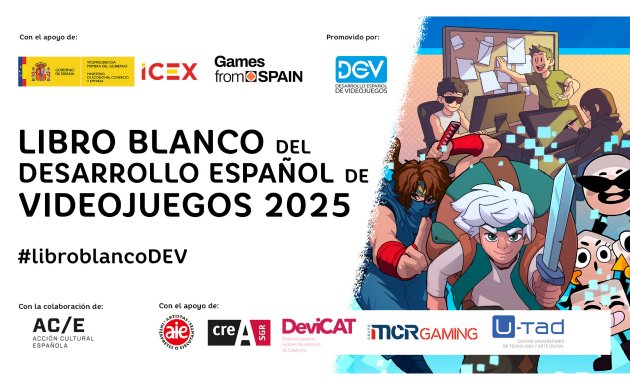
Published: 28 July 2026 Sources: AEVI 2025 Industry Yearbook, DEV White Paper, GamesMarket.global
The Spanish Video Game Association (AEVI) has published its official 2025 industry yearbook, disclosing full-year consumer gaming market metrics. Spain’s total video game revenue reached €2.293 billion in 2025, marking a year-on-year decline of 3.2% — the only major European top-five market to record negative growth. The downturn stems primarily from a sharp collapse in premium digital PC and console game & DLC sales. Nevertheless, mobile titles, subscription services and social games delivered double-digit growth, supported by an expanding domestic player base and maturing local development ecosystem, laying solid foundations for long-term industry resilience.
I. Full 2025 Market Breakdown by Segment
- Overall Market ScaleTotal industry revenue hit €2.293 billion, split between €1.419 billion digital revenue and €873 million physical sales. Spain ranks fifth among European gaming markets, trailing the UK, Germany, France and Italy. All four peer European markets posted positive growth in 2025: UK (+7.4%), Germany (+4%), France (+2.9%), Italy flat year-on-year.
- Core Segments Dragging Down Overall RevenueSales of full digital games and downloadable content (DLC) plummeted 27.8% YoY, falling from €706 million in 2024 to €509 million in 2025, acting as the primary drag on total turnover. Physical software revenue declined 11.8%, while second-hand physical game sales crashed 43%, reflecting weakened demand for premium PC and console boxed/digital titles.
- High-Growth Counter-Trend Verticals
- Mobile game app revenue rose 11.3%; mobile devices remain the top gaming platform for 43% of Spanish players;
- Game subscription revenue increased by 4%; social game revenue surged 125.2%;
- Gaming hardware sales climbed 2.6%, driven largely by the mid-2025 launch of Nintendo Switch 2.
- Rapidly Expanding Player AudienceSpain counted 22.8 million active gamers in 2025, up 3.17% year-on-year, representing nearly half the national population. The player demographic is well-balanced by gender: 51% male, 49% female, covering all age brackets with the 25–34 and 35–44 age groups each accounting for 17% of players. Spanish gamers spend an average of 8 hours and 31 minutes per week playing video games, demonstrating sustained strong entertainment demand.
II. Official Industry Comment: Short-Term Correction, Sufficient Long-Term Resilience
José María Moreno, CEO of AEVI, commented on the revenue decline: the slight turnover dip reflects a temporary structural consumption shift rather than weakening player demand. While Spanish gamers are growing in number and playtime, consumer spending patterns have shifted away from high-cost premium PC/console full-game purchases toward lightweight mobile games, subscription models and casual social titles. Though this transition suppressed traditional digital game revenue in the short run, it unlocks broader, more sustainable long-term growth channels for the sector.
Mobile gaming’s low barrier to entry has cemented its position as the mass-market foundation of Spain’s gaming ecosystem, while rising hardware sales confirm players continue to invest in gaming equipment — the console/PC segment is merely undergoing a shift in content consumption formats, not a loss of user interest.
III. Domestic Development Industry: Consistent Growth as a Long-Term Growth Engine
Contrasting the mild downturn in consumer retail revenue, Spain’s indigenous game development sector posted steady expansion, forming the core pillar for future market recovery:
- Expanding Industrial FootprintData from DEV, the Spanish Association of Video Game Developers, shows domestic development revenue reached €1.464 billion in 2025, up 2.7% YoY, with 10,508 direct industry jobs (+2.4%). There are 820 active studios nationwide, with Catalonia and Madrid generating over 70% of total production output, forming a mature industrial cluster.
- Generative AI Widely Adopted to Boost Creative Output53% of local studios integrate generative AI tools into pre-production and programming workflows to streamline asset creation. Female representation in game development stands at 27%, exceeding the European average, reflecting improving talent diversity.
- Policy Advocacy to Unlock New Growth CatalystsLocal developers are pushing national authorities to introduce targeted tax incentives aligned with the audiovisual sector, establish multi-year stable public subsidies and strengthen domestic IP ownership to reduce reliance on foreign publishers. Implementation of these policies would accelerate the scaling of independent small-to-medium studios and drive overseas revenue growth for Spanish-made games.
IV. Four Key Pillars Shaping Spain’s Positive Long-Term Industry Outlook
- Massive, Diversified Player Base Delivers Stable Baseline Demand8 million cross-age, gender-balanced gamers with consistent weekly playtime guarantee steady underlying consumer demand. Mobile gaming remains a low-friction gateway to capture untapped casual audience potential.
- High-growth Mobile, Subscription & Social Verticals Create New Revenue StreamsWhile premium PC/console game sales contract, lightweight service-based gaming models deliver consistent growth. Studios can build sustainable recurring revenue pipelines via free-to-play IAP, subscription tiers and social gameplay features to rebalance national market income structures.
- Booming Domestic Development Drives Overseas Export GrowthYears of continuous expansion in studio count, production revenue and technical talent — paired with mainstream AI creative adoption — will boost international distribution of Spanish titles, offsetting short-term domestic retail headwinds.
- Upcoming Policy Support Expected to Unlock Industrial UpsideIndustry bodies are advancing proposals to align video game tax treatment with film and television, alongside dedicated talent training and export funding. Long-term forecasts project the domestic development sector will surpass €1.65 billion in revenue by 2028, fuelling overall market recovery.
Industry Conclusion
Spain’s consumer video game market experienced a temporary revenue correction in 2025, triggered by falling spending on premium digital PC and console games. However, growing player numbers, fast-expanding mobile verticals and a thriving domestic development industry signal solid underlying industry momentum. The short-term structural shift will not reverse the sector’s long-term upward trajectory. Driven by rising mobile and service-based game penetration, growing domestic production capacity and anticipated government policy support, Spain is positioned to reverse its 2025 downturn and consolidate its status as Southern Europe’s leading gaming market.
Official Reference Links
- AEVI 2025 Market Report:
https://www.gamesmarket.global/spains-games-revenue-fell-by-3-2-in-2025/?ref=daily-update-newsletter
- DEV Spanish Game Development White Paper: https://dev.org.es/libro-blanco-2025/
熱門頭條新聞
- Evolution of Game Monetization Maps Global Investment Trends;
- Human Fall Flat Celebrates 10 Year Anniversary Alongside 60 Million Players
- Amazon MGM Studios Unveils Full ‘Warhammer 40,000’ Animated Series Project, Led by Henry Cavill & Blur Studios
- AEVI Releases 2025 Spanish Video Game Report
- The Stone Age Survival Game That Actually Has Color Is Leaving Early Access August 25
- Tiny Teams Festival Returns This August to Celebrate Micro Studios with Massive Ideas
- Two Flagship Industry Reports Unveil Critical Mobile Game Growth Barriers & Winning Strategies for 2026
- London Emerges as Europe’s Undisputed Mobile Gaming Powerhouse