Policy Empowerment Builds a High Ground, Accelerated Global Expansion Begins a New Journey – “Shanghai’s 10 Measures for Gaming” Charts a Global Blueprint for the City’s Gaming and Esports Industry
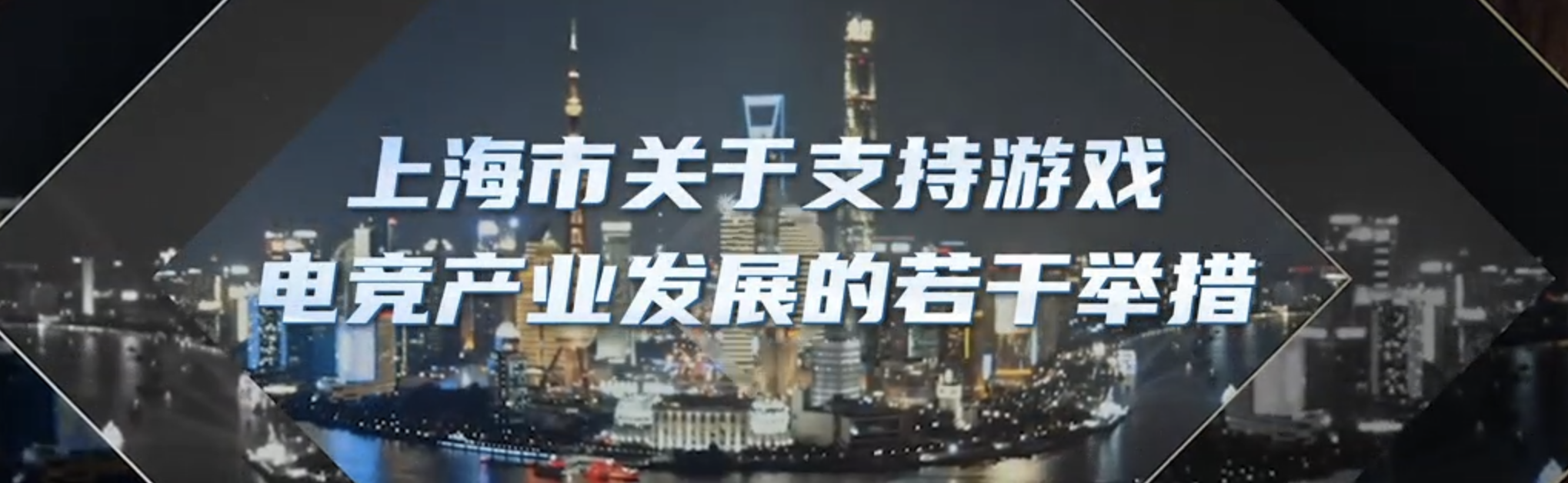
In April 2026, Shanghai officially issued the “Several Measures of Shanghai Municipality to Support the Development of the Gaming and Esports Industry” (abbreviated as “Shanghai’s 10 Measures for Gaming”). Featuring ten hard-core initiatives and an annual special fund of 50 million RMB, the measures inject strong momentum into the entire chain of the gaming and esports industry, helping Shanghai accelerate its construction as a “Global Esports Capital” with worldwide influence, and propelling “Shanghai-original” games onto the center of the global stage.
As a core highland of China’s gaming and esports industry, Shanghai has long demonstrated robust industrial strength. In 2025, the city’s online gaming industry achieved sales revenue of 170.7 billion RMB, with overseas revenue reaching 30.3 billion RMB, a year-on-year increase of 13.7% – the fastest growth rate in the nation. In the global ranking of esports city industry development indices, Shanghai secured second place worldwide. A cluster of leading enterprises such as miHoYo, Hypergryph, Lilith Games, and Papergames has emerged, with hit games like Genshin Impact, Arknights: Endfield, and Infinity Nikki captivating global audiences and serving as shining calling cards for Chinese cultural exports.
The newly released “Shanghai’s 10 Measures for Gaming” focuses on core areas including industry clustering, original high-quality games, overseas expansion services, technological empowerment, and talent cultivation. It establishes a comprehensive, multi-level policy support system that precisely addresses pain points in industrial development.
Industry Clustering and Brand Building: Shanghai designates Caohejing in Xuhui, Daxiangchuang in Yangpu, and Daning in Jing’an as core functional zones to build world-class gaming and esports industry clusters. High-quality industrial parks and incubators can receive up to 5 million RMB in annual support. Meanwhile, international exhibitions such as ChinaJoy and CIGDC will be upgraded to create a “global meeting lounge” linking the world’s gaming industry, attracting overseas companies and international organizations to establish their presence in Shanghai.
Original Quality Games and Financial Support: The policy strongly backs the development of original games that incorporate outstanding traditional Chinese culture and Shanghai characteristics. Outstanding original games are eligible for rewards of up to 2 million RMB. A Shanghai Game Industry Investment Fund will be established, with an initial fundraising target of 500 million RMB, using state-owned capital to leverage private investment, with a special focus on supporting the innovation and entrepreneurship of small game development teams. Additional financial services such as loan interest subsidies will help solve enterprise financing difficulties.
Addressing Overseas Expansion Challenges: Shanghai takes the lead nationally in building a one-stop service platform for game overseas expansion, offering full-chain services including localization, legal compliance, financial payment, and risk early warning. Platform construction can receive up to 2 million RMB in support, helping companies reduce overseas costs and accelerate global deployment. Currently, Shanghai game companies have shifted from “product export” to “global simultaneous release,” gaining a firm foothold in markets such as Europe, the US, Japan, South Korea, and Southeast Asia. Companies like Century Huatong and Moonton Games continue to see rising shares of overseas revenue.
Technological Innovation and Cross-Sector Integration: “Shanghai’s 10 Measures for Gaming” deeply implements the “Gaming+” model, supporting R&D in AI, core game engines, and other technologies, and promoting the empowerment of medical, education, cultural tourism and other industries through game technology. It also encourages cross-brand collaborations between game IPs and time-honored Shanghai brands such as White Rabbit, Laofengxiang, and Xinghualou, activating new scenarios integrating culture, commerce, tourism, sports, and exhibitions, and turning game IPs into a “super interface” connecting urban culture with young consumer groups.
Esports Ecosystem Upgrades: The policy supports the development of esports events and clubs, providing up to 3 million RMB in support for top-tier esports events. It aims to nurture local event brands and consolidate Shanghai’s position as the world’s premier destination for esports events. Furthermore, it deepens industry-education integration by supporting universities in establishing gaming and esports degree programs, offering over a thousand internship positions annually, and building an esports talent pool to secure high-quality talent for industry development.
Alongside municipal-level policy efforts, districts including Xuhui, Yangpu, Jing’an, and Minhang have quickly followed up with supporting implementation rules, forming a coordinated policy force across city and district levels. Minhang District offers up to 2 million RMB in subsidies for original games featuring Shanghai characteristics, and a 300,000 RMB reward for games that receive official publication approval and are launched, further reducing startup costs for enterprises and absorbing spillover demand from core areas.
Industry insiders note that “Shanghai’s 10 Measures for Gaming” not only provides substantial financial support for the city’s gaming and esports industry but also sends a strong signal of Shanghai’s determination to grow and strengthen the sector and promote cultural exports. From miHoYo telling Chinese stories well through original IPs, to Hypergryph reshaping overseas players’ perceptions with futuristic Eastern scenes, and many more companies leveraging policy dividends to accelerate global expansion – Shanghai’s gaming industry is moving from scale expansion to quality improvement, from product export to cultural and even standard export.
In the future, as the policies take effect, Shanghai will further enhance its core competitiveness in the gaming and esports industry, build a global hub for gaming industry resource allocation, and enable more “Shanghai-original” and “Chinese culture” content to go global through the medium of games, contributing Shanghai’s strength to the high-quality development of China’s digital cultural industry.
熱門頭條新聞
- Hong Kong International AIGC Digital Creation Competition 2026
- Beyond Concept Verification: AIGC Film & Video Enters Commercial Realization Cycle in H2 2026
- It’s Time to Reap What You Sow (and Then Throw It!) – Planted! Launches 29th October 2026.
- Award-Winning Composer Cris Velasco and Milan Records Bring the Dark, Nordic Sound of Mistfall Hunter to Life
- ArcheAge S: Strait of Freedom Targets Q2 2027 Steam Launch
- “One City Embodies Three Kingdoms, Half-Step Into Jianghu” Launches in Shanghai — Kaiying Network’s Dual Chinese-Style Game IPs Cross Over With Urban Tourism Festival, Pioneering Game-Culture-Tourism Integration Model
- Registration Opens for NVIDIA China Developer Day 2026 — A Premier Off line Tech Gathering for AI Developers in Suzhou
- Giving Back To The Industry: Nova Games Foundation Officially Launches To Empower Next Generation Game Creators