The Inaugural World Industrialisation Congress & Cambridge Industrialisation Annual Conference 2026 Successfully Held at the University of Cambridge
WIC & CIAC 2026 · August 2026 · University of Cambridge
From 20 to 22 August 2026 (local time), the World Industrialisation Congress & Cambridge Industrialisation Annual Conference 2026 (WIC & CIAC 2026) was held with great ceremony at the University of Cambridge in the United Kingdom. This was the first annual conference of the Cambridge Industrialisation Society since it was officially approved as a university level organisation at Cambridge, and it also marked the inaugural World Industrialisation Congress.
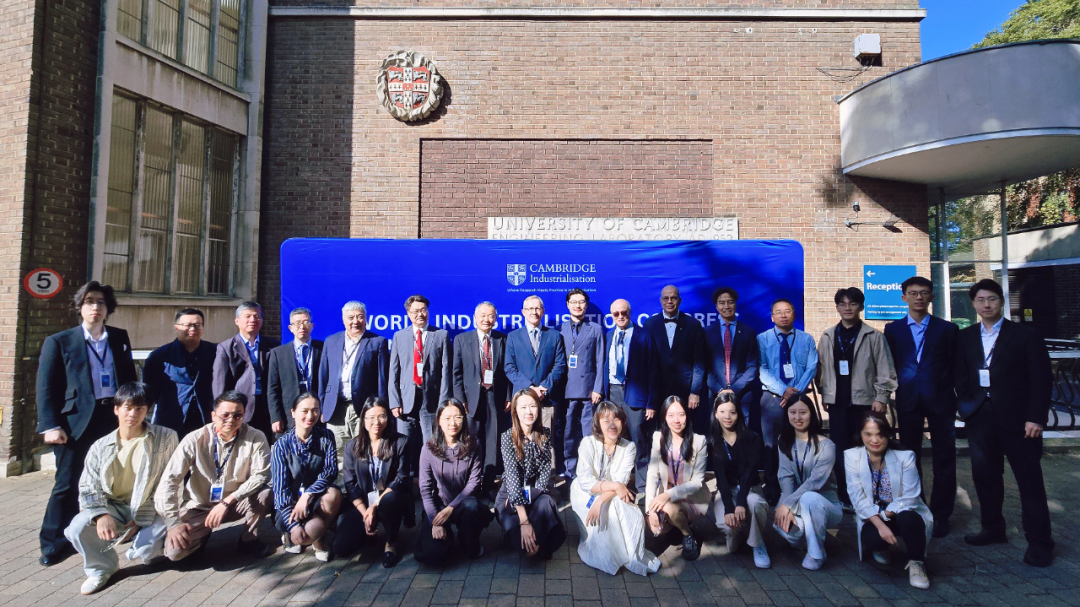
Under the theme “Industrialisation in the Digital Age”, the Congress was hosted by the Cambridge Industrialisation Society and co organised by Tsinghua University, Peking University, the University of Cambridge, the University of Oxford, and Hong Kong Metropolitan University. Scholars from these five universities, as well as from University College London, Imperial College London, Nanyang Technological University, King’s College London, Harbin Institute of Technology, Hunan University, Shenzhen University, Jinan University, Shandong University, Xi’an University of Architecture and Technology, and other institutions, gathered together with industry representatives from Deloitte, Tencent Research Institute, Alibaba Research Institute, Shupu Group, Manchester Airport Group, and other organisations. They engaged in a full day of in depth discussions around the congress themes. On the day of the Congress, deans and directors from the five co organising universities led five parallel forums, with a total of 35 keynote presentations and speeches held throughout the day.
The most significant outcomes of this Congress were the official signing and release of the Global Industrialisation Initiative, as well as the establishment of the Global Industrialisation Star Award Committee and the official introduction of its first eight members.
Congress Opening: The Question of Our Age – Industrialisation
At 9:00 a.m. on 21 August, the Congress officially opened at the Department of Engineering, University of Cambridge.
Professor Tim Minshall, Head of the Institute for Manufacturing at Cambridge and the first John C Taylor Professor of Innovation, delivered the welcome address. Professor Minshall stated: “Any economy that aspires to resilient, safe, sustainable and equitable development will have manufacturing at its core in one form or another. I am delighted to see that this Congress provides us with an opportunity to focus on collaboration and to jointly address the many challenges facing global society today and in the future.” In his short address, Professor Minshall mentioned the name “Cambridge Industrialisation” no fewer than eight times. This repeated emphasis, perhaps more than any words of praise, speaks to the recognition and support that the head of Cambridge’s manufacturing school has for the founding vision and work of the Society.
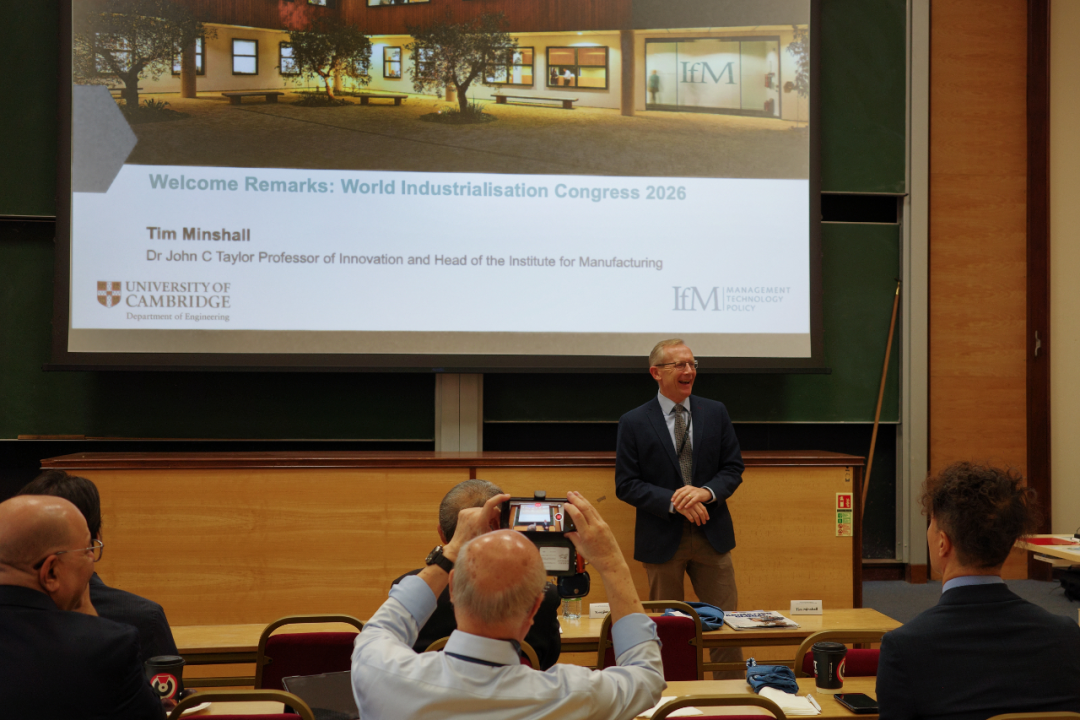
[Image: Professor Tim Minshall delivering the opening address]
Following this, Professor Yongjiang Shi, Congress Chair and Director of Research at the Centre for International Manufacturing (CIM), Institute for Manufacturing, University of Cambridge, delivered the keynote speech entitled “Industrialisation: our research journey for understanding its multiple layers and interactions”. Starting from the essence of “manufacturing”, Professor Shi systematically reviewed his team’s more than three decades of research across the intertwined dimensions of globalisation, industrialisation, digitalisation and ecosystemisation (GIDE). Drawing on cases from four decades of transformation in China’s manufacturing sector, he explored the role of business ecosystems in addressing uncertainty. He remarked: “Industrialisation is an ancient yet still vibrant topic … We hope that this inaugural World Industrialisation Congress will bring us an interdisciplinary and inspiring ‘Overview Effect’ that transcends disciplinary boundaries.”
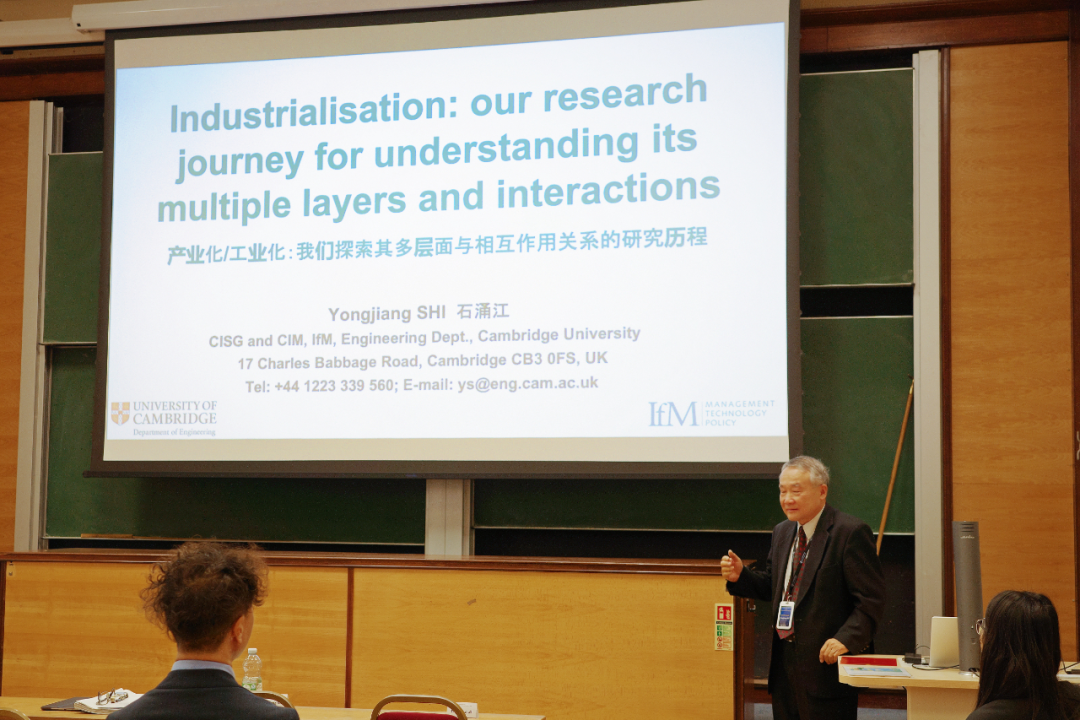
[Image: Professor Yongjiang Shi delivering the keynote]
The three Co Chairs of the Congress also gave invited speeches during the opening session: Professor Shen Tiyan, Professor of the School of Government at Peking University and Dean of the Institute of Urban Governance, spoke on “Multi scale Global Complex System Paradigm of Industrialisation”; Professor Wang Yong, Professor of the School of Social Sciences at Tsinghua University and Director of the Digital Economy Research Centre, spoke on “AI vs. Human in Dynamic Pricing: Learning Effects and Price Complementarity”; and Professor Mohan Datwani, Director of the Centre for Future Studies at Hong Kong Metropolitan University and Professor at the Lee Shau Kee School of Business and Administration, spoke on “New Industrialisation: A Global Compact for Capability”.
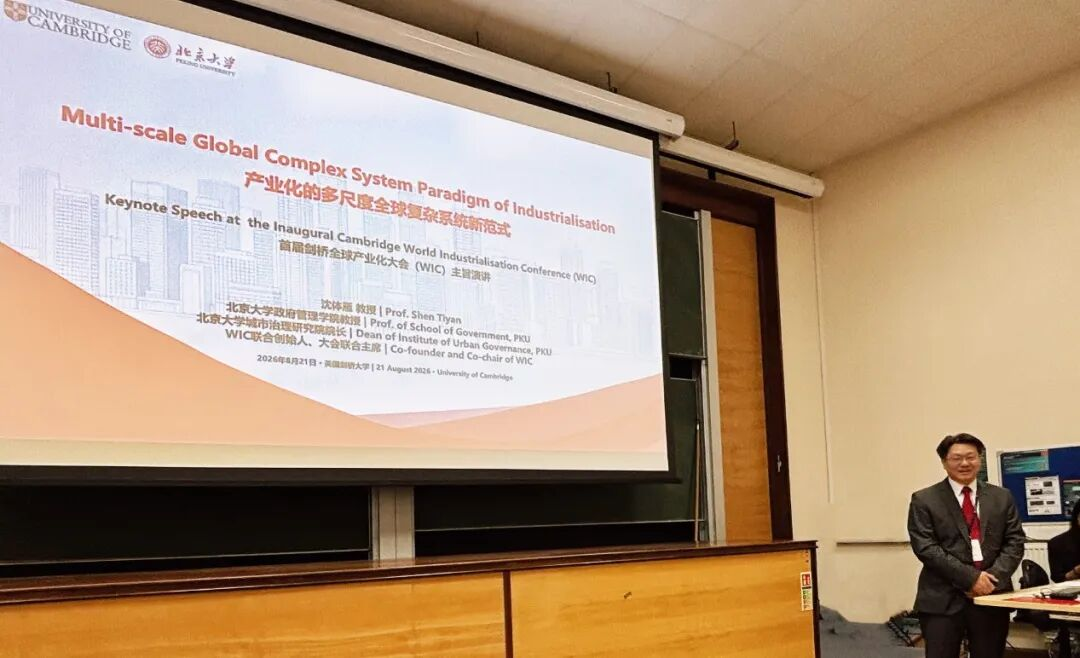
[Image: Professor Shen Tiyan of Peking University speaking]
Professor Shen Tiyan of Peking University remarked: “Without the support of governance systems and urban platforms, no industrial transformation has ever truly succeeded. The success or failure of industrialisation ultimately hinges on cities, not merely on factories. As digital technologies reshape the way industries and economies coordinate across spaces, this principle has not become outdated – it has become even more critical. This Congress deserves to be taken seriously precisely because it places governance and urban systems at the heart of the future of industrialisation, rather than treating them as optional footnotes.”
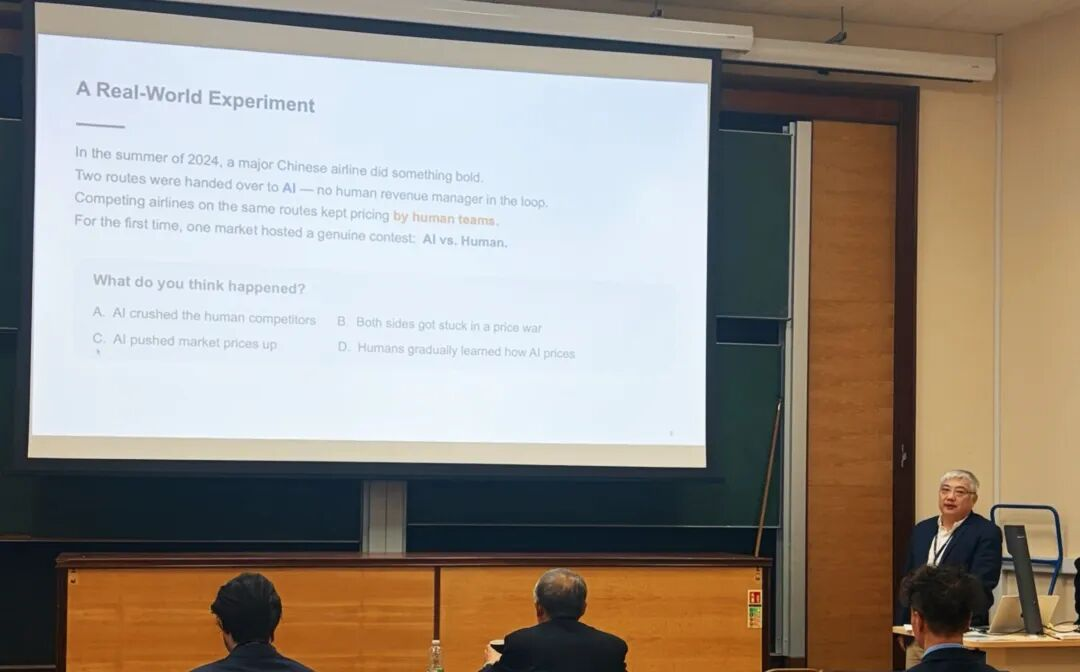
[Image: Professor Wang Yong of Tsinghua University speaking]
Professor Wang Yong of Tsinghua University said: “Technology, platforms and institutions – and the ways in which they interact, create and distribute value – will determine the next phase of industrial development. That is precisely why research on industrial and economic transformation is so important today: digital technologies are spreading across all sectors and reshaping productivity itself. This Congress stands on the world stage because it treats this transformation with the seriousness it deserves – as both an economic and a civilisational proposition.”
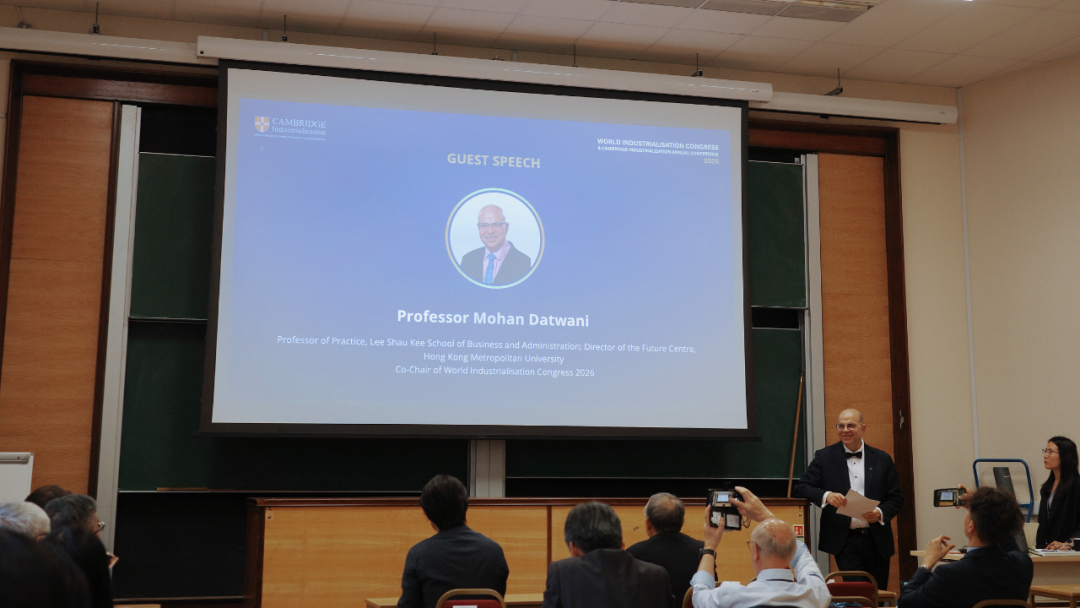
[Image: Professor Mohan Datwani of Hong Kong Metropolitan University speaking]
Professor Mohan Datwani of Hong Kong Metropolitan University stated: “Institutional and governance frameworks are the silent bedrock behind every lasting industrial achievement; without them, even the most sophisticated technologies will eventually collapse under their own weight. That is why governance must occupy a central place in any serious conversation about industrialisation – especially at a time when the pace of digital transformation has already outpaced the speed of rule making. This Congress stands out precisely because it insists on that seriousness: treating governance as an integral part of industrial progress, not as a constraint. Such work is not glamorous, but it is foundational – it quietly safeguards steady and far reaching economic progress.”
During the break, all guests moved to Queens’ College, Cambridge, for a shared lunch and a stroll through the courtyards, adding a touch of the leisurely Cambridge collegiate experience amidst the busy schedule.
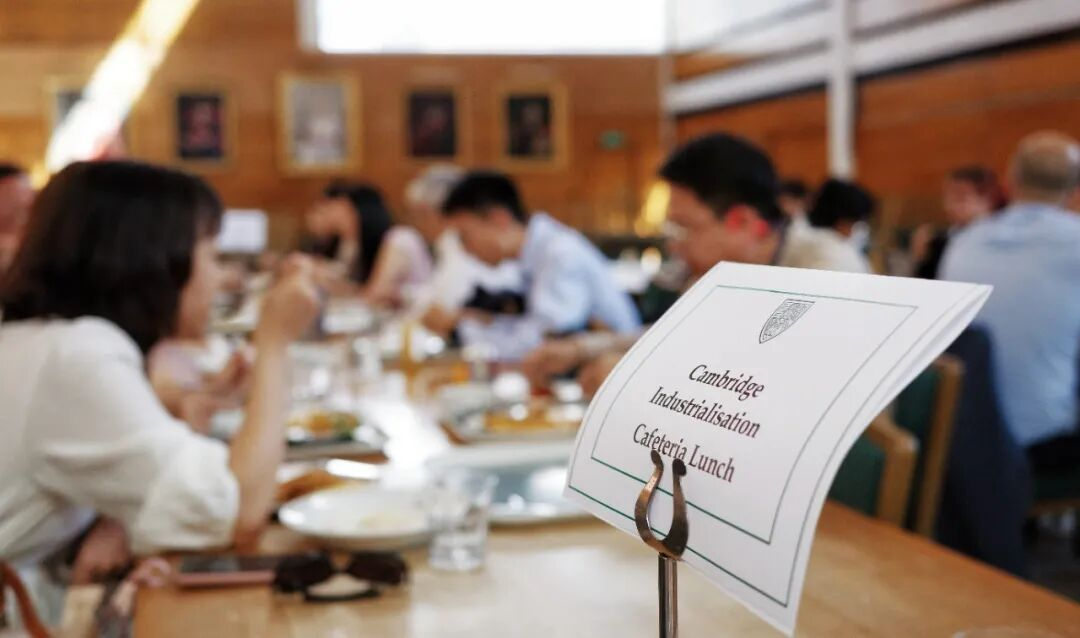
[Image: Lunch at Queens’ College, Cambridge]
A Historic Moment: Signing and Release of the Global Industrialisation Initiative
At 11:20 a.m. on 21 August, the Congress witnessed its most historic moment of the day – the signing and release ceremony of the Global Industrialisation Initiative.
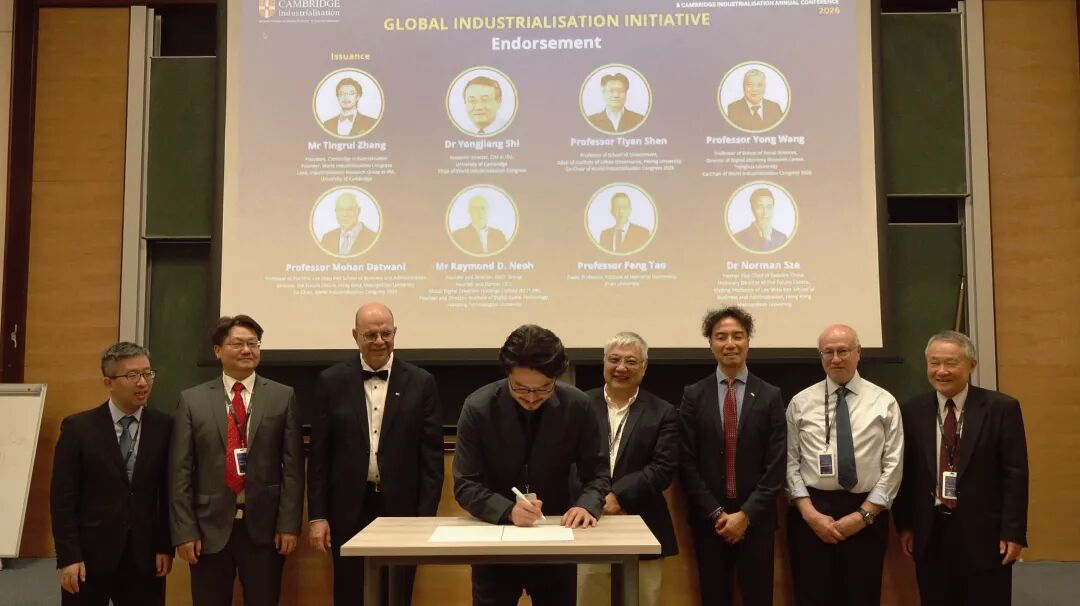
[Image: Signing ceremony of the Global Industrialisation Initiative]
The Initiative was introduced and signed on behalf of the Congress by Mr. Zhang Tingrui, Founder of the World Industrialisation Congress and President of the Cambridge Industrialisation Society. It was jointly signed in the presence of Professor Yongjiang Shi, Professor Shen Tiyan, Professor Wang Yong, Professor Mohan Datwani, Mr. Raymond D. Neoh, Professor Tao Feng, Dr. Norman Sze, and other members of the Congress Presidium and core representatives.
The Initiative opens by stating: “Industrialisation is one of the most fundamental pathways for humanity to escape scarcity, create opportunities, and move towards shared prosperity.” Upholding the principles of peace, development and international cooperation enshrined in the Charter of the United Nations, and echoing the long standing advocacy of inclusive and sustainable industrial development by the United Nations Industrial Development Organization (UNIDO), the Initiative sets out six basic principles: people centredness, openness and inclusiveness, results orientation, self sustainability, policy coherence, and greenness and security. It also issues calls for action in six areas: technology sharing, responsible development of intelligent industries, green and circular transformation, commercialisation of research outputs, development of capital and talent systems, and building global partnerships.
The Initiative envisions in particular that: “Every individual, enterprise and region that is willing to strive can find its own place in the global industrial wave … making industrialisation a force that unites the world rather than divides it, with more cooperation than confrontation and more trust than suspicion.”
This is the first programme document issued since the founding of the World Industrialisation Congress, marking the transition of this international academic cooperation platform from “building consensus” to “taking action”.
Mr. Zhang Tingrui, the initiator of the Initiative, remarked: “History remembers not those societies that merely became rich, but those that knew how to industrialise wisely. Industrialisation, in its highest form, is a process of civilisational construction: it turns innovation into infrastructure, and then turns infrastructure into everyday prosperity for all. The World Industrialisation Congress was born because the cause of industrialisation is entering a new and critical phase shaped by digital technologies, redefining how nations, enterprises and communities create value together. I believe that bringing together global industrialisation research and practice is precisely the kind of enduring, steady, and far reaching work that benefits both present and future generations.”
Joint Action: Establishment of the Global Industrialisation Star Award Committee
In parallel with the signing of the Initiative, the Global Industrialisation Star Award Committee was also established. As a long term mechanism of the Society for evaluating industrialisation and discovering exemplary cases, the “Global Industrialisation Star” aims to identify representative and promising enterprises, institutions and practices in the process of industrialisation worldwide. The Congress officially announced the first eight members of the Award Committee (listed in order of joining):
Zhang Tingrui — Founder of the World Industrialisation Congress, President of the Cambridge Industrialisation Society
Professor Yongjiang Shi — Director of Research, Centre for International Manufacturing, Institute for Manufacturing, University of Cambridge
Professor Shen Tiyan — Professor, School of Government, Peking University; Dean, Institute of Urban Governance
Professor Wang Yong — Professor, School of Social Sciences, Tsinghua University; Director, Digital Economy Research Centre
Mr. Raymond D. Neoh — Chairman of Shupu Group, Founder of Global Digital Creations (8271.HK), Founder and Chairman of the Digital Games Institute at Nanyang Technological University
Professor Mohan Datwani — Director of the Centre for Future Studies, Hong Kong Metropolitan University; Professor at the Lee Shau Kee School of Business and Administration
Professor Tao Feng — Dean and Professor, Institute of Industrial Economics, Jinan University
Dr. Norman Sze — Former CEO of Deloitte China, Adjunct Professor at Hong Kong Metropolitan University
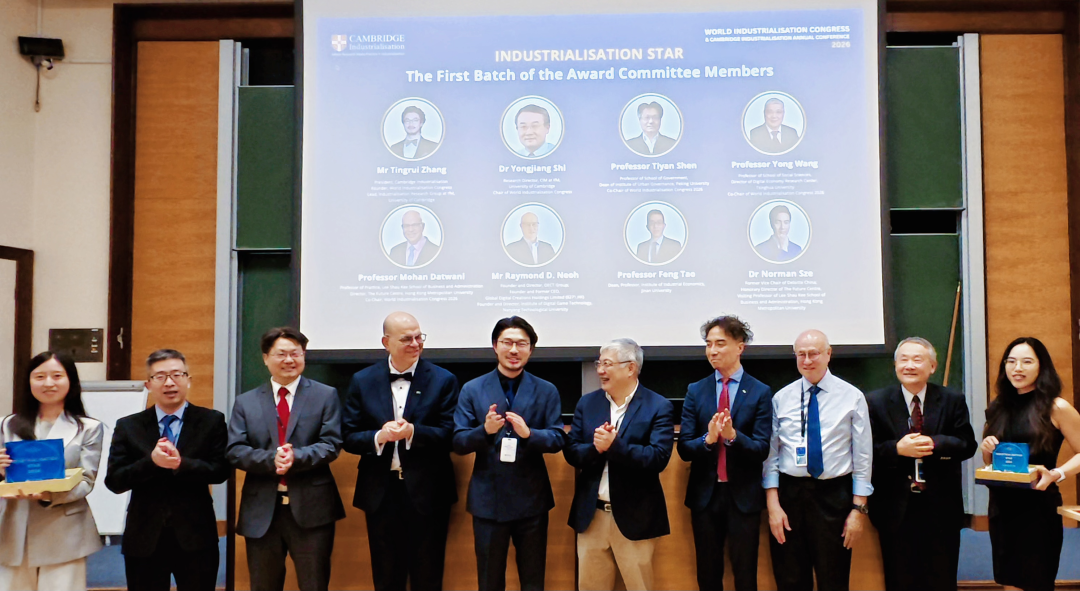
[Image: Group photo of the first members of the Global Industrialisation Star Award Committee]
Five Parallel Forums: Thirty Five Intellectual Exchanges
From 1:30 p.m. onwards, the Congress simultaneously held five parallel forums, each led and chaired by deans and directors from Tsinghua University, Peking University, the University of Cambridge, the University of Oxford, and Hong Kong Metropolitan University. These forums featured 25 special presentations and 5 roundtable discussions, which – together with the 5 invited speeches of the main morning session – brought the total to 35 presentations for the day. The main venue was moderated by Dr. Zheng Ge, Assistant Research Professor at the Institute for Manufacturing, University of Cambridge, and Vice President of the Cambridge Industrialisation Society.
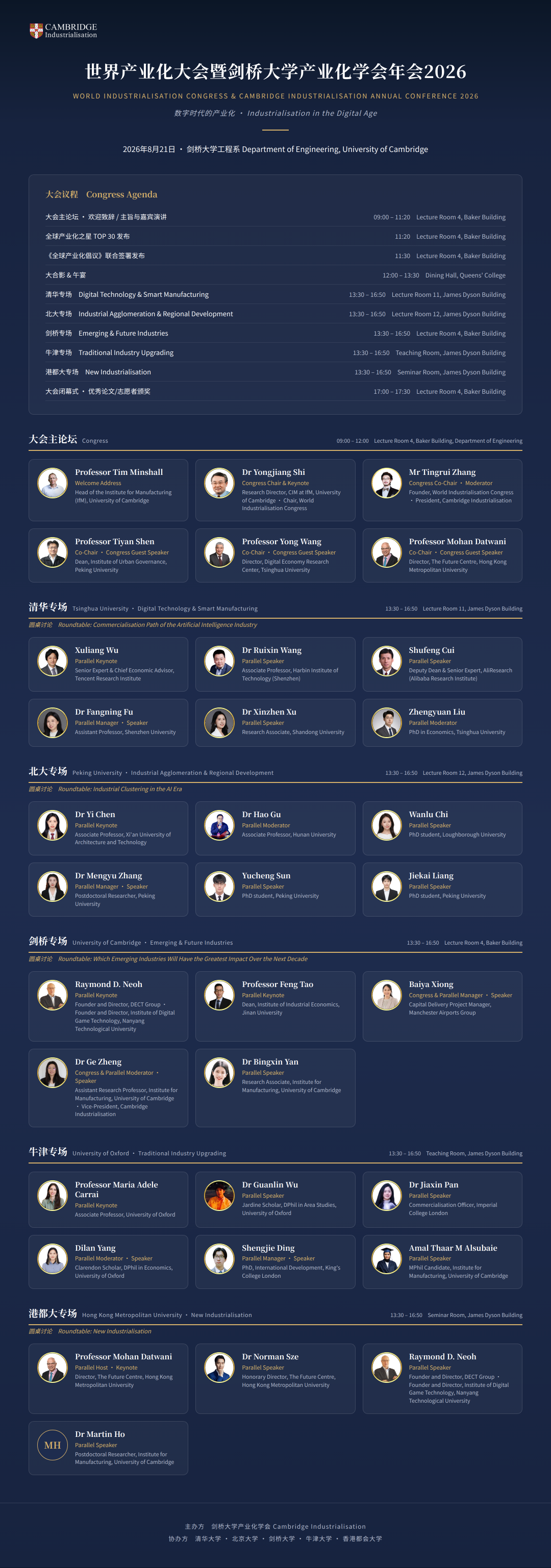 [Image: Overview of Congress and speakers]
Tsinghua Session – Digital Technology and Intelligent Manufacturing
Hosted by the Tsinghua University team, moderated by Dr. Liu Zhengyuan (PhD in Economics, Tsinghua University). Presentations were given by Wu Xuliang (Chief Economist, Tencent Research Institute), Cui Shufeng (Deputy Dean, Alibaba Research Institute), Associate Professor Wang Ruixin (Harbin Institute of Technology, Shenzhen), Assistant Professor Fu Fangning (Shenzhen University), and Dr. Xu Xinzhen (Shandong University). A roundtable discussion was held on “Commercialisation Path of the Artificial Intelligence Industry”.
Peking University Session – Industrial Agglomeration and Regional Development
Hosted by the Peking University team, moderated by Associate Professor Gu Hao (Hunan University). Presentations were given by Associate Professor Chen Yi (Xi’an University of Architecture and Technology), Dr. Chi Wanlu (Loughborough University), Postdoctoral Researcher Zhang Mengyu (Peking University), Dr. Sun Yucheng, and Dr. Liang Jiekai. A roundtable discussed “Industrial Clustering in the AI Era”.
Cambridge Session – Emerging and Future Industries
Hosted by the Cambridge team, moderated by Dr. Zheng Ge (Assistant Research Professor at Cambridge’s Institute for Manufacturing and Vice President of Cambridge Industrialisation). Presentations were given by Mr. Raymond D. Neoh, Professor Tao Feng (Jinan University), Ms. Xiong Baiya (Manchester Airport Group), Dr. Zheng Ge, and Postdoctoral Researcher Yan Bingxin (Institute for Manufacturing, Cambridge). A roundtable discussed “Which Emerging Industries Will Have the Greatest Impact Over the Next Decade”.
Oxford Session – Upgrading of Traditional Industries
Hosted by the Oxford team, moderated by Dr. Yang Dilan (PhD in Economics, Oxford). Presentations were given by Professor Maria Adele Carrai (Oxford), Dr. Wu Guanlin (Oxford), Dr. Yang Dilan, Dr. Pan Jiaxin (Imperial College London), Dr. Ding Shengjie (King’s College London), and Amal Thaar M Alsubaie (Cambridge).
Hong Kong Metropolitan University Session – New Industrialisation
Hosted by the Hong Kong Metropolitan University team, chaired by Professor Mohan Datwani, who also gave the first presentation. Presentations were given by Dr. Norman Sze (former CEO of Deloitte China), Mr. Raymond D. Neoh, and Postdoctoral Researcher Martin Ho (Cambridge). A roundtable discussed “What does New Industrialisation Look Like in Practice”.
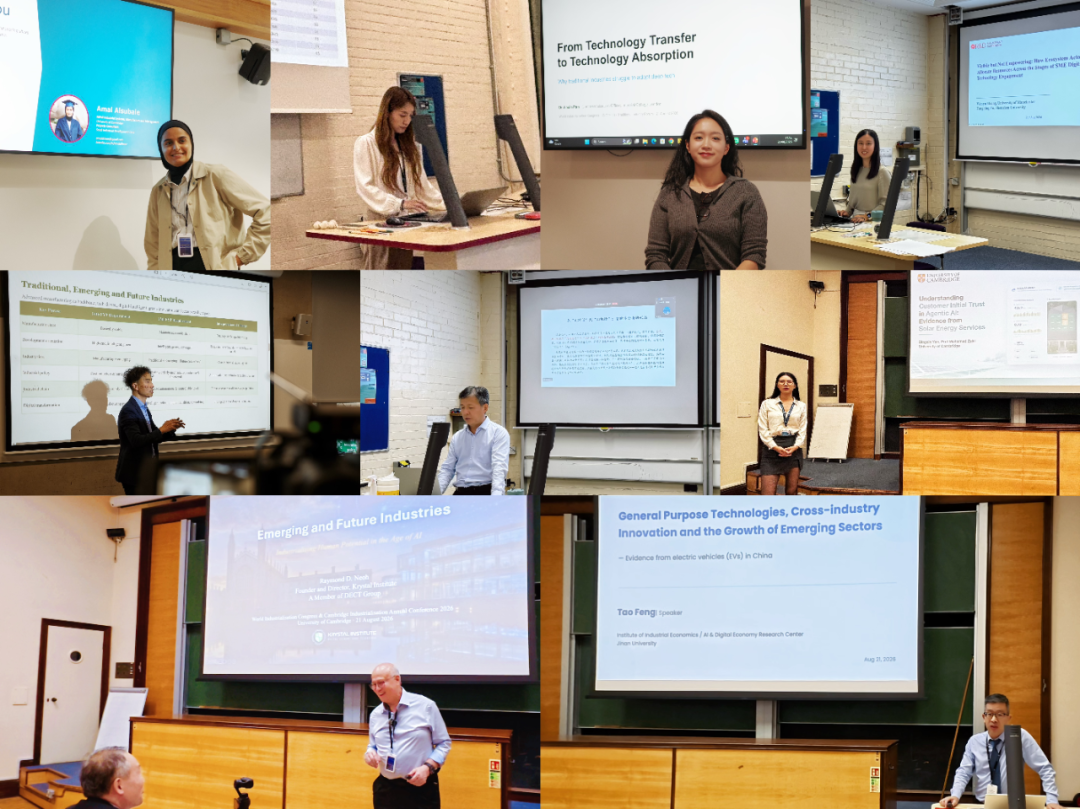
[Image: Scenes from the five parallel forums]
At 5:00 p.m., the closing ceremony took place. Congress Chair Professor Yongjiang Shi presented awards to the winners of outstanding presentations. The Secretary General of the Congress, Mr. Zhang Tingrui, presented certificates to the Deputy Secretary General and outstanding volunteers. The Congress also announced that the call for papers remains open, with plans to increase the proportion of outstanding papers awarded to around 40% in the future.
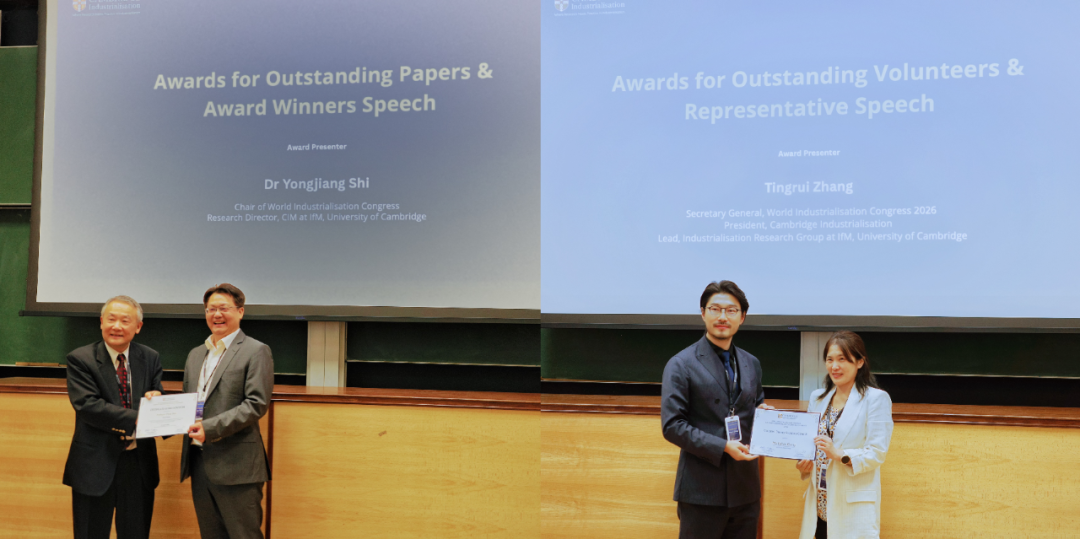
[Image: Closing awards ceremony]
Closed Door Meeting: The Highlight of the Congress
If the signing of the Initiative was the most dazzling moment of WIC 2026, then the closed door meeting held on the afternoon of 20 August was the “crowning touch” of the entire Congress.
Participants in the closed door meeting included Congress Chair Professor Yongjiang Shi, Congress Vice Chair Mr. Zhang Tingrui (Cambridge), Professor Shen Tiyan (Peking University), Professor Wang Yong (Tsinghua University), Professor Mohan Datwani (Hong Kong Metropolitan University), Mr. Raymond D. Neoh (Nanyang Technological University), Professor Tao Feng (Jinan University), Dr. Norman Sze, and other members of the Congress Presidium, as well as special guests and members of the Congress Secretariat – more than twenty core members in total. The meeting collectively reviewed the congress agenda, the Global Industrialisation Initiative, the preparations for the “Global Industrialisation Star” awards, and engaged in in depth discussions on the future development path of the World Industrialisation Congress.
The participants agreed that this closed door meeting had genuinely moved from simply “bringing people together” to “forming consensus and determining what to do”, with outcomes exceeding pre meeting expectations. The meeting clarified the development philosophy, positioning, and approaches for the World Industrialisation Congress and the Cambridge Industrialisation Society. It also reached multiple interim consensuses on case collection mechanisms, evaluation system optimisation, award committee development, and international network building, thereby outlining a clear roadmap for the next decade of the Society and the Congress.
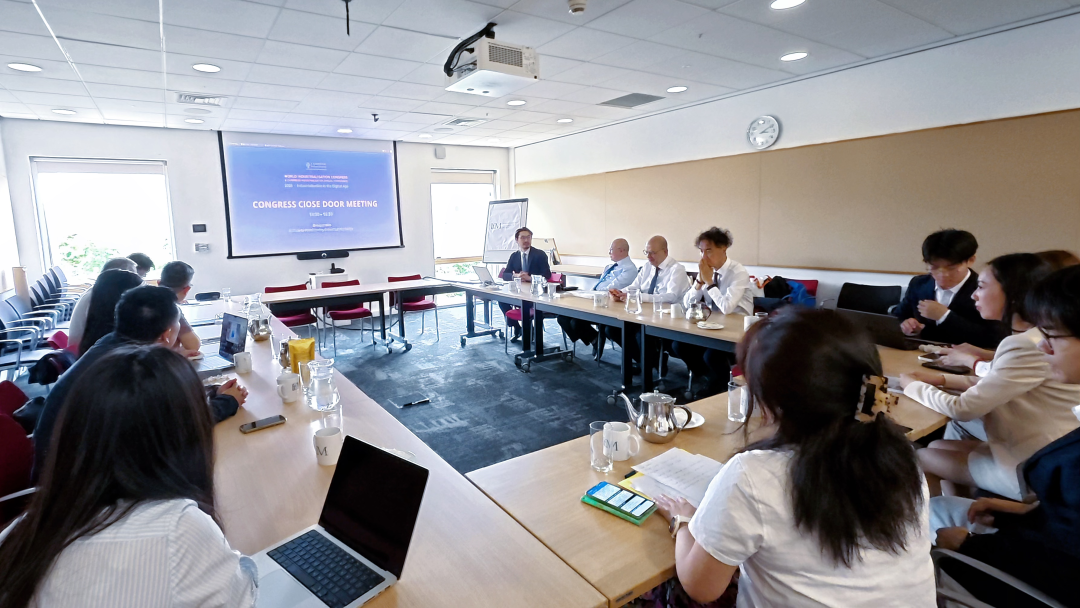
[Image: Closed-door meeting]
WIC Night: Cambridge Formal Gala Dinner
On the evening of 20 August, the Congress Organising Committee held a formal gala dinner at St John’s College, Cambridge – a college with over 500 years of history – inviting core members and registered members to gather together. Dressed in formal attire or evening gowns, guests enjoyed Cambridge’s historic collegiate tradition, sharing visions for cooperation and strengthening friendships, while experiencing an authentic taste of Cambridge college life.
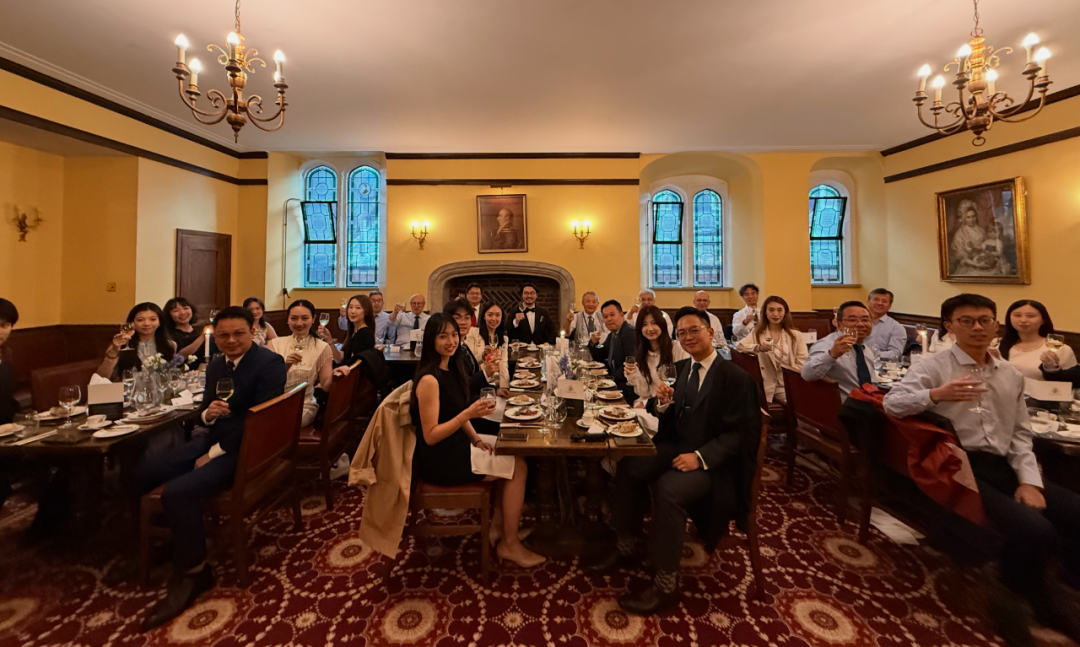
[Image: Congress gala dinner]
Moving Forward Together: From Team Exchanges to Multilateral Cooperation
Before and after the Congress, the Society and the Congress continued to expand their international cooperation landscape. On the morning of 20 August, the Peking University team and the Cambridge University team held an exchange seminar, engaging in in depth discussions on academic cooperation and experience sharing. On 22 August, the Congress held talks with Jinan University, Nanyang Technological University, Hong Kong Metropolitan University, and Shupu Group, reaching cooperation intentions in multiple areas including talent training and development, case studies, academic collaboration, and industrial liaison, and signing relevant memoranda of understanding.
The World Industrialisation Congress & Cambridge Industrialisation Annual Conference 2026 concluded successfully with a full agenda, profound intellectual exchanges, and a deep Cambridge tradition. As the Global Industrialisation Initiative envisions, let innovation and practice converge more rapidly, and let cooperation transcend borders and differences – this is only the beginning.
Welcome to register for the World Industrialisation Congress & Cambridge Industrialisation Annual Conference 2027. We look forward to seeing you again in Cambridge next year.
Official Congress Website: www.cambridgeindustrialisation.org/wic-2026
熱門頭條新聞
- The Inaugural World Industrialisation Congress & Cambridge Industrialisation Annual Conference 2026 Successfully Held at the University of Cambridge
- NetEase’s open-world urban RPG Infinity Great is set to launch simultaneously worldwide on January 15, 2027.
- TIDES OF ANNIHILATION PREMIERES ‘BENEATH THE VEIL’ TRAILER AT GAMESCOM OPENING NIGHT LIVE 2026
- Lost and Found Co. Surpasses 100,000 Copies Sold, Announces Global Event Tour
- Freaky Horde Survivor Ground Zero Hero Lands on Steam and Consoles Now to Kick Butt and Chew Candy
- Sublight Sets Course for Early Access, Launching September 15th
- Youku Animation Premieres Ground-Breaking Original 3D Donghua Oriental Martial Academy for Summer 2026;
- THE FPS GAMES SHOW DEBUTS ON 3 SEPTEMBER WITH A DEDICATED SHOWCASE FOR FPS PLAYERS