The Measures for the Identification of Artificial Intelligence-Generated and Synthesized Content will come into effect on September 1st
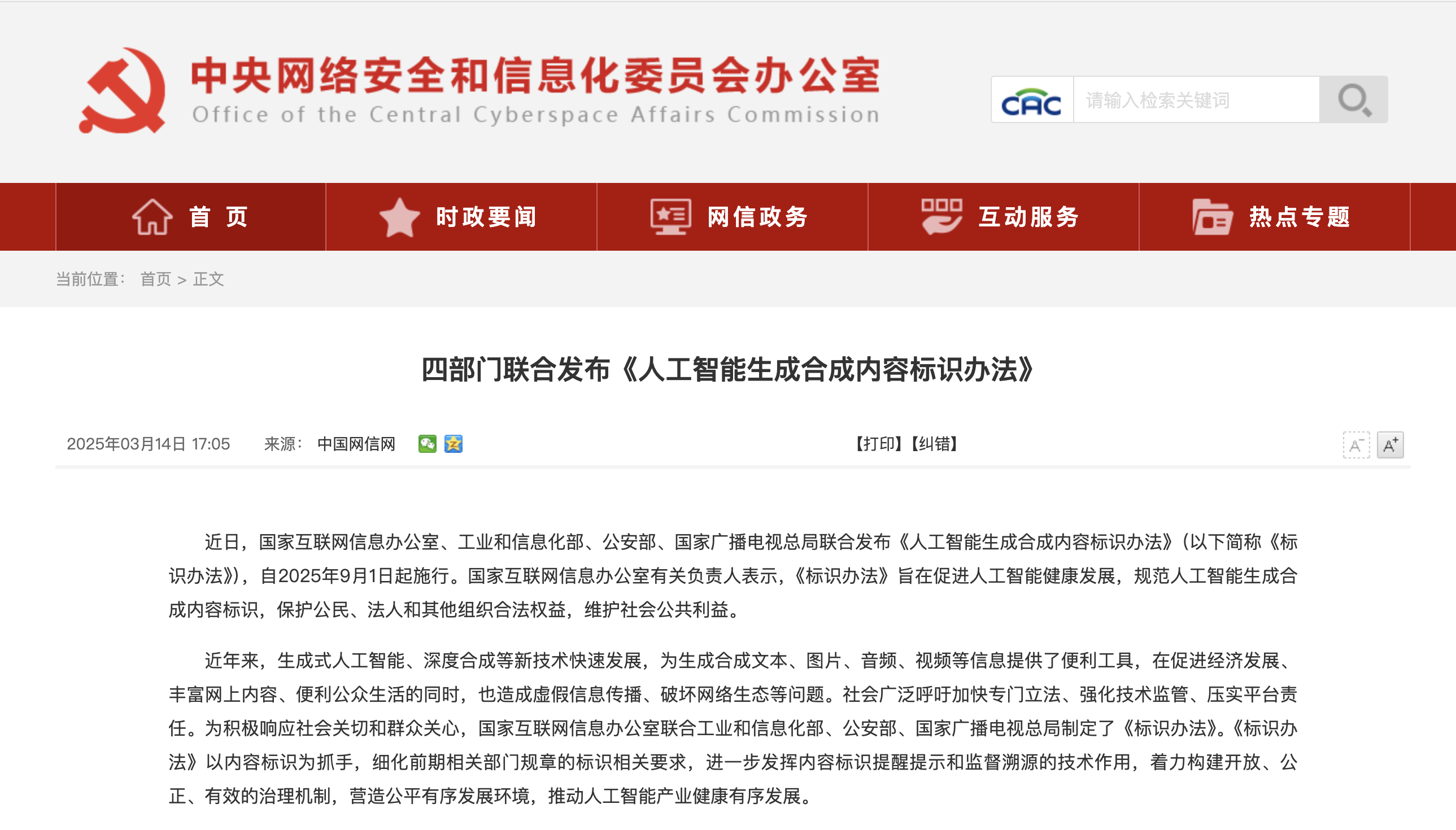
On September 1st, the Cyberspace Administration of China, the Ministry of Industry and Information Technology, the Ministry of Public Security, and the National Radio and Television Administration jointly issued the “Notice on the Release of the Measures for the Identification of Synthetic Content Generated by Artificial Intelligence” (hereinafter referred to as the “Measures”), which was officially implemented. This “Measure” aims to strengthen the standardized management of content generated by artificial intelligence technology, and promote the healthy development and standardized application of generative artificial intelligence.
Core Requirements: Clear Identification and Clear Responsibility
The core focus of the Measures lies in strictly implementing the obligation to identify content generated by generative artificial intelligence. The document stipulates:
– Provider Responsibility: Providers of generative artificial intelligence services (i.e., technology developers and providers) should prominently identify the photos, videos, texts, music, codes, and other content they generate, clearly informing users that the content is AI-generated.
– User Obligation: Providers should prompt users to assume the responsibility of identifying the generated content during the service process. This means that individuals or organizations using AI tools to generate and publish content also have the obligation to identify it.
– Special Cases for Recordation and Explanation: For special circumstances where identification is truly impossible, the Measures require providers to file with the cyberspace administration in accordance with relevant regulations and take other measures to prevent user misunderstanding or confusion.
Far-reaching Impact: Tackling Chaos and Promoting Healthy Industry Development
The introduction of these Measures is expected to have multiple significant impacts:
– Maintain a clean online space: By mandating identification, it helps curb the spread of harmful content such as false news, fraud information, rumors, and defamation generated by AI technology, enhancing the authenticity and credibility of online information and protecting the public’s right to know.
– Clarify legal and ethical boundaries: It provides a clear basis for regulatory enforcement. Those responsible (providers and users) for engaging in illegal activities using unmarked AI content will be held accountable according to law, which helps draw the ethical red line for the application of technology.
– Promote sustainable innovation in the industry: A regulated environment actually offers clear rules for responsible AI research and development enterprises, ensuring fair competition. In the long run, it is conducive to building user trust and promoting the healthy and orderly development of generative AI technology within the framework of the rule of law.
According to the notice, the “Measures for the Identification of Content Generated and Synthesized by Artificial Intelligence” will come into effect on September 1, 2025. The setting of this implementation date not only reflects the timeliness of regulation but also leaves a certain period of preparation and transition for service providers to make technological renovations and business adjustments.
The industry generally believes that these “Measures” represent a crucial step forward in China’s governance of artificial intelligence, marking the entry of AI-generated content into a new regulatory phase characterized by “traceability, identifiability, and strong accountability”.
熱門頭條新聞
- Yahoo Quietly Rebuilds Its Games Business: Daily Web-based Casual Games Open A New Growth Trajectory
- gamescom asia × Thailand Game Show 2026 Returns to Bangkok
- TIGA Submits Autumn Budget Proposals, Calls for Enhanced Video Games Expenditure Credit (VGEC) to Boost UK Games Industry
- Call for Entries Opens for FFAA 2027
- Rocketry, a Rocket Building and Space Exploration Simulator Coming to PC in 2027
- TOKYO GAME SHOW 2026 Marks Its 30th Anniversary with Record-Length Five-Day Run at Makuhari Messe; Complete Overview of Dates, Speakers, Exhibitors & On-Site Key Activities
- Hong Kong International AIGC Digital Creation Competition 2026
- Beyond Concept Verification: AIGC Film & Video Enters Commercial Realization Cycle in H2 2026