miHoYo Announces 100 Billion Yuan AI Investment in Three Years, Betting Big on the AI-Driven Game Era
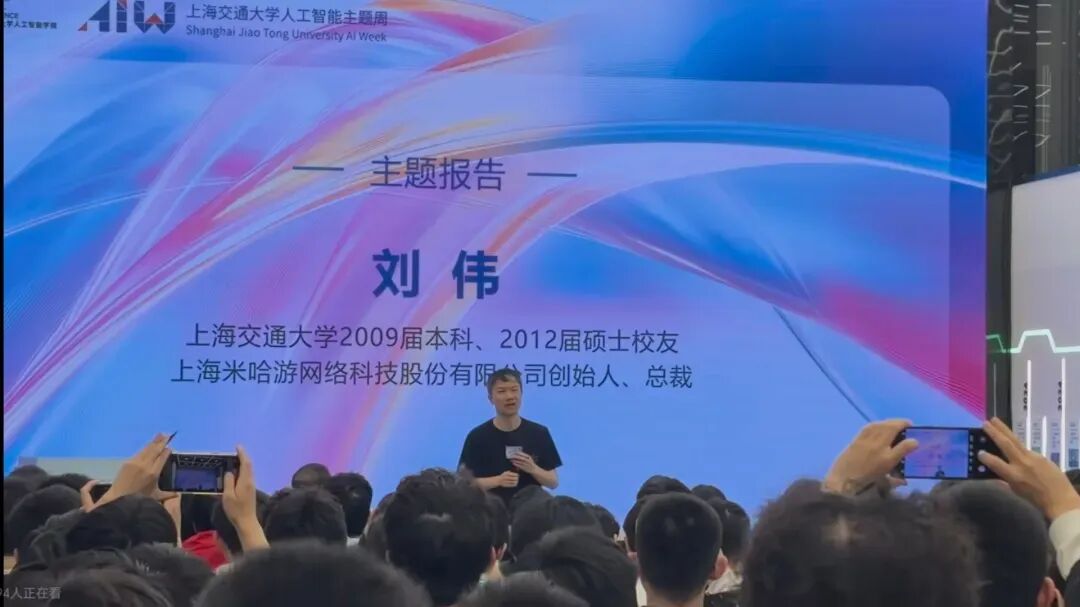
On May 15, 2026, miHoYo held its AI Large Model Tech Sharing Session & Top Campus Recruitment Presentation in Beijing. Liu Wei (Dawei Ge), co-founder of miHoYo, officially unveiled a landmark strategy: the company will invest up to 100 billion RMB in AI over the next three years and stick to full-stack self-research, accelerating its transformation into an AI-driven technology company.
Liu openly stated that even if the project ultimately fails, “we will accept it and treat it like setting off a big fireworks display.” His words fully demonstrate miHoYo’s determination and resolve to deeply explore artificial intelligence.
Behind the 100 Billion Investment: Targeting “Fully Personalized” Gaming Experience
Liu Wei made it clear at the event that the most transformative direction AI will bring to gaming is full personalization. Powered by AI, games will generate real-time content, dynamic storylines, exclusive quests and gameplay, truly delivering an immersive “thousand faces for thousand players” experience. He predicted that such AI-native games will emerge within three years, and miHoYo is working hard toward this goal.
miHoYo’s AI strategy has now taken clear shape:
- Founders stay at the forefront of technologyto maintain sharp technical sensitivity and efficient decision-making.
- Promote flat team structure, avoid the “top expert trap”, and encourage young teams to overtake in technology.
- Establish the core R&D philosophy of AI for AI, Model with Model, letting large models participate in tuning, coding and bug detection autonomously.
- Focus on general large language models (LLM) and AI Agents; co-founder Cai Haoyu has shifted R&D focus back to China, with core teams fully concentrated.
In terms of product implementation, miHoYo has achieved phased breakthroughs:
- Honkai: Star Raillaunched its AI assistant “Pom-Pom Help” in beta, supporting natural language interaction, strategy queries and fun conversations.
- Project M-STARSintroduced AI NPCs with long-term memory and emotional responses, marking a shift from traditional UI to natural language dialogue in game interaction.
Industry Trend: AI Becomes Standard in China’s Game Market, Reshaping the Entire Industry
In 2026, AI has evolved from an option to a compulsory course for China’s game industry. It penetrates every scenario — R&D, art, storytelling, operation, marketing and user interaction — officially launching the AI-native era for games.
- Mainstream Trends of AI Application in China’s Game IndustryIndustrialized Content ProductionAIGC fully covers 2D/3D art, level design, storytelling and sound effects. Leading companies have cut art costs by 70%–80% and shortened R&D cycles by over 60%, greatly improving productivity.
- AI Agents Become Core GameplayAI teammates, intelligent NPCs and natural language interaction are no longer gimmicks but standard features. Games such as Game for Peace, Justice Online and miHoYo’s dynamic interactive characters significantly boost retention and monetization.
- Personalized Experience Becomes Competitive FocusThe industry is shifting to dynamic narration, real-time generation and exclusive content, breaking homogeneity through “thousand faces for thousand players”.
- Self-developed Large Models & Private Deployment AccelerateTencent, NetEase, miHoYo and other giants have launched self-developed large models, achieving full control over computing power, algorithms and data to support high-concurrency, high-security game scenarios. Deep Impacts of AI on China’s Game IndustryProduction Paradigm Restructured The game industry transforms from labor-intensive to technology-intensive. Even small and medium teams can efficiently produce high-quality content with AI, enhancing the value of creativity.
- Experience Paradigm UpgradedGames evolve from “fixed scripts” to dynamic worlds and real-time co-creation, with more immersive storytelling, exploration and combat, extending product lifecycle.
- Competitive Landscape ReshuffledTechnology and creativity replace pure manpower input, forming a high-quality, concentrated market structure and driving high-quality industry development.
Enhanced Global Competitiveness AI greatly reduces localization costs for global publishing, helping Chinese games iterate rapidly in art, story and localization, and strengthening their global market position.miHoYo’s 100-billion investment is not only a bold corporate strategy but also a signal that China’s game industry has entered the deep water zone of AI-driven development. As technology, creativity and AI integrate deeply, the next generation of gaming is about to arrive.
Hot News
- Hong Kong International AIGC Digital Creation Competition 2026
- Beyond Concept Verification: AIGC Film & Video Enters Commercial Realization Cycle in H2 2026
- It’s Time to Reap What You Sow (and Then Throw It!) – Planted! Launches 29th October 2026.
- Award-Winning Composer Cris Velasco and Milan Records Bring the Dark, Nordic Sound of Mistfall Hunter to Life
- ArcheAge S: Strait of Freedom Targets Q2 2027 Steam Launch
- “One City Embodies Three Kingdoms, Half-Step Into Jianghu” Launches in Shanghai — Kaiying Network’s Dual Chinese-Style Game IPs Cross Over With Urban Tourism Festival, Pioneering Game-Culture-Tourism Integration Model
- Registration Opens for NVIDIA China Developer Day 2026 — A Premier Off line Tech Gathering for AI Developers in Suzhou
- Giving Back To The Industry: Nova Games Foundation Officially Launches To Empower Next Generation Game Creators