First Three Kingdoms Culture Forum Held in Guangzhou, Exploring the “Evergreen” Path for a Super IP in the Digital Age
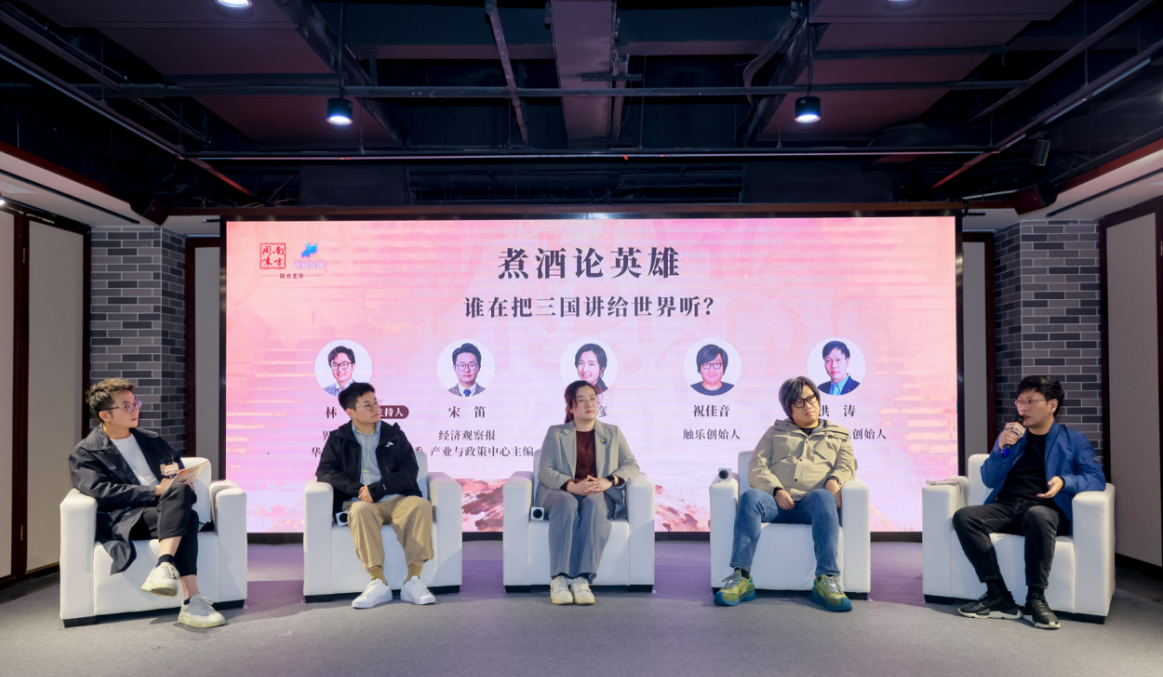
On January 5th, the inaugural cultural summit focusing on the Three Kingdoms theme in China’s gaming industry—”Evergreen Three Kingdoms: Reconstruction, Innovation, and Globalization”—was held in Guangzhou. Co-hosted by Southern Weekly and Alibaba’s Lingxi Games, the forum brought together representatives from industry associations, academia, media, and enterprises to explore how gaming, as an emerging medium, can inject contemporary vitality into the nearly two-thousand-year-old Three Kingdoms culture and examine the global industrial value of this national-level super IP.
Player Path “Reversal”: From Gaming to Actively Exploring History
The forum highlighted a “path reversal” in how the younger generation engages with Three Kingdoms culture. Increasingly, young people develop an interest through games like Three Kingdoms: Strategy Edition and then proactively delve into historical texts, researching figures and debating strategic gains and losses. Historian Liu Bo suggested that games, due to their inherent need to consider systematic elements like resources, geography, and development, can sometimes come closer to the internal logic of history than novels.
“Players naturally have the ability to ‘change’ history,” noted Ma Shuming, producer of Three Kingdoms: Strategy Edition, emphasizing that the core appeal of games lies in the player’s shift from observer to decision-maker. To build credible immersion, the development team insists on rigorous historical research—such as studying ancient techniques in freezing cold to verify the “overnight ice city” legend or retracing the ancient Shu roads—transforming research findings into rich in-game and external content.
Deep Reconstruction and Innovation: “Humanities + Technology” Broadens Narrative Boundaries
Addressing the question of how to keep classics “evergreen,” the forum proposed dual pathways of “reconstruction” and “innovation.”
Reconstruction means rooting deep to capture the spirit of the era. Li Zhiqian, Co-President of Lingxi Games, emphasized that being “meticulous” about history is not for replication but to grasp the core spirit of strategy, loyalty, circumstances, and heroes. Professor Zhong Zhijin, Dean of the School of Journalism and Communication at Sun Yat-sen University, analyzed that players invest genuine emotion and time into game alliances, building highly cohesive, strong social networks that form vibrant online communities—a contemporary reconstruction of historical social relations.
Innovation lies in broadening narrative and technological horizons. Technologically, games have evolved from plot recreation to systematic, deep simulation of complex historical situations. Narratively, creative perspectives are expanding from traditional heroic epics to focus on ordinary people in turbulent times, women’s fates, and the complex inner worlds of historical figures, as seen in Ru Yuan which adopts a female perspective. Meanwhile, new technologies like AI open new possibilities for enhancing content diversity and achieving personalized experiences.
Globalization Outlook: Crossing Cultural Boundaries, Shifting from “Output” to “Resonance”
Three Kingdoms culture is becoming a globally resonant Chinese cultural icon through carriers like games. Data shared by Zhang Yi, Founder of iiMedia Research, shows that China’s gaming market is projected to reach 500 billion yuan in 2025, with overseas revenue accounting for about 150 billion yuan, indicating significantly rising demand for products with deep cultural attributes. He proposed the observation of “culture first, products later,” noting that the cultural sentiment deeply rooted in global Chinese communities forms a natural foundation for the Three Kingdoms IP’s global reach.
Successful globalization hinges on finding universal human resonance and contemporary expression. A consensus at the forum was that the underlying logic for crossing cultures lies in the common human emotions embedded in Three Kingdoms stories—loyalty, strategy, and growth. Lingxi Games’ practice demonstrates that validating market potential through depth and strategy in Three Kingdoms: Strategy Edition, then broadening genres and narrative dimensions with products like Three Kingdoms Fantasy Mainland 2: Song of the Owl and Ru Yuan, is an effective path to activating the IP.
“Our overseas expansion is not just about product export but also cultural dialogue,” stated Li Zhiqian, expressing Lingxi Games’ vision to become a globally competitive enterprise. Future Three Kingdoms games should “use language and gameplay the world understands to tell stories containing Eastern wisdom,” achieving a leap from cultural output to cultural resonance.
Conclusion: Driven by Product Capability, Injecting Enduring Vitality into Classics
The forum ultimately returned to the fundamentals of industrial development. Li Zhiqian pointed out that among the different paths the gaming industry pursues for “evergreen” success, Lingxi Games has chosen to be “driven by a youthful organization and a product-capability-driven strategy.” By building a three-dimensional, healthy product matrix and balancing “deepening” a single track with “broadening” genre expression, it continuously creates diverse value for users.
This was not merely a discussion about Three Kingdoms games but a deep reflection on how to inherit and innovate traditional culture in the digital age and how Chinese stories can win global resonance. As games evolve beyond mere entertainment to become hubs of cultural experience, the millennia-old wisdom of the Three Kingdoms will find its “evergreen” path to the next millennium through interaction and resonance.
Hot News
- New AI, New Computing — The 7th AI Computing Conference (AICC2026) Grandly Opens in Beijing
- Germany’s Federal Game Development Funding Programme Allocates €267 Million Over Seven Years, Reshaping Domestic Gaming Industry Competitiveness
- PIF-Backed Merger Proposal Between EA and Savvy Games Could Reshape Global Gaming, With Far-Reaching Impacts on Both Parties’ Businesses
- Farming Camp Demo Expands to PS5, Xbox, Switch & Microsoft Store
- MIPJUNIOR 2026 to Open in Cannes: Full Introduction of Dates, Participation Channels, Core Sessions and Industry Significance
- Chill with You: SHIOI’s Sparkling Scenes – Steam Store Page Is Now Live
- SIGGRAPH Asia 2026 Takes Shape: Distinguished Keynote Speaker Line-up Unveiled
- Apple Completes App Store Leadership Transition; New Management Pursues Higher Margins, Phil Schiller Steps Back From Day-to-Day Operations