Google to Open Google Play to Third-Party App Stores Starting Last Week ; Antitrust Ruling Reshapes Android Ecosystem with Short-Term Revenue Pressure on Google
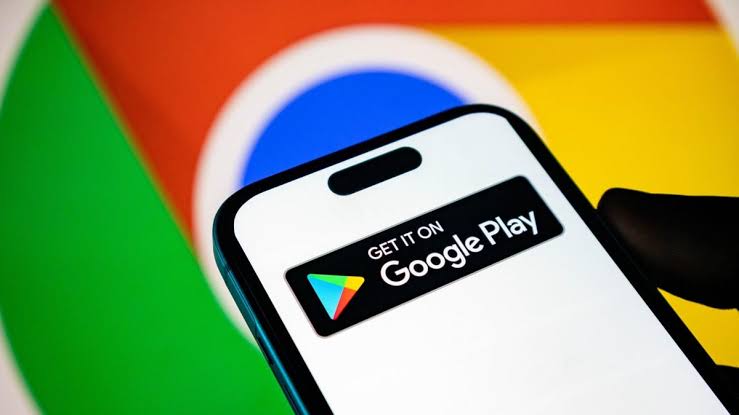
After a six-year antitrust legal battle with Epic Games, Google has formally abandoned the previously proposed compromise settlement and fully complied with the original U.S. court injunction. Starting last week, Android users in the U.S. can directly download and install third-party app stores within Google Play under the newly launched Play Catalog Access Program. The sweeping reforms loosen restrictions on app distribution and payment systems, bringing greater options for developers and consumers, yet exert immediate downward pressure on Google’s revenue from platform commissions. In the long run, Google will offset earnings losses via its advertising business and consolidate its dominance over the Android ecosystem.
1. Background: Settlement Draft Scrapped, Full Enforcement of Court Mandate
Epic Games, creator of hit title Fortnite, filed an antitrust lawsuit against Google in 2020 after Google removed the game from Play Store for bypassing Google’s official billing system to evade the 30% platform commission. In 2023, the court ruled Google maintained an illegal monopoly over Android app distribution, ordering structural reforms including lower service fees and open access for rival marketplaces.
In November 2025, Google and Epic reached a tentative settlement centered on a Registered App Stores program, which only streamlined sideload installation instead of allowing third-party stores to list natively on Google Play. U.S. District Judge James Donato repeatedly questioned whether the deal could eliminate Google’s channel monopoly. In mid-July 2026, both parties jointly withdrew their motion to modify the court’s permanent injunction, scrapping the compromise and committing to full compliance with the original ruling.
2. Core Policies Taking Effect This Week (U.S.-Only Implementation)
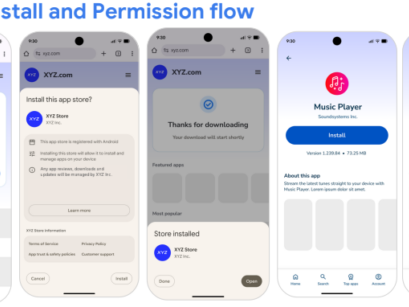
Third-Party Stores Allowed Official Listings on Google Play Qualified third-party marketplaces, including Epic Games Store, Microsoft’s Xbox mobile store, Amazon Appstore and Samsung Galaxy Store, can publish official listings on Google Play. Users can install these rival stores with one tap without cumbersome sideload workflows and repeated security warning pop-ups. All app metadata, assets and listings hosted on Google Play will be automatically shared with participating third-party stores, with an opt-out mechanism available for individual developers.
Entry Requirements & Google’s Fee Structure for Third-Party Operators Third-party store operators must pay a one-time $5,000 security review fee and an annual $5,000 license fee to access Google’s full app catalog. Strict compliance rules apply: malware installation failure rates below 1%, non-discriminatory policies for all developers, exclusive service to U.S.-based users, and mandatory app update/uninstall mechanisms. Violators will be permanently removed from the program.
Notably, all app downloads and underlying distribution infrastructure remain controlled by Google Play even when accessed via third-party storefronts, meaning Google retains full authority over core distribution in a framework of “controlled openness”.
Revised Commission & Payment Rules Per the terms of the Epic settlement, Google’s standard in-app purchase commission has been slashed from 30% to 20%, while subscription service fees drop to 10%. Developers are permitted to integrate alternative third-party payment gateways or redirect users to brand-owned web checkout pages without mandatory use of Google’s native billing. A supplementary 5% processing surcharge applies only if developers opt into Google Play Billing alongside alternative payment channels.
3. Two-Sided Financial Impact on Google: Short-Term Earnings Headwinds, Long-Term Offset Opportunities
(1) Near-Term Revenue Contraction: Declining Commission Income
- Margin shrinkage from steep commission cutsThe removal of the historic 30% platform tax, combined with transaction diversion to rival stores, industry analysts estimate Google’s annual gross profit from Play Store commissions could drop by $1–1.5 billion. Analysts at JPMorgan and Wells Fargo forecast a 1%–2% hit to Alphabet’s EPS, creating near-term growth drag on Google’s services segment.
- Dual transaction diversion erases billing revenueMajor publishers including Epic Games and Spotify will incentivize users to adopt external payment systems to skip Google’s billing surcharge. Parallel traffic migration to third-party storefronts further reduces transaction volume flowing through native Google Play channels; large gaming studios have recorded a 25% reduction in platform commission payouts after switching to independent billing frameworks.
- Minimal offset from third-party store licensing feesAnnual $5,000 licensing fees per marketplace generate negligible total revenue compared to the shortfall in in-app purchase commissions, failing to make up lost earnings.
(2) Long-Term Strategic Offsets: Advertising to Recover Lost Income Streams
- Expanded Android ecosystem drives advertising growthGoogle’s core profit engine lies in search, YouTube and mobile advertising rather than Play Store commissions. Lower platform fees lower barriers for developers to launch apps on Android, and publishers will reinvest saved commission margins into Google’s ad buying ecosystem. Rising ad revenue will partially counterbalance losses from store commissions.
- Mitigation of global regulatory risksFull compliance with U.S. court orders avoids massive antitrust fines and sets a reform template for regulators across the EU, South Korea and other major markets, reducing the risk of separate punitive rulings worldwide. Sustained massive Android user volumes secure long-term upside for ads and cloud services.
- Permanent control over core distribution infrastructureAll app installation, updates and security scanning rely on Google Play’s backend architecture, allowing Google to retain full access to user distribution data and device traffic. The company maintains foundational channel power to unlock additional monetization opportunities from user data.
4. Industry-Wide Impacts
- Developers: Higher revenue retention via reduced platform fees, diversified distribution channels to reduce reliance on a single marketplace, and flexibility to launch exclusive web-based discounts for consumers. Independent small-scale developers stand to benefit most.
- End Users: Wider selection of app marketplaces, potential price reductions as developers pass on commission savings, and simplified installation of third-party stores unified under Google’s security framework.
- Competing Platforms: Microsoft’s Xbox mobile game store and Epic Games Store gain a streamlined official launch pathway, breaking Google’s exclusive hold over Android app distribution and creating a multi-player competitive landscape.
5. Market Outlook
The July 28 policy rollout is limited exclusively to the United States, with no parallel mandatory rules for global markets. Google plans to roll out the sideload-focused Registered App Stores program for regions outside the U.S., establishing a dual-track operating model: native third-party store listings in America, simplified sideload access for overseas users. Industry observers predict Google may accelerate global expansion of the Play Catalog Access Program if U.S. revenue declines exceed internal forecasts, rewriting global Android distribution standards.
Dan Jackson, Google’s Trust & Reputation Communications Lead, stated the reforms fully fulfill the U.S. court’s injunction while preserving Android’s industry-leading security capabilities. Google remains focused on building a competitive ecosystem for all store operators and developers, balancing short-term revenue pressure with long-term sustainable growth of the Android ecosystem through global business model transformation.
熱門頭條新聞
- SIGGRAPH Asia 2026 Takes Shape: Distinguished Keynote Speaker Line-up Unveiled
- Apple Completes App Store Leadership Transition; New Management Pursues Higher Margins, Phil Schiller Steps Back From Day-to-Day Operations
- Apple’s new EU App Store Business Terms Still Violate the Digital Markets Act (DMA).
- Lost and Found Co. Developer Bit Egg Becomes First Game Studio to Win Thailand’s Prestigious Prime Minister’s Export Award
- DRAGONHEIR: SILENT GODS MARKS THIRD ANNIVERSARY WITH COMMUNITY-CREATED HERO AND ORDER VS. CHAOS SHOWDOWN
- China Domestic Animation Summer Season 2026 Review: Box-office Boom for Theatrical Animation, Established Web Series Face Headwinds, AI Man-Dramas Explode for New Growth
- Tianji: Shadow of the Ancients, Coming 2027 to Multiple Global Platforms
- China’s Anime-Goods (“Guzi”) Economy 2026 Market Review