Generative AI Reshapes the Gaming Industry: Empowering Creation and Defining Future Development
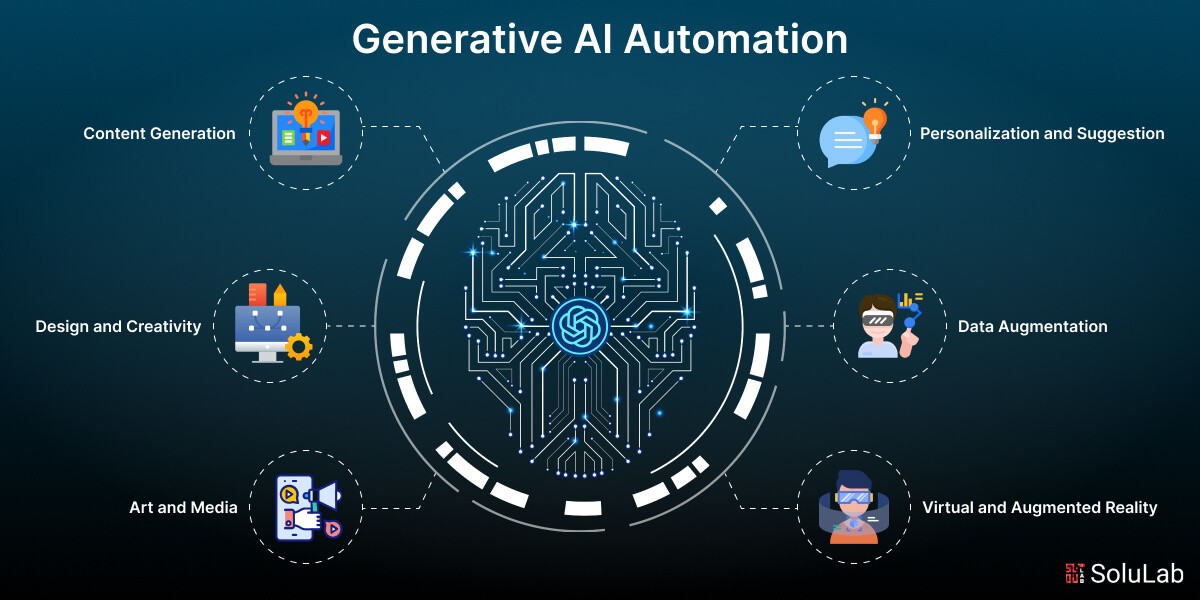
Generative AI (GenAI) has been fully integrated into the entire game development workflow today. From conceptual design, programming and art production to game localization, voice acting and in-game experience, AI models have become essential collaborative tools for game creators. As exemplified by SEGA’s disclosure of generative AI adoption in Crazy Taxi World Tour, the technology boosts production efficiency and expands gameplay possibilities, while also bringing new challenges surrounding copyright ethics, career development and creative styles. Combining current industry practices and market feedback, generative AI, driven by technological empowerment, is profoundly transforming game production workflows, creators’ working models and industrial logic, ushering the global gaming sector into a new era of human-AI collaborative creation.
I. Core Advantages of Generative AI in Game Development
With robust capabilities for automated content generation, rapid iteration and intelligent interaction, generative AI addresses longstanding pain points of traditional game development, such as lengthy production cycles, high costs and heavy repetitive workloads, delivering benefits across game production and player experience.
1. Streamline Workflows and Significantly Cut Costs
Traditional game development involves massive repetitive tasks. Generative AI automates such work and accelerates content iteration. Industry statistics show that over 90% of game developers leverage AI for this purpose. At the early stage of conceptualization and prototyping, AI quickly generates concept art, level layouts and worldbuilding frameworks, slashing prototyping time by more than half and lowering trial-and-error costs. In technical development, AI acts as an intelligent coding assistant, helping write basic scripts and debug programs, allowing programmers to focus on core gameplay and underlying architecture optimization.
AI is most widely applied in art asset creation. It can batch-produce scene props, textures and 2D/3D resources, lifting the productivity of 2D art production by 60% to 80%. SEGA adopted generative AI to assist with background asset production for Crazy Taxi World Tour, with all AI-generated content reviewed and verified by human staff. The company clarified that AI was only used as an auxiliary tool and not involved in character performance — a standard practice adopted by most major game developers.
In game localization and audio production, AI delivers fast multilingual translation and subtitle adaptation, reducing post-editing work to below 10%. It also assists with background music and sound effect creation, revamping workflows for voice actors and sound designers and greatly improving efficiency for global releases.
For small and medium-sized independent studios and individual developers with limited budgets, AI delivers remarkable inclusive value. Lightweight AI tools enable small teams to handle basic work that once required dozens of employees, cutting labor costs by up to 90%. This breaks the production monopoly of large publishers and makes more creative ideas achievable.
2. Innovate Game Experience and Build Immersive Dynamic Gameplay
Beyond backend development, generative AI is embedded into games to deliver unprecedented interactive experiences. Powered by natural language processing and real-time content generation, AI-driven non-player characters (NPCs) respond dynamically to players’ actions and dialogue, moving past rigid preset lines. Storylines and game environments evolve based on player choices, creating a unique gaming experience for every user.
Additionally, AI lowers the threshold for player-created content and fosters a new ecosystem combining AI and User-Generated Content (UGC). On platforms like HiberWorld, players can generate brand-new game scenes simply through text prompts. Everyone is empowered to become a content creator, enriching in-game content, extending product lifespans and elevating games from pure entertainment platforms to interactive creative hubs that amplify IP value.
3. Support Testing and Operations for Full Lifecycle Management
AI also plays a vital role in post-launch testing and live operations. It simulates massive player behaviors to automatically traverse game levels, detect bugs and evaluate gameplay balance, achieving wider coverage and higher efficiency than manual testing. During live service operations, AI analyzes player data to generate in-game events and deliver personalized recommendations, enabling refined operation strategies and improving user retention.
II. Industry Challenges and Debates Brought by Generative AI
Despite technological dividends, the large-scale adoption of generative AI has sparked widespread industry debates. Issues including creative homogenization, intellectual property disputes, job impacts and ethical concerns have become unavoidable obstacles for industrial development.
1. Risk of Homogenization Diluting Artistic Expression
Over-reliance on AI tends to result in convergent art styles and game designs. Trained on massive existing datasets, AI models are prone to replicating mainstream aesthetics, which may weaken creators’ unique artistic visions and lead to repetitive game experiences while lowering overall content quality. The industry has reached a consensus that AI serves as an enabler rather than a replacement for creativity. Learning to retain original artistic styles while leveraging new technology has become a compulsory lesson for all development teams.
2. Intellectual Property and Ethical Disputes Call for Enhanced Trust
Copyright remains the biggest point of contention regarding AI applications. Most mainstream generative models are trained on publicly available online data, raising serious risks of unauthorized use of artworks, audio and texts. Ambiguity over the copyright ownership and commercial usage boundaries of AI-generated content has drawn strong concerns from artists, voice actors and the general public.
Against this backdrop, requirements for regulatory oversight and industrial transparency keep rising. Major platforms including Steam now mandate developers to clearly mark the use of AI content on store pages. Nearly 90% of industry practitioners are calling for full disclosure of AI adoption details and source attribution. SEGA’s revelation of AI usage in Crazy Taxi World Tour triggered public discussions focusing on content traceability, creator credits and the scope of AI application, reflecting the market’s strict standards for AI compliance and transparency.
Meanwhile, voice actors and performance artists worry about the unauthorized replication of their voices and likenesses using AI. Labor organizations such as SAG-AFTRA have launched advocacy campaigns and strikes to push for robust rights protection regulations, triggering ongoing labor disputes across the global gaming industry.
3. Restructured Employment Landscape and Pressure for Role Transition
Automation driven by AI has impacted roles centered on repetitive work, including junior art designers, freelance voice actors, entry-level testers and basic translators, leading to growing career anxiety among practitioners. Nevertheless, the industry agrees that AI will not replace core creative positions. Tasks requiring human inspiration, emotion and original thinking — such as worldbuilding, storyline design, artistic direction and gameplay innovation — remain the irreplaceable domain of human creators. The job market is shifting from basic execution to creative direction and AI management, pushing traditional practitioners to upgrade their skill sets and master AI tools.
III. Long-term Impacts of Generative AI on the Gaming Industry
Looking ahead, generative AI will reshape the gaming landscape across industrial structure, creative models, industry regulations and market competition, steering the sector toward standardization, high-quality production and diversification.
1. Mainstream Creative Model: Human-AI Collaboration
In the future, the model of humans leading creativity while AI handling execution will become the industry standard. Game creators will be freed from tedious repetitive work and take on roles as creative planners, style directors and AI supervisors, focusing on worldbuilding, artistic expression and gameplay innovation. AI will act as a standardized tool to deliver scalable production for repetitive tasks. This collaborative framework balances efficiency and creativity, catering to studios of all sizes.
2. Improved Industry Rules and Accelerated AI Compliance Standards
Amid growing copyright disputes, public concerns and labor campaigns, the global gaming industry will speed up the formulation of AI-related regulations. Platform rules and laws will be further refined to clarify requirements for AI content labeling, data authorization, copyright ownership and creator protection, defining clear boundaries for the commercial use of training data and AI-generated content.
Unified internal workflows will be widely adopted: all AI-produced content will go through multi-round manual review and source tracing. The use of AI will be strictly limited for core art assets, character performances and main storylines to safeguard human creativity. Leading enterprises will prioritize building proprietary AI models and exclusive licensed datasets to eliminate copyright risks at the source, which will also become a new technological moat for major publishers.
3. Restructured Market Competition and Return of Creative Value
By lowering development barriers, AI has completely reshaped competition logic within the industry. Small and medium-sized teams will leverage AI’s cost advantages to focus on niche tracks and original independent creations, enriching the overall content ecosystem. Large established publishers will combine AI with AAA productions, live service operations and cutting-edge gameplay to deliver premium immersive experiences. Competition will shift from production capacity to original creativity, brand reputation and technological innovation.
Furthermore, the AI-powered UGC ecosystem will mature gradually. Player-created content will become a vital part of games, transforming products from standalone entertainment titles into comprehensive platforms and extending IP lifespans as well as commercial potential.
4. Accelerated Global Expansion and Cross-border Collaboration
AI-powered localization translation and rapid asset generation greatly reduce costs and lead times for global game launches. Simultaneous worldwide releases of high-quality games will become commonplace, facilitating exchanges of regional cultures and creative gameplay. Cross-border co-development will also gain popularity, as creators from different regions collaborate remotely via AI tools and drive integrated growth of the global gaming industry.
IV. Conclusion
Generative AI represents an inevitable trend in the digital transformation of the gaming industry. It addresses efficiency bottlenecks in traditional development, expands the boundaries of creativity and gameplay, and injects new vitality into the sector. Short-term challenges including copyright conflicts, creative homogenization and job transition pressures are inevitable growing pains for any emerging technology.
In the long run, the gaming industry will not witness AI replacing human creators, but embrace a brand-new era of human-AI collaborative creation. For developers, mastering AI tools while adhering to original creativity and upgrading professional capabilities is essential to keep pace with industrial trends. For game companies, abiding by compliance rules, protecting creator rights and maintaining full transparency are the prerequisites for sound AI adoption. For the entire industry, generative AI will phase out extensive and inefficient production models, push forward regulatory improvement and creative upgrading, and guide the gaming sector toward a healthier, more diverse and innovative future where technology and art achieve balanced development.
By:Jiasong Gong/CGGE
熱門頭條新聞
- Kingdom Hearts Franchise Expands Multi-Media Universe at D23 2026: Kingdom Hearts IV Locked for Late 2027 Launch
- More Than Technical Execution – Mikros Animation Establishes New Standard for Modern Animation Studios with Expert 3D & Animation Creative Leadership
- Nintendo Unveils Fire Emblem: Fortune’s Weave’s True Protagonist: Custom White-Haired Avatar Leads Time-Travel Narrative, Stirring Awakening Fans’ Nostalgia
- Sizeable Is Out Now On PC & Consoles – A Small Puzzle Game That Leaves a Big Impact
- ‘Frozen 3’ Unveiled at D23: Anna and Kristoff’s Royal Wedding, a New Villain, and a Frozen Land “More Wild and Dangerous” Than Anything Elsa Has Created
- Vampire Survivors Meets Rick and Morty in Ground Zero Hero, Coming to Consoles and Steam on August 20
- gamescom dev speaker survey puts AI, smaller teams and leadership at the centre of industry change
- Legendary Sci-Fi Visual Novel STEINS;GATE RE:BOOT to Launch August 20, Multi-Platform Remake with Brand-New Story & Full Audio-Visual Overhaul