Big Tech Goes All In on Manju: ByteDance, Tencent, and Baidu Race to Capture the Next Content Frontier as Independent Manju Apps Spark a Three-Way Battle
From “Year One of Manju” to “Year One of AI-Powered Manju,” the industry has completed a full cycle of iteration in just one year. Between late 2025 and early 2026, ByteDance, Tencent, and Baidu each launched standalone manju apps, quietly igniting a new competition for the next generation of content consumption.

In November 2025, ByteDance became the first mover with the launch of its standalone manju app Hongguo Manju. Within a month, the app had reached 8.54 million monthly active users, securing a spot among the top three short-drama apps. In December, Baidu followed with two standalone apps: You Manju and Qimao Manju. Then, in February 2026, Tencent entered the fray with Fire Dragon Manju, quickly announcing a licensing partnership with Chinese online literature giant China Literature for animated micro-dramas. With these moves, the “three kingdoms” battle among tech giants in the manju space had officially taken shape.
Three Camps, Three Strategies
ByteDance: Inheritor of a Dominant Ecosystem
Hongguo Manju closely mirrors the successful formula of its predecessor, Hongguo Short Dramas. Its design features a swipeable recommendation feed, dedicated sections for rankings and theaters, and a rewards page where users can earn coins by watching—a structure nearly identical to the short drama app that preceded it. On the content side, the app draws on the vast IP reserves of Tomato Fiction and the algorithmic distribution power of Douyin, forming a complete closed loop from IP source to platform distribution.
What sets Hongguo Manju apart is its clear tilt toward AI-generated photorealistic manju. On the platform’s top 10 trending list, nine titles fall into this category. The platform’s policy direction is unmistakable: after Douyin’s copyright center adjusted its manju revenue-sharing coefficients, AI photorealistic manju received a coefficient of 60, significantly higher than 3D animated manju (50) and 2D animated manju (40). Creators, naturally, gravitate toward formats that yield higher returns.
Baidu: The Technologist Sending Signals
Baidu’s strategy involves two parallel apps. Qimao Manju, carrying the tagline “free drama for 100 years,” functions more as a placeholder signal, with a relatively simple feature set. You Manju, by contrast, offers a more complete product framework and integrates Baidu’s own literary resources, including Zongheng Chinese Network.
Unlike Hongguo, AI photorealistic manju has yet to dominate You Manju. Among the top 10 trending titles, only three are AI photorealistic, while meme-style animated manju and 2D animated manju remain the mainstays. According to Baidu, “meme-style manju” accounts for 25% of content supply but contributes 81% of distribution traffic—a dynamic that helps explain the platform’s current content mix.
As a key player in China’s AI landscape, Baidu has also launched a full-process AIGC solution for the manju industry through Baidu AI Cloud and established an AIGC Content Creators Alliance, signaling its ambition to link tool development, content creation, and distribution.
Tencent: The Challenger Actively Recruiting Talent
Fire Dragon Manju stands out as the only app in the space that explicitly positions itself as a community. While its overall structure resembles Hongguo Manju, key differences emerge in the details: a branded fire dragon mascot, a unique “Hot 1000” ranking that shows a title’s share of total trending heat, a “New Releases” section alongside the rankings, and a calendar-based update schedule that evokes the feel of long-running serialized IPs.
Content acquisition has been a priority. Upon launch, Tencent announced a 23.2 million yuan licensing deal with China Literature for animated micro-dramas and formed a deep partnership with Lingyang Manju. The platform’s revenue-sharing model offers a coefficient as high as 200% for exclusive content, alongside incentive programs for top-tier titles and sustained creation. In February, Fire Dragon Manju opened individual creator channels, allowing creators without corporate credentials to produce AI short dramas—lowering the barrier to entry to its lowest point yet.
AI Technology Reshapes the Industry
In early 2026, ByteDance unveiled Seedance 2.0, a video generation model capable of producing 60 seconds of 2K footage. Its ability to generate coherent multi-scene narratives from a single prompt significantly improved character consistency. Around the same time, Kling 3.0 introduced dual-track control combining “image-to-video + subject reference.” These breakthroughs dramatically reduced production costs and barriers.
According to analysis from Dongwu Securities, traditional manju production costs ranged from 2,000 to 5,000 yuan per minute. With AI, costs dropped to 1,000 to 2,500 yuan per minute. Wang Shubo, founder of Lingju Animation, shared that a 100-minute manju now costs around 60,000 yuan to produce—just a few hundred yuan per minute, a reduction of nearly 90%. Production cycles have also shortened from years or months to weeks.
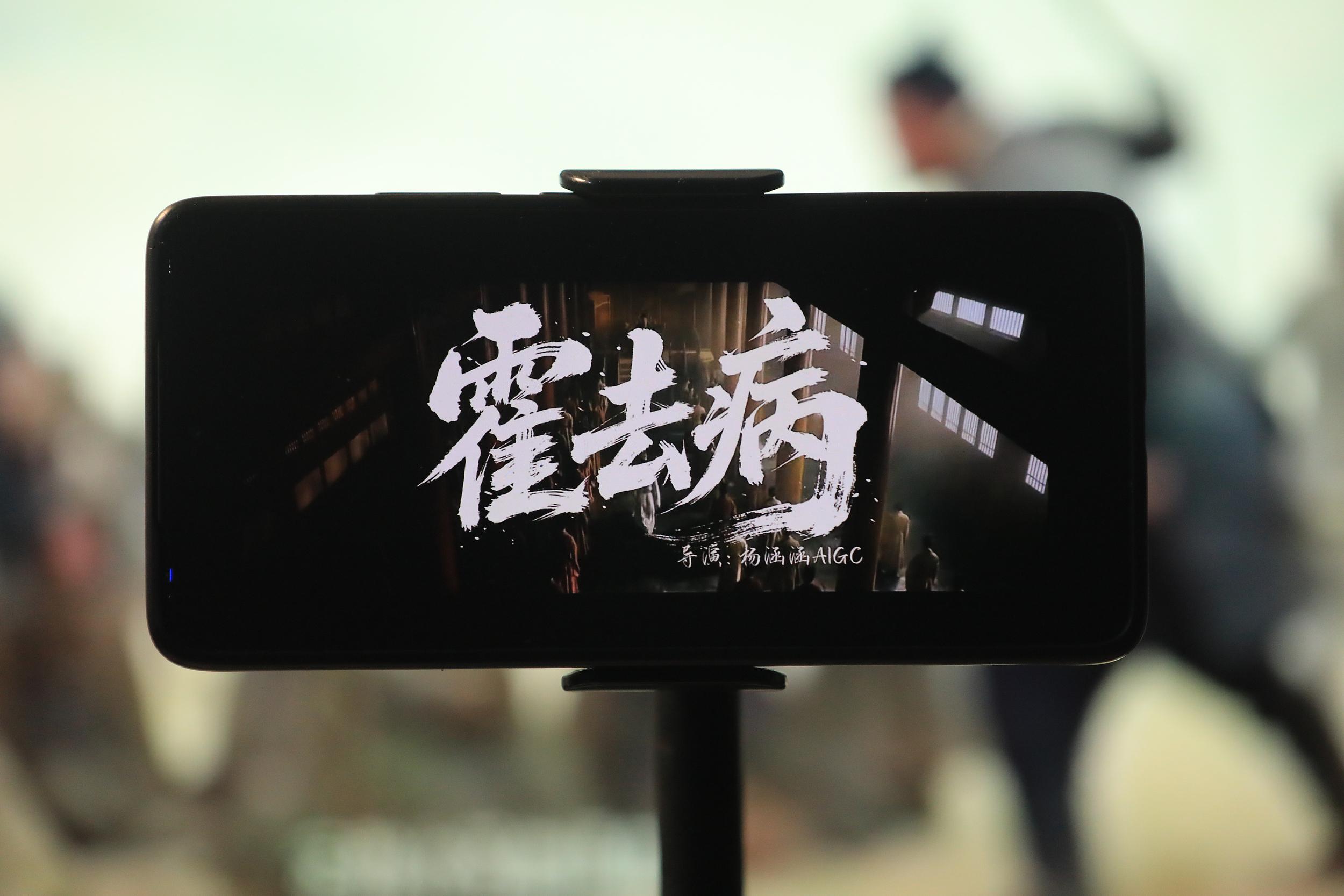
The surge in efficiency has led to an explosion in output. DataEye data, in 2025 alone, over 60,000 manju titles were released on Douyin, with total views exceeding 70 billion. In January 2026, the share of AI photorealistic manju among the top 100 titles jumped from 7% to 38%, with total views reaching 2.55 billion. By February, AI photorealistic manju accounted for nearly 60% of the top 100, becoming the dominant format.
Market Landscape and Future Challenges
The manju sector is now taking shape across three tiers. ByteDance leads the top tier with its complete ecosystem. Tencent is seen as the only serious contender, leveraging its China Literature IP reserves and the distribution reach of WeChat Channels. Baidu, with its technological capabilities and content assets, also has the potential to join the top ranks.
Traditional long-form video platforms such as iQiyi, Youku, and Bilibili form the second tier. iQiyi is internally testing AI video generation tools and planning to incubate AIGC production teams. Youku has updated its anime revenue-sharing rules, adding a top prize of 1 million yuan for high-quality projects. Bilibili’s “Awakening Plan” covers 30% to 100% of production costs, with a revenue share of up to 80%.
The third tier consists of technology companies entering the space via tools. Qihoo 360, for example, launched “Nano Manju Pipeline,” an AI-powered manju production platform targeting professionals and short-drama creators looking to transition into the space.
Despite the excitement, challenges persist. Low production barriers have led to uneven quality and growing homogenization. Mid-tier producers face squeezed margins, with production rates dropping to as low as 300–500 yuan per minute. On the technical side, the “gacha” nature of AI generation means results are not always consistent, and copyright issues around AI-generated content remain unresolved.
Industry observers expect AI manju to follow a path similar to live-action short dramas, gradually moving toward higher quality, greater diversity, and clearer regulatory frameworks. Ultimately, success will hinge not only on how well companies deploy AI tools, but also on the depth of their storytelling and the effectiveness of their monetization strategies.
熱門頭條新聞
- New AI, New Computing — The 7th AI Computing Conference (AICC2026) Grandly Opens in Beijing
- Germany’s Federal Game Development Funding Programme Allocates €267 Million Over Seven Years, Reshaping Domestic Gaming Industry Competitiveness
- PIF-Backed Merger Proposal Between EA and Savvy Games Could Reshape Global Gaming, With Far-Reaching Impacts on Both Parties’ Businesses
- Farming Camp Demo Expands to PS5, Xbox, Switch & Microsoft Store
- MIPJUNIOR 2026 to Open in Cannes: Full Introduction of Dates, Participation Channels, Core Sessions and Industry Significance
- Chill with You: SHIOI’s Sparkling Scenes – Steam Store Page Is Now Live
- SIGGRAPH Asia 2026 Takes Shape: Distinguished Keynote Speaker Line-up Unveiled
- Apple Completes App Store Leadership Transition; New Management Pursues Higher Margins, Phil Schiller Steps Back From Day-to-Day Operations