Brands as Story Engines: Five Strategic Trends in Entertainment Marketing Revealed at MIPCOM 2025 BrandStorytelling Summit
The two-day BrandStorytelling Summit (October 13-14) successfully concluded during the recently held MIPCOM 2025. This year’s summit brought together top experts from globally renowned brands, film and television production companies, advertising agencies, and distributors, converging on an industry consensus: brand investment in entertainment content has transitioned from experimental exploration to a new phase of scaled and normalized operations.
The lineup of participants highlighted the industry’s broad engagement:
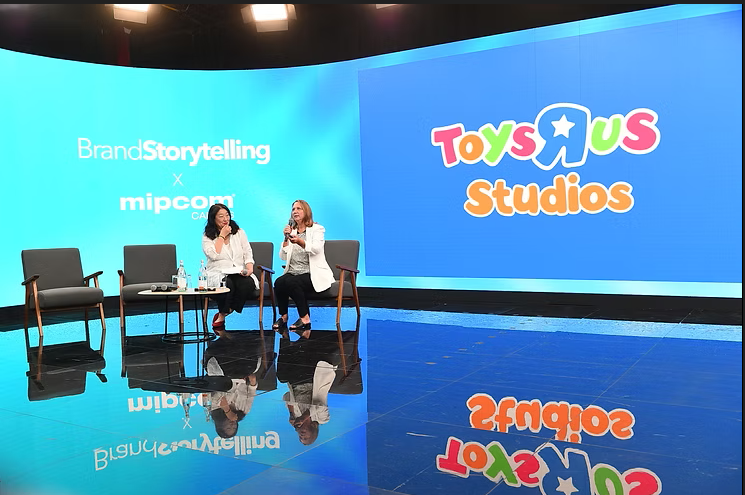
- Kim Miller (Global CMO, Toys”R”Us & President, Toys”R”Us Studios), in her opening keynote, elaborated on how a legacy retail brand is successfully transforming into a comprehensive content IP engine.
- Doug Scott (Founder, UNXOWN) delivered a macro-level speech positioning brand-funded entertainment as a strategic growth engine for enterprises.
- Representatives from top agencies such as McCann Worldgroup, Dentsu, and UTA all indicated that brand storytelling is reaching a critical inflection point and shared new agency-driven deal models for brand content.
Major production/distribution companies like Banijay Entertainment and Fremantle shared strategies for the production, support, and global distribution of brand-funded content.
Furthermore, market research firm K7 Media analyzed the convergence of the creator economy and branded entertainment; brand representatives from Indeed and Ancestry offered unique internal perspectives, sharing insights from creative ideation through production and performance measurement.
Drawing on successful case studies like “Tame The Kraken” and “Una Isla de Ti” from the US, Spain, and South Africa, the summit clearly depicted a landscape where brand investment in entertainment is no longer sporadic experimentation but has established mature systems and achieved genuine global operation. Below are the five key insights from this year’s summit:
- The Models Are Established: No Need to Reinvent the Wheel, Application is Key
Kim Miller’s address sent a clear signal: brands are focusing their creative energy on applying and optimizing existing models. Both she and Doug Scott emphasized that the collaborative frameworks and business models for brand-funded film and television production are already mature. The case study “Tame the Kraken” demonstrated how brands, creative partners, and producers can co-design a film story integrating journalistic value, brand essence, and distribution ambition. The core takeaway is that financing, co-production, rights, and distribution have moved beyond theoretical discussion. For content creators and brands, the key to success lies in flexibly applying existing models and positioning the brand as a “producer/co-producer,” not merely a “sponsor.” - Content Democratization: Winning Lies in Quality and Audience-First Logic
Across multiple panel discussions, participating experts reached a consensus: in an era of content overload, brands are no longer mere appendages to creative partners. Agencies like McCann and Dentsu are packaging brand stories into series or features and placing them into global distribution windows. For creatives and agencies, the primary consideration is the audience, not the brand logo. Content quality, narrative form, and audience reach are paramount. Brands can invest in content much like a producer would, achieving a strategic shift from “brand exposure” to “story engagement” and even “IP lifecycle management.” - Global Vision: International Scale is No Longer Optional, but a Necessity
As the summit’s first iteration held at the international MIPCOM, its global dimension was particularly prominent. Organizations like Banijay, Fremantle, and K7 Media all emphasized cross-territorial distribution strategies and the global creator economy. Case studies from Spain illustrated how to build cross-border impact for brand-led films. The resounding message was that from day one of a project, a “glocal” mindset—thinking globally and acting locally—is essential. Rights, format potential, international partners, and multi-market appeal must be inherent in the content blueprint. - Performance Measurement: Redefining ROI and Integrating it Upfront
Performance measurement was a repeatedly emphasized focus, but the discussion direction shifted from past “explorations of difficulties” to an “optimistic outlook on solutions.” Experts pointed out the need to abandon reliance on vanity metrics like impressions and instead directly align success criteria with the brand’s strategic objectives and the story’s purpose. UTA’s Sam Glynne advised clarifying the “definition of return” with partners before cameras roll. This means contracts must establish Key Performance Indicators, data analytics rights, and distribution logic from the outset. - Language Fusion: ‘Bilingual’ Proficiency is the Key to Success
The summit highlighted that brands typically converse in ROI and reach, while creators focus on character and narrative. The most successful projects often involve partners who can fluently switch between and integrate these languages. The Ancestry case study perfectly demonstrated this, showing how the brand, creator, and filmmaker could leverage their respective expertise to deliver work that meets brand objectives while being creative, deeply appealing to audiences, and award-winning. When producers, studios, and agencies can translate brand goals into entertainment mechanics, and vice versa, financing pathways open up. Brands that embrace the language of television and streaming gain access to the entertainment ecosystem, moving beyond mere digital ad spots.
Case Studies Validate, Practice Leads the Way
Multiple international case studies presented at the summit, such as the US collaboration “Tame The Kraken” between a brand and creative studio, and “Una Isla de Ti” developed by IPG Mediabrands Spain, substantiate the trends outlined above. These works have not only achieved success with audiences but have also garnered industry awards, demonstrating that branded content can deliver a dual victory for both commercial value and cultural influence.
The MIPCOM 2025 BrandStorytelling Summit made it clear that the branded content business has matured. The collaborative frameworks and operational mechanisms are now defined. Amid the waves of content democratization and the global creator economy, brands can launch their story IP with an audience-first logic and international ambition. The more challenging yet crucial task now is the discipline to operationalize this model effectively: setting success metrics early, adopting entertainment industry discourse, engaging in cross-disciplinary collaboration, and designing stories with longevity beyond the 30-second ad. For attendees, future brand story projects must treat the brand as an investor and commissioner, the creative team as storytellers, and the global market as the ultimate client.
熱門頭條新聞
- BlizzCon 2026 Unveils Diablo V and New StarCraft Open-World Shooter; Early Announcement Sparks Industry-Wide Discussion
- Ubisoft Conducts Major Steam-Launch Experience Test, Exploring Removal of Mandatory Full Ubisoft Connect Desktop Client
- PlayStation Ends Partnership With Kojima Productions on PHYSINT, Multi-Faceted Business Impacts for Sony
- Legendary Illustrator Akemi Takada’s Solo Exhibition -Angel Touch- Lands in Taipei, October 3 – November 1; Artist Profile, Exhibition Info & On-Site Activities
- New AI, New Computing — The 7th AI Computing Conference (AICC2026) Grandly Opens in Beijing
- Germany’s Federal Game Development Funding Programme Allocates €267 Million Over Seven Years, Reshaping Domestic Gaming Industry Competitiveness
- PIF-Backed Merger Proposal Between EA and Savvy Games Could Reshape Global Gaming, With Far-Reaching Impacts on Both Parties’ Businesses
- Farming Camp Demo Expands to PS5, Xbox, Switch & Microsoft Store