Dilemma and Breakthrough: The Existential Allegory in “Nobody”
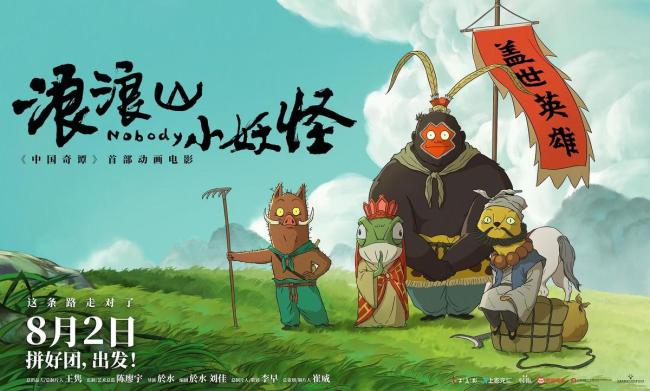
The comedy animated film “Nobody” (Little Demons of Langlang Mountain)was released on August 2nd and has currently achieved a score of 8.6 on Douban. It is the second-highest-rated domestic animated film this summer, just behind “The Legend of Nezha 2” with a score of 8.7. The film was jointly produced by Shanghai Animation Film Studio Co., Ltd., Shanghai Film Group Yuan Culture and Technology Development Co., Ltd., and others.
In the dazzling constellation of contemporary animated films, “Nobody” stands out with its unique narrative perspective and profound humanistic care, crafting a fable world that is both fantastical and real. Through the daily struggles of an unnamed little monster, the film ingeniously reflects the survival predicament of modern people – aren’t we all like that little monster seeking meaning in the vast social machine? With delicate strokes, the movie depicts the process of human alienation by the system, while the protagonist’s unyielding spirit of resistance lights a lamp of hope for all souls trapped in “Nobody”.
The film “Nobody” constructs a strict hierarchical monster society. The protagonist, as the lowest-level existence in this system, has a survival state full of modern workplace metaphors. The series of scenes at the beginning of the film are both heartrending and familiar: the little monster is casually ordered to do all kinds of trivial work, its creativity is ruthlessly rejected by its superiors, and its labor achievements are easily erased. This situation reminds people of those grassroots employees in modern enterprises who have no say. Their individuality is gradually eroded by the system, and they become “tool people” who merely execute orders. There is a highly symbolic detail in the film – the little monster is required to clean all the pots in the cave overnight. This absurd task is just like those meaningless yet mandatory KPI indicators in real life. Through this exaggerated approach, the director reveals the alienation of modern work ethics on people: when labor is no longer associated with self-actualization, people lose their sense of existence.
The character design of the little monster is one of the most successful parts of the film. It has no powerful magic, no prominent background, and not even a formal name. But it is precisely this “ordinariness” that endows the character with universal representativeness. Among the many monster characters, the little monster is the closest to “human” traits – it can think, question, and have desires beyond survival needs. While other monsters are content with the status quo and accept their fate, the little monster maintains a clear pain, which is precisely the embodiment of its humanistic brilliance. Through the brief encounter between the little monster and Sun Wukong, the film showcases two different modes of resistance: Sun Wukong causes a ruckus in the Heavenly Palace in a spectacular way, while the little monster guards the spark in its heart with silent persistence. This contrast implies the diversity of resistance – not everyone can be a hero who changes the world, but everyone can choose not to submit to the world.
In the film, “Wangwang Mountain” is not merely a geographical concept but a metaphor for a spiritual predicament. For most of the monsters, Wangwang Mountain is the entire world, and they have never considered the possibilities beyond it. This closed-mindedness leads to a barrenness of thought and a depletion of possibilities. The little monster was initially in this “frog in a well” state, but as it began to question, imagine, and take risks, the boundaries of Wangwang Mountain were gradually broken. Through the transformation of the little monster’s perspective, the film explores the philosophical proposition of how cognition shapes reality – when we believe the world has only one form, we are truly trapped; but when we start to doubt this single narrative, the possibility of liberation begins to sprout. In the end, the little monster did not gain superpowers or a lofty status, but it obtained something even more precious: a different way of looking at the world and the courage to leave Wangwang Mountain.
The supporting characters in “Nobody” form an important context for the protagonist’s growth. These characters can be roughly divided into three categories: one is the partners at the bottom like the little pig demon and the crow spirit, who share similar predicaments with the little demon but choose different ways to deal with them; another is the middle-level managers like the bear instructor, who are both the executors of oppression and victims of the system themselves; and the last is the “successful ones” like Sun Wukong, who have achieved the breakthrough that the little demon dreams of but have thus become unattainable. Through the interactions between the little demon and these characters, the film shows the complex situation of people in the system – there are no purely evil people, only human nature distorted by the system; resistance is not a simple confrontation between good and evil, but a difficult pursuit of another possibility. It is particularly worth mentioning the relationship between the little demon and his mother. This family affection thread adds a warm background to the story and also implies why the lower class finds it difficult to break through the solidification of social strata – the desire for stability and the fear of the unknown often outweigh the courage to change.
The film is also rich in visual symbolism. The scene design of “Nobody” deliberately intensifies a sense of oppression – dark caves, narrow passages, and crowded living conditions, all these visual elements collectively form a material symbol of institutional oppression. In contrast, the film occasionally presents expansive long shots, especially the scenes where the little monster stands high and looks into the distance, which are often accompanied by the elevation of the music, suggesting the exhilarating experience of free thinking. The film’s use of color is also ingenious. In the predominantly gray and dark daily life, the occasional bright colors (such as the creative little items made by the little monster) represent the suppressed but not extinguished creativity. This high degree of unity between visual language and narrative theme demonstrates the production team’s profound understanding of the relationship between form and content.
The film “Nobody” ultimately points to an existential proposition: How can one create their own meaning in a meaningless system? The film does not offer a cheap solution. The little monster neither overthrows the rule of “Nobody” nor gains a miraculous redemption. Its victory is purely spiritual – it retains the ability to question, to feel pain, and to imagine another kind of life. This ending avoids the clichés of heroic narratives but more truthfully reflects the normal state of resistance of ordinary people. In contemporary society, most people cannot completely break free from the constraints of the system, but we can refuse to be completely assimilated in thought and seek limited autonomous space in action, just as the little monster did. Through this seemingly small but profoundly significant victory, the film conveys a warm message to all viewers struggling in their own “Nobody”: True breakthrough first occurs in the heart. When you start to think, “Is this how I’m going to spend my entire life?”, change has already begun.
The outstanding feature of “Nobody” lies in its use of a fantasy story to reveal the most common human predicament. Every era has its “Nobody”, and everyone will encounter the conflict between the system and the self. The reason why this film can evoke widespread resonance is precisely because it touches upon this eternal dilemma and offers us a mirror to reflect on our own situation in an artistic way. When the audience is concerned about the fate of the little monster, they are actually contemplating their own state of existence; when the little monster ultimately maintains its spiritual independence, the audience also gains a symbolic liberation. This ability to perfectly combine entertainment with philosophical thinking enables “Nobody” to transcend the category of ordinary animated films and become a profound allegory about the human condition.
熱門頭條新聞
- Aiming To Rival Hello Kitty: Sony Invests Heavily In Original Mascot IP Project
- 2026 Taichung International Anime & Manga Expo Unveiled, “Manga & Food Memories” Blends Local Cuisine with ACG Culture, Original Comic Contests Launched
- Talking Tom & Friends: World Launches Global The Smurfs Crossover Update, Two Generational Kids IPs Unite for Creative Sandbox Fun
- Vancouver Rises as Global Mobile Gaming Powerhouse, Backed by Integrated Industrial Advantages
- Epic Fantasy Tactical SRPG Brigandine: Abyss to Launch Worldwide on August 27, 2026, Available on All Major Platforms with Full Chinese Support
- Kadokawa Q1 FY2026 Earnings: Anime Segment Sees Higher Revenue Yet Operating Loss
- A New Dawn – Miyu Productions Builds a Groundbreaking Bridge Between French and Japanese Animation
- YouTube Doubles YPP Monetization Thresholds, Global Creator Industry Faces Structural Strategic Division