Apple’s new EU App Store Business Terms Still Violate the Digital Markets Act (DMA).
Apple’s new EU App Store business terms have been collectively questioned by a coalition of developers, who determined that they still violate the Digital Markets Act (DMA).
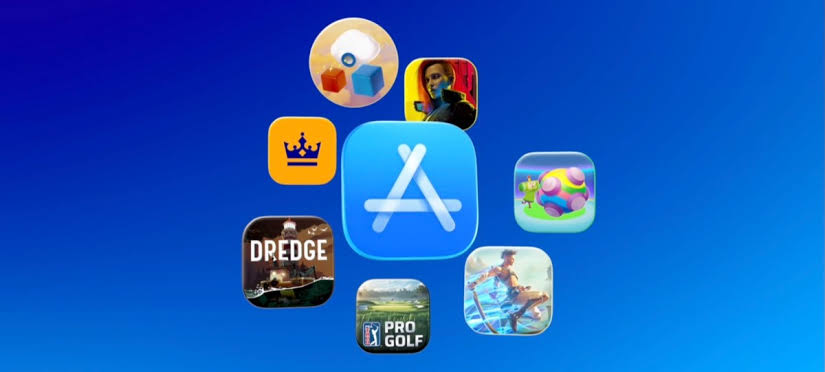
A coalition of 18 European industry organisations has published an open letter arguing Apple’s revised App Store business terms for the European Union, announced August 18, 2026, still fail to comply with the Digital Markets Act (DMA). Signatories include the Coalition for App Fairness, the European Games Developer Federation (EGDF), the European Publishers Council (EPC) and other digital business bodies, warning that revised fees create new competitive barriers rather than delivering genuine regulatory compliance.
Apple states the overhaul was developed in close collaboration with the European Commission. The unified rulebook for all EU based developers will enter into force October 1, 2026, intended to resolve prior disputes over alternative distribution and payment mechanisms. Nevertheless, developer groups insist the revisions amount to cosmetic adjustments that leave core compliance defects unresolved.
Background
Under the DMA, Apple is designated a “Gatekeeper”. Article 5(4) imposes a clear statutory duty: gatekeepers must permit developers to inform users of outside App Store offers and steer customers to external contracts and purchases free of any chargeShaping Eu….
In April 2025, the European Commission fined Apple €500 million (USD 570 million) for violating this provision, because prior Apple rules restricted developer outreach and levied fees on transactions generated by external links. Apple’s August 18 policy rewrite represents its latest attempt to address the regulatory findings.
Key Provisions of Apple’s New EU Terms
Apple has restructured its commission model. The old per install Core Technology Fee (CTF) is replaced by a transaction based 5 % Core Technology Commission (CTC). The Initial Acquisition Fee and Store Services Fee are eliminated. The framework introduces tiered commission rates, permits dual payment options, adds strengthened child safety safeguards, and broadens eligibility for third party marketplaces and web based app sideloading.
Main commission rates are listed below:
- App Store using Apple In App Purchase: standard 26 %; reduced 15 % for small business participants and second year auto renewing subscriptions.
- App Store with in app alternative payment processors: standard 20 %; reduced 10 % for eligible programmes.
- App Store apps steering users out of app to external web purchases: standard 15 %, reduced 10 % for qualifying developers.
- Apps distributed via third party marketplaces or direct web distribution: 5 % Core Technology Commissionapplies to all digital goods transactions.
Additional obligations apply: developers must keep their chosen payment mix unchanged for 12 months. All sideloaded applications must pass Apple’s Notarization baseline security review. Age based parental gate controls are mandated for minors, with outright bans on external transaction links for Kids category apps. Apple justifies levies as compensation for investments in iOS developer tooling, system infrastructure and platform security to protect EU consumers against malware and juvenile fraud risks.
Core Grievances & Analysis from Developer Coalition
The open letter highlights two major alleged violations and raises procedural concerns over enforcement by the European Commission.
1. 15 % steering fee directly contradicts DMA Article 5(4)
The DMA text and the Commission’s April 2025 penalty decision explicitly require zero cost steering. Apple’s revised rules still impose up to 15 % commission on sales triggered when developers guide users to external websites, with a 10 % discounted tier for selected smaller developers. Signatories argue this preserves powerful financial disincentives against using outside channels. Developers remain economically discouraged from exercising their DMA granted rights, so meaningful free of charge steering cannot materialise in practice.
2. Five percent Core Technology Commission replaces old barriers with new costs
By shifting from per install CTF to a 5 % transaction levy CTC for apps outside the official App Store, Apple trades one disincentive for another. Industry bodies contrast this model with Windows and Linux ecosystems: self distribution over the web requires no comparable transaction percentage fee payable to the operating system vendor. Apple’s 5 % commission creates persistent extra friction that limits the scale up potential of rival distribution channels and prevents effective competition against the App Store.
Furthermore, even with sideloading formally permitted, Apple retains substantial gatekeeping powers via Notarization oversight, contractual eligibility criteria and mandatory monthly full transaction reporting obligations for all alternative channel sales, adding administrative compliance burdens for businesses.
3. Concerns over ambiguous European Commission signalling
Co signatories express profound disappointment over informal public statements emanating from the Commission, which appear to signal acceptance of Apple’s proposals without formal stakeholder consultation. If regulators endorse these terms without a formal reasoned decision, the practical effect would be to rewrite DMA obligations through negotiation rather than statute. The coalition demands the European Commission open formal consultations with affected stakeholders and publish a definitive, reasoned ruling clarifying whether the April 2025 non compliance findings have been remedied, removing major legal uncertainty across the European digital ecosystem.
Stakeholder Positions
- Apple: The revised terms result from intensive regulatory dialogue. Harmonised rules lower operational complexity for developers. Commissions reflect value delivered through system level developer infrastructure and security investments. Removing the former per install CTF constitutes meaningful compromise, opening up alternative distribution pathways. Notarization and parental gate safeguards protect end users from security and fraud risks.
- Developers & Publishers: Formal textual compliance is not equivalent to substantive compliance. Fee restructuring preserves anti competitive economic incentives. Media publishers stress high steering commissions undermine their ability to build direct reader subscription relationships, threatening sustainable European press business models and consumer access to diverse content.
- European Commission: Public statements welcome Apple’s adjustments and promise ongoing post launch monitoring. As of September 9 2026, no binding formal written conclusion has been issued, leaving market participants facing unresolved regulatory ris.
Industry Outlook & Implications
This stand off represents a landmark DMA test case distinguishing formal contractual compliance versus real world substantive compliance.
First scenario: should the Commission find the new terms non compliant, Apple may face further substantial fines and will need to eliminate steering related fees entirely while re justifying the CTC mechanism. Conversely, official acceptance of the current framework would set far reaching precedents shaping how “Gatekeeper” duties are interpreted for digital platforms globally.
Second, for developers: even after the October 1 rule change comes into force, using external steering or web sideload distribution carries material cost burdens. It remains highly uncertain whether alternative distribution channels can achieve sufficient scale to compete meaningfully with the App Store. Small developers, game studios and news publishers will continue to face significant platform tax pressures.
Third, trans Atlantic spill over effects are visible. Apple has advanced analogous fee arguments in ongoing United States litigation, where the Supreme Court has declined to stay a lower court injunction against Apple’s charging practices. The EU decision making process will indirectly reverberate across North American mobile app markets.
The Coalition for App Fairness and its allies urge industry stakeholders to follow the DMA assessment procedure closely and call upon regulators to uphold the original legislative intent of the DMA, delivering an open and contestable digital environment rather than only superficial contractual modifications.
熱門頭條新聞
- SIGGRAPH Asia 2026 Takes Shape: Distinguished Keynote Speaker Line-up Unveiled
- Apple Completes App Store Leadership Transition; New Management Pursues Higher Margins, Phil Schiller Steps Back From Day-to-Day Operations
- Apple’s new EU App Store Business Terms Still Violate the Digital Markets Act (DMA).
- Lost and Found Co. Developer Bit Egg Becomes First Game Studio to Win Thailand’s Prestigious Prime Minister’s Export Award
- DRAGONHEIR: SILENT GODS MARKS THIRD ANNIVERSARY WITH COMMUNITY-CREATED HERO AND ORDER VS. CHAOS SHOWDOWN
- China Domestic Animation Summer Season 2026 Review: Box-office Boom for Theatrical Animation, Established Web Series Face Headwinds, AI Man-Dramas Explode for New Growth
- Tianji: Shadow of the Ancients, Coming 2027 to Multiple Global Platforms
- China’s Anime-Goods (“Guzi”) Economy 2026 Market Review