Anthony Neoh: IPO Back on Top Globally, But Sponsor Price Wars Could Hurt Quality
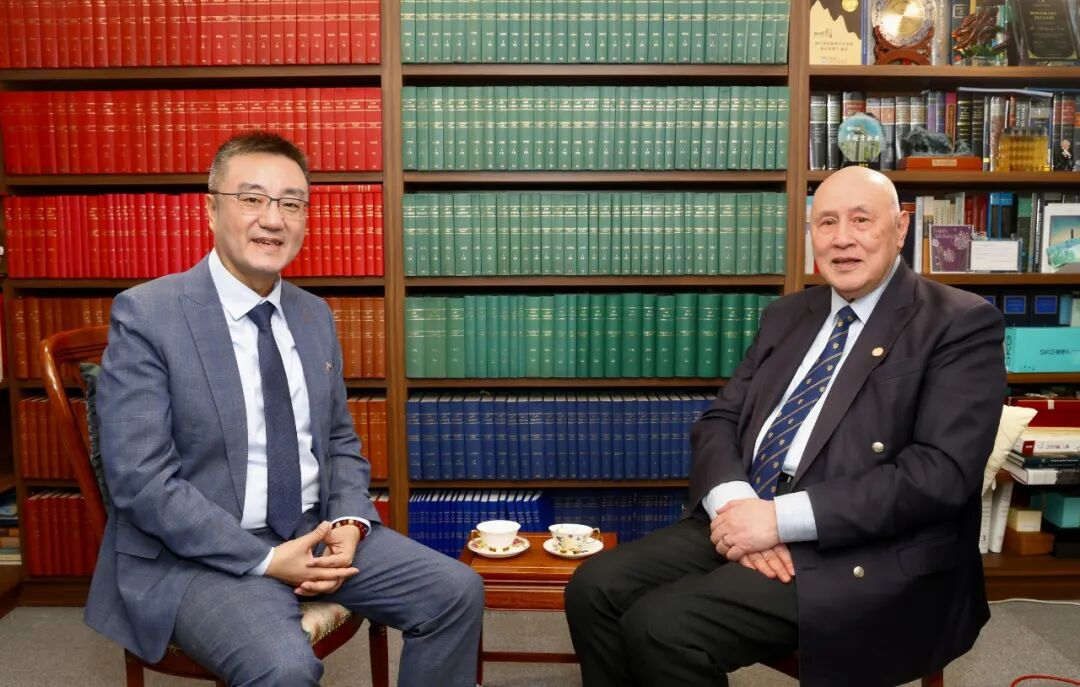
In recent years, regulators in mainland China and Hong Kong have stepped up co operation to guard against financial risks. It is said that the core philosophy of regulation lies in “striking an appropriate balance between private interests and the public good”, treating supervision as a dynamic art. Yet Anthony Neoh, a senior counsel who once served as Chairman of the Hong Kong Securities and Futures Commission (SFC) and Chief Adviser to the China Securities Regulatory Commission, takes a different view. In an exclusive interview with the programme One Word, A Thousand Gold, jointly produced by the Hong Kong Economic Journal and Now TV, he argued that while regulation does need to be dynamic, it involves far less art and much more science. “Regulation is a set of principles and a system, not something you do just because an incident happens,” he said. To improve a regulatory body, the key is to make information symmetrical.
Neoh explained that within the financial regulatory framework, each sector – whether securities, banking or insurance – has its own ecosystem. Regulators must understand how that ecosystem survives within the overall system. “You first have to know how the whole system is structured and how the different parts relate to each other,” he said. “These structures and relationships have parameters, but those parameters keep changing – just look at how stock prices rise and fall. So these parameters become dynamic; they become a living organism.”
01 Scientific governance, not art
“So how do you ‘nurture’ this organism? It’s like a doctor treating a patient – why did the patient suddenly fall ill? How do you cure him? The doctor also needs to understand the whole system and its interrelationships,” Neoh noted. He pointed out that the philosophy behind the regulatory system is more scientific. “Some people call it art, but in essence, it’s about understanding the system, knowing the reasons behind things, and then figuring out how to govern it. So the scientific element is much higher than the artistic one.”
Hong Kong’s IPO market has been red hot in recent months, but the industry has also voiced concerns that the SFC’s tighter scrutiny of IPO sponsors could stifle the number of listings. Neoh, a former SFC chairman, believes both sides have valid points. “In any regulatory system, there may be facts or processes that not everyone perceives, leading to information asymmetry. How do you improve a regulator? By making information symmetrical for everyone. That is precisely why I talk about being scientific.”
Only after the system is improved can one think about how to achieve the best fit – just as the economic concept of “Pareto optimisation” (a mathematical and decision making approach for simultaneously optimising multiple conflicting objectives) represents, in his words, the practice of “scientific” regulation. A regulator must first ask itself whether it fully understands a particular sector or area; otherwise, it cannot reach a more scientific conclusion. “So I think both sides [the SFC and the industry] have a point. The SFC sees a problem, and the industry also knows the problem exists – but can everyone see the whole picture? Both sides need to communicate to reach a more complete outcome.”
02 Due diligence for new listings cannot be one size fits all
Asked whether the industry in recent years has been “putting quantity over quality” – chasing the number of IPOs while neglecting due diligence – Neoh acknowledged that it is indeed possible. “It’s hard to apply a one size fits all approach. For IPOs, there are very large institutions and also small ones. Large institutions may have more robust internal divisions, structures and processes, while small ones do few IPOs and their processes may not be as mature. Is a one size fits all approach appropriate? Regulation must look at the ecosystem. You cannot just apply a uniform rule; you have to understand the ecosystem as a whole.”
Neoh added that the industry’s main concern at present is whether the SFC fully understands industry practices. In his own days as chairman, he would have responded directly: “If you say I don’t understand, then tell me.” Both sides should communicate openly. On the other hand, some in the industry point out that the IPO market is fiercely competitive, with firms cutting prices to win sponsor mandates, sometimes inevitably compromising quality in order to match prices. “That is certainly wrong – due diligence is crucial for investor protection. Everyone in the industry should share a common set of principles.”
“Second, we need to understand the ecosystem of each player, the roles of each person, how things are carried out at all levels, and then find the optimal way to match them. That brings us back to the ‘scientific reasoning’ I mentioned. You can’t call it art – art is somewhat elusive. We cannot be elusive; we must be realistic.”
03 Fund flows back – profits will naturally attract capital
Hong Kong’s IPO market returned to the global No. 1 spot in terms of funds raised in the first quarter of this year. Neoh reiterated that this is a matter of scientific reasoning – understanding why IPOs are increasing.
“Even if you become the best in the world, investors may not necessarily come. If they do come, there must be reasons: first, the companies have performance; second, that performance is genuine; third, the trading is fair; fourth, there is social oversight and no insider trading. But the most important point is that you buy something for a return – without return, who would come? The rebound in recent years is because people see returns.”
Beyond returns, risk is also a factor. “To predict risk, you have to look at the overall landscape, not just the regulator.” The recent return of capital to Hong Kong is simple: Europe and the US are embroiled in the Russia Ukraine war and conflicts in the Middle East, changing the global security landscape. “Which places are relatively safe? But if it’s safe yet economically risky, people may still not come. Hong Kong has weathered many shocks over the years; even when it falls, it recovers, because since 1989 its regulatory system has been continuously upgraded and is globally recognised. Hong Kong’s system is transparent, consultative, and market information is highly efficient. Once problems are spotted, it does not stay rigid – it adjusts. Regulation is handled dynamically, which is what gives people confidence.”
Source: Hong Kong Economic Journal
Interviewed by: Tang Chunkeung
Written by: Hui Chunpong
Hot News
- SIGGRAPH Asia 2026 Takes Shape: Distinguished Keynote Speaker Line-up Unveiled
- Apple Completes App Store Leadership Transition; New Management Pursues Higher Margins, Phil Schiller Steps Back From Day-to-Day Operations
- Apple’s new EU App Store Business Terms Still Violate the Digital Markets Act (DMA).
- Lost and Found Co. Developer Bit Egg Becomes First Game Studio to Win Thailand’s Prestigious Prime Minister’s Export Award
- DRAGONHEIR: SILENT GODS MARKS THIRD ANNIVERSARY WITH COMMUNITY-CREATED HERO AND ORDER VS. CHAOS SHOWDOWN
- China Domestic Animation Summer Season 2026 Review: Box-office Boom for Theatrical Animation, Established Web Series Face Headwinds, AI Man-Dramas Explode for New Growth
- Tianji: Shadow of the Ancients, Coming 2027 to Multiple Global Platforms
- China’s Anime-Goods (“Guzi”) Economy 2026 Market Review