2026 Beijing Animation Festival Concludes Fruitfully, Empowering Animation Industry with Digital-intelligent Technology
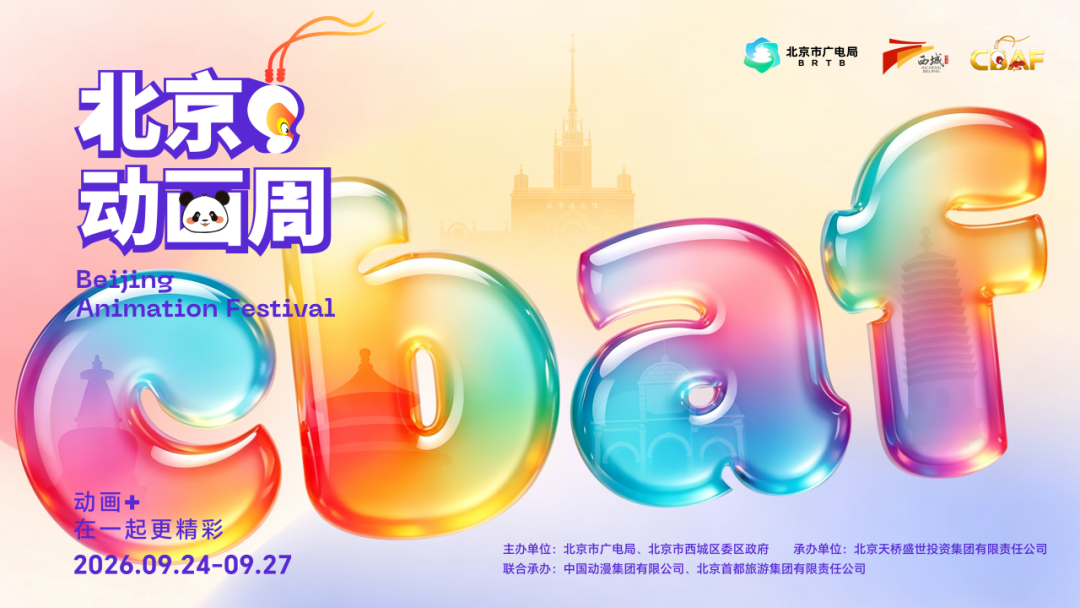
The four-day 2026 Beijing Animation Festival drew its curtain successfully at the Beijing Exhibition Center. Co-hosted by the Beijing Municipal Radio and Television Bureau and the Xicheng District Party Committee and People’s Government, the festival adopts the brand theme “Animation Plus, Better Together”, with “Beijing AI Animation” as its annual focus. Following the “1+7+N” framework, the event set up sub-venues in Yizhuang, Huairou, Songzhuang (Tongzhou) and other districts, and launched a series of animation activities covering “16+1” administrative regions across Beijing. Scheduled over the Mid-Autumn holiday, it realized in-depth integration of industrial exhibition, cultural-tourism consumption and traditional festival culture.
“Little Lion Fu”, the festival mascot inspired by traditional Chinese lion culture, was displayed as a giant inflatable installation at the south square of Beijing Exhibition Center and became a popular urban check-in spot. Five themed blocks, namely Top IP Block, City Partner Block, Creator Block, Illustration Block and Trendy Toy Block, were built at the main venue. Domestic well-known animation IPs, cultural-creative enterprises and independent creators gathered here. With IP exhibitions, creator meet-and-greets, merchandise sales and interactive experiences, an immersive offline animation space accessible for visiting, entertainment and shopping was created.
Key Achievements
1. Premier Original Titles Released & Wide–ranging Screening Coverage
Thirty key animation projects under the “Beijing Grand Audiovisual” initiative were unveiled at the opening ceremony, including Luoshen: Reviving Chinese Master Paintings. Warm realistic animation series Childhood Memories in Hutongs and other local productions were presented, drawing stories of youth growth from Beijing’s hutong culture. A total of 203 high-quality animated works were selected. Online screenings were rolled out on mainstream platforms such as Yangshipin, iQIYI and Youku, reaching over 500 million online viewers. Offline, 36 commercial screenings and 53 public-welfare & open-air shows were held, bringing animation to broader audiences beyond exhibition halls.
2. Effective Industry Investment–financing Matchmaking
During the festival’s industry venture-capital session, 330 outstanding projects were collected. Eight letters of intent for cooperation were secured, with a total intended contract value of 135 million RMB. Beijing has built a complete animation industrial chain worth more than 120 billion RMB, home to 154 active animation and film institutions. Supported by radio-film-television funds, around 30 animation projects receive municipal funding each year. The Measures for Supporting High–quality Development of Animation Industry in Beijing was issued to boost R&D innovation, ecological construction, industrial integration and market entities. Large-scale application of AI across animation production is promoted to unlock new growth points for IP licensing and cultural-tourism integration.
3. AIGC Creation Competitions to Nurture Young Talents
Multiple AIGC extreme creation contests were organized. At the closing ceremony, awards were presented for the 48–Hour AIGC Original Animation Challenge, in which 30 teams delivered creative works rooted in Beijing local culture. At the Yizhuang sub-venue featured for AIGC, the 24-Hour AIGC Animation Improvisation Challenge took place for young creators. Meanwhile, the “New Light · Future Frames” Youth Animation Showcase exhibited 274 student entries from over 80 universities nationwide, building a bridge linking campus creators with the industry. The festival highlights that AI serves as an auxiliary tool while human-centered narrative and cultural value remain core to animation creation
4. City–wide Engagement Boosts Consumption & Elevates Urban Cultural Brand
A city-wide animation check-in map together with PASS wristbands were launched. 29 commercial districts, industrial parks, cultural–tourism sites and more than 150 partner merchants joined the event, recording nearly 20,000 check-in visits. Venues including Songzhuang International AI Animation & Game Creative Industrial Park, Huairou Great-Wall International Animation Valley and major shopping malls hosted themed activities. Permanent offline stores for domestic animation IP opened to the public. The festival has transformed from a vertical industrial expo into a city-level cultural brand for public participation, driving mutual growth of animation industry and urban consumption.
Significance for China’s Animation Industry
The year 2026 marks a pivotal transition of Beijing Animation Festival from hosting events to building a comprehensive industrial ecosystem. It facilitates deep collaboration among government authorities, enterprises, universities and individual creators. Authoritative industry reports released at the festival show market scale, AI penetration rate and overseas performance of China’s animation sector, pointing out the shift from “product export” to “cultural export”. The event clarifies the role of artificial intelligence: AI improves production efficiency, yet artistic aesthetics, cultural heritage and human stories stay fundamental to animation creation, guiding rational adoption of digital technologies within the sector.
Furthermore, the festival forms a full-loop mechanism covering creation, capital investment, production, distribution and derivative consumption. It supports domestic original content, cultivates young talents and expands global outreach. New business models of “animation + cultural tourism”, “animation + consumption” and “animation + education” are explored, offering Beijing’s practical experience for the high-quality development of national animation industry. Organizers announced that the 2027 Beijing Animation Festival will return to audiences.
熱門頭條新聞
- Wuthering Waves Version 3.7 Preview Introduces New Story Content, Resonators Hsin and Suoming, and Major Gameplay Optimisations
- 2026 Beijing Animation Festival Concludes Fruitfully, Empowering Animation Industry with Digital-intelligent Technology
- WOW – WOMEN OF THE WORLD ANNOUNCES FURTHER LINE-UP FOR ITS 2027 LONDON FESTIVAL
- Automate Annihilation: Roguelike Factory Defense Title BELTFED Announced, Playable Steam Demo Coming Soon
- Happy Mid-Autumn Festival!
- Chinese Open-World RPG Untamed Wilds Makes Its Official Debut; Physics-Chemistry Dual-Engine Delivers Ground-Breaking All-Object-Interaction Gameplay
- Saber Interactive Exec Warns Unsustainable North-American Game-Development Costs; Global Distributed-Studio Model Sparks Industry-Wide Debates & Local-Sector Impacts
- Blizzard Unveils World of Warcraft: Forever at BlizzCon 2026 — New Permanent Azeroth Branch: Product Overview, Timeline and Significance for Warcraft Fans