Balancing Technology and Copyright: Clarifying IP Boundaries for Animation Industry in the AIGC Era
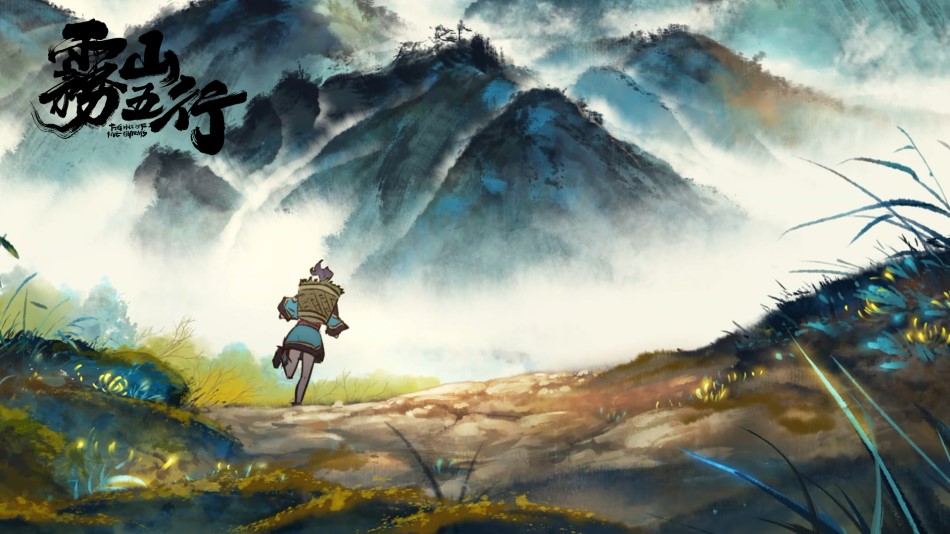
As generative AI technologies gain widespread adoption in animation and short video sectors, the AI man drama segment has experienced explosive growth. Industry analysts project China’s AI man drama market size will reach RMB 24.36 billion in 2026. While AI drastically cuts production costs and lead times, copyright conflicts over training data sourcing, ownership of AI generated outputs and commercial exploitation have surfaced intensively. The copyright infringement case of domestic Chinese animation Wushan Wuxing (Fog Hill of Five Elements) has become an industry landmark, sparking wide ranging discussions among industrial and legal circles over the core principle of “authorisation first, utilisation later”.
On August 21, 2026, Liu Dao Wu Yu Studio, copyright holder of the celebrated domestic animation Fog Hill of Five Elements, issued a formal public statement. It accused a Bilibili content creator of scraping original animation frames and art backgrounds without permission to train a self built AI model, which was then used to produce and publicly distribute AI animated work Da Ai Xian Zun. Comparative checks revealed numerous scenes and art styles in the infringing AI work bore striking resemblance to the original animation, with segments amounting to direct copying, allegedly violating rights of reproduction, adaptation and information network communication. The copyright holder demanded full removal of all relevant source materials and training parameters from the AI model, complete takedown of infringing AI works across platforms and a formal public apology. The involved content creator later published an apology and removed all related videos, yet systemic industry risks exposed by the incident persist.
From a technical perspective, multimodal large scale models carry the inherent risk of “deep memorization and content regurgitation”. Without directly duplicating original files, pre trained AI models may reconstruct art styles, compositions and narrative features of copyrighted works via parameter weight memorization. This raises core legal questions on the input side: whether scraping copyrighted creative works for commercial AI model training qualifies as legitimate practice. Legal and intellectual property experts have reached a clear consensus: technological neutrality cannot serve as justification for misappropriating original creations. Commercial AI training activities must adhere to the rule of “authorisation first, utilisation later”. Animation, comic and literary IPs cannot be arbitrarily scraped as training corpora. The Interim Measures for the Administration of Generative AI Services stipulate that commercially oriented AI training must draw on legally sourced materials, and unauthorised use of copyrighted content for training triggers corresponding infringement liabilities.
Copyright challenges also exist on the output side. The AI man drama sector faces a widespread imbalance: infringement outpaces copyright enforcement. AI tools lower barriers for mass content production. Some producers carry out “rewash style” adaptation of online novels and comic IPs to launch content and capture traffic revenue rapidly. Meanwhile, original right holders face complex, high cost evidence gathering procedures for litigation. In many instances, infringing parties have already realised commercial gains by the time enforcement actions take effect. Regarding ownership confirmation, Chinese judicial practice has established consistent criteria. Pure one click AI outputs lacking meaningful human creative intervention do not qualify as copyright eligible works. For commercial use and copyright protection, human creative intervention should account for no less than 35 % of finished works, covering storyboard design, character detail development, iterative parameter tuning and content screening. Creators must preserve complete evidence including revision drafts and prompt iteration logs. Insufficient human contribution prevents AI man dramas from realising IP capitalisation, blocking derivative product development and copyright licensing business models.
Regulatory authorities in China are building comprehensive institutional frameworks to bring unregulated AI man drama growth under oversight. The National Radio and Television Administration has incorporated AIGC animated micro dramas into a tiered filing and review regime. Review authorities are assigned according to project investment scale and thematic risk levels. High budget and sensitive theme productions are reviewed centrally, while tailored filing pathways are available for small and medium creators. Unfiled legacy non compliant content will be removed from online platforms. Industry representatives including national committee member Zhou Yuan have proposed setting up fast track dispute resolution channels for AI generated content infringements, implementing the “verify and take down” complaint mechanism, introducing penalty scales linked to infringing party revenue, strengthening sanctions against mass scale infringements and reinforcing platform accountability to safeguard creators’ legitimate rights.
Industry stakeholders widely acknowledge that AI serves as an efficiency enhancing creative tool rather than a loophole to evade copyright obligations. While embracing AI driven productivity gains, the animation sector must uphold intellectual property standards. A healthy ecosystem requires legally licensed training datasets, evidence backed ownership confirmation for AI outputs, and coordinated governance between regulators and platforms, to achieve dynamic balance between technological innovation and original content protection.
熱門頭條新聞
- Balancing Technology and Copyright: Clarifying IP Boundaries for Animation Industry in the AIGC Era
- Tides of Annihilation Unveils Core Gameplay & Next Gen Technical Features, Re imagining Arthurian Fantasy Epic
- Maximum Entertainment Announces Hexplorando, a Cozy Puzzle-Building Journey Around the World
- Croakwood Hops Ahead With New Development UpdateThe team behind Parkitect shares the latest progress on its cozy frog-filled town builder ahead of Early Access this winter
- Pegs, Balls, Bunny Girls 😈 – Kniv Studio Rolls Out “High Roller Penny”!
- Disney × TikTok Strike Global Short-Form Content-Sharing Deal: Hollywood IP Descends Into the Creator Economy as Streaming Enters the Vertical-Video Era
- Hand-Painted Cozy Adventure Seina: a Tale of Spirits Launches Free Steam Demo
- SPRAWL zero brings early 2000s nostalgia to PC and consoles this September